REVIEW · MARRAKESH
Marrakech: Moroccan Cooking Class for vegetarians and vegan
Book on GetYourGuide →Operated by Cooking class with chef Fatima · Bookable on GetYourGuide
A Moroccan cooking class at a family home beats restaurant lessons. You learn Moroccan spices up close, then cook a full meal (starter, main, dessert) with Chef Fatima and often her brother Yasser, in the heart of the Medina. I especially like how hands-on it is and how clearly the instructor walks you through ingredients. The one drawback to plan for: some groups may include a meat menu alongside the vegetarian/vegan dishes, so if you’re strict, you’ll want to ask how they keep things separated.
Here’s the other reason this works: you’re not only eating well, you’re learning how to build flavor the way Moroccans do. You get to talk with the chef’s family over tea or juice, you can take pictures, and you’ll leave with a small end-of-class gift. For $30 and four hours, it’s one of the best ways to turn Marrakech from a place you visit into a place you understand.
In This Review
- Key things I’d mark as highlights
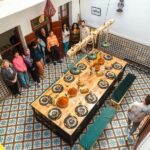
- Inside a family kitchen in Marrakech’s Medina
- Finding the meeting point next to Andalusia restaurant
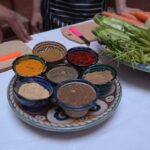
- The spice lesson that changes how you cook at home
- Cooking the starter: Moroccan salads or briwat
- The main event: tajines, couscous, or tanjya-style dishes
- Dessert and the sweet finish that actually makes sense
- Vegetarian and vegan: how they handle menus and restrictions
- The family meal afterward: what “best meal” usually means
- Value check: is $30 for 4 hours actually fair?
- Who should book (and who should ask extra questions)
- Should you book this vegetarian Moroccan cooking class?
- FAQ
- FAQ
- How long is the Marrakech Moroccan cooking class?
- Where is the meeting point?
- Is transport included?
- Does this class work for vegetarians and vegans?
- What kinds of dishes will I cook?
- What happens after cooking?
- What languages are used during the class?
- Can I take pictures during the lesson?
- Is the class wheelchair accessible?
- Is there free cancellation?
Key things I’d mark as highlights
- A real-home setup in the Medina instead of a showroom kitchen
- Spice focus first, with tips for choosing what to buy in the souks
- Starter, main, and dessert all cooked by you
- Vegetarian, vegan, and allergy needs handled without stress
- Family meal afterward with no leftovers vibe
- End-of-class gift plus recipe follow-up mentioned by past participants
Inside a family kitchen in Marrakech’s Medina
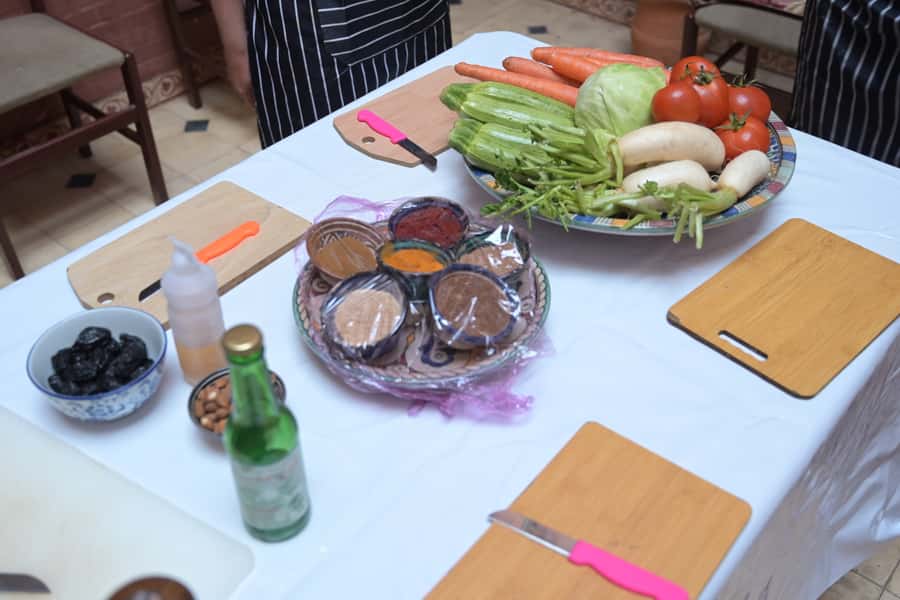
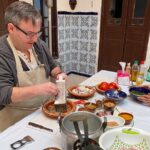
Marrakech food classes are everywhere, but this one has the feel of a visit to someone’s home. The cooking happens in an authentic Moroccan house in the Medina, not behind a counter with plastic menus. That matters because Moroccan cooking is tactile: smells change as spices toast, sauces shift as they simmer, and vegetables behave differently when cut a certain way.
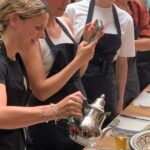
Chef Fatima runs the experience, and many sessions are guided by her brother Yasser. What you’re really paying for is the combination of cooking instruction and cultural context—spices, habits, and how a typical Moroccan family eats together. In practice, the class doesn’t feel like a “show.” It feels like you’re being folded into the day’s routine.
You also get an audio guide in English and French. That’s a helpful extra when terms get specific—like the difference between spice blends used for tagines versus couscous-style seasoning.
You can also read our reviews of more tours and experiences in Marrakesh.
Finding the meeting point next to Andalusia restaurant
Logistics in the Medina can be annoying, even for seasoned walkers, and this class starts with a simple plan: the chef waits 30 minutes early at the meeting point. The meeting point is next to Andalusia restaurant. From there, you’re guided into the maze of streets to the house.
Here’s my practical advice: don’t rely on “I’ll just figure it out.” Give yourself extra buffer time, and be ready to ask someone for directions. One past participant noted the meeting point can be tricky for taxis, so arriving a little early is worth it.
Also, transport isn’t included. If you’re staying outside the Medina, plan on using a taxi or rideshare to reach near the meeting area. Once you’re in, expect narrow lanes and walking.
The spice lesson that changes how you cook at home
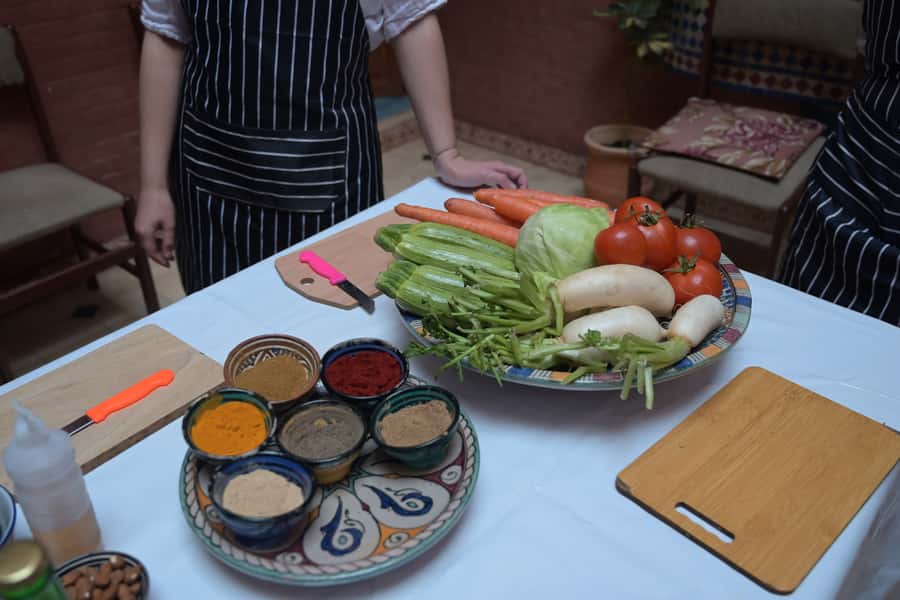
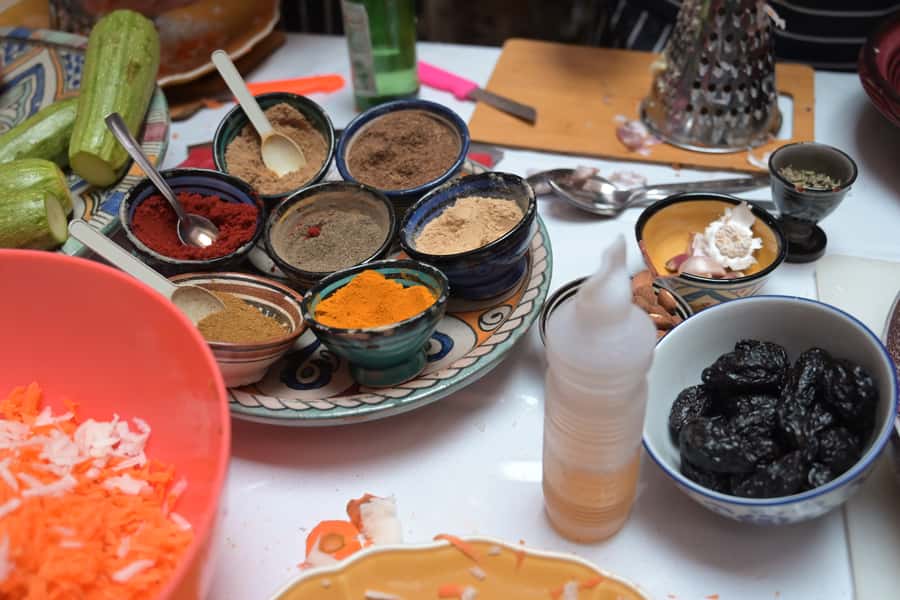
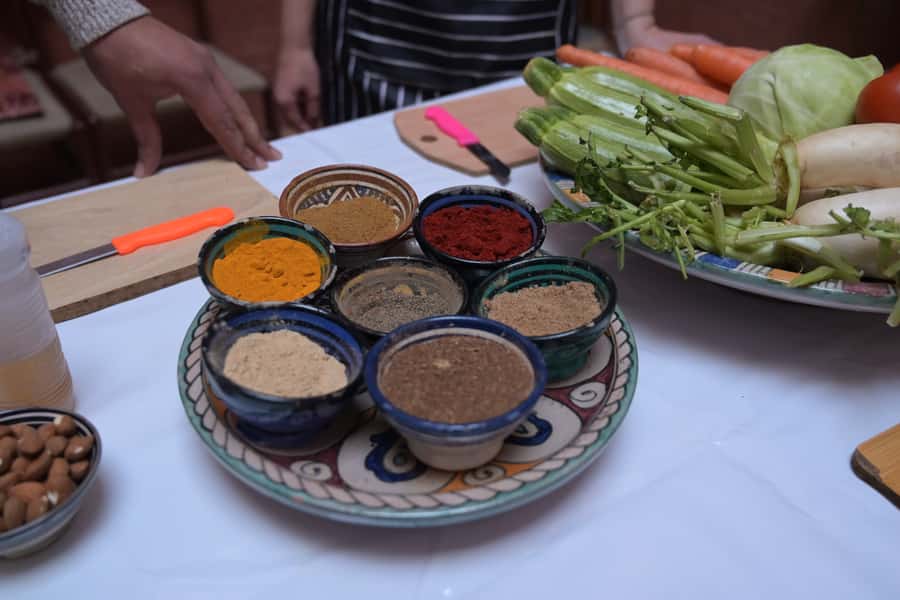
The class begins with spices, and not in a vague way. The chef explains the spices you’ll taste in Moroccan food, and you learn how they work together—what to smell for, what changes when they’re heated, and how blends land differently in savory dishes versus desserts.
This is the part that pays off long after the meal. If you’ve ever tried to re-create tagine at home and it tasted flat, the issue is usually seasoning timing and balance, not just missing ingredients. In this class, you get a framework.
You’ll also get guidance for buying spices in the souks. The souks can be a sensory overload, so it helps to go in with a short list of what to look for and how to choose. If you’re the type who likes bringing back food souvenirs, this is your moment—when you know what you’re buying and why.
Cooking the starter: Moroccan salads or briwat
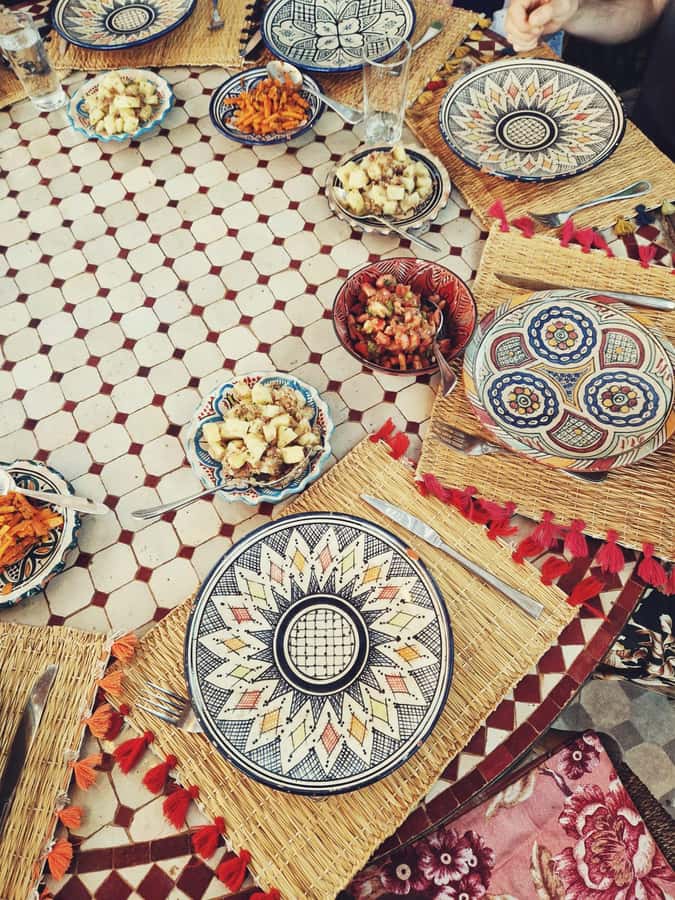
After the spice setup, you move into the cooking. You start with a starter, with options like Moroccan salads or briwat. That choice usually depends on the menu the chef suggests when you arrive.
Either way, this is a good starter lesson because it teaches texture and flavor building:
- Moroccan salads often show how herbs, citrus, and spices balance against each other.
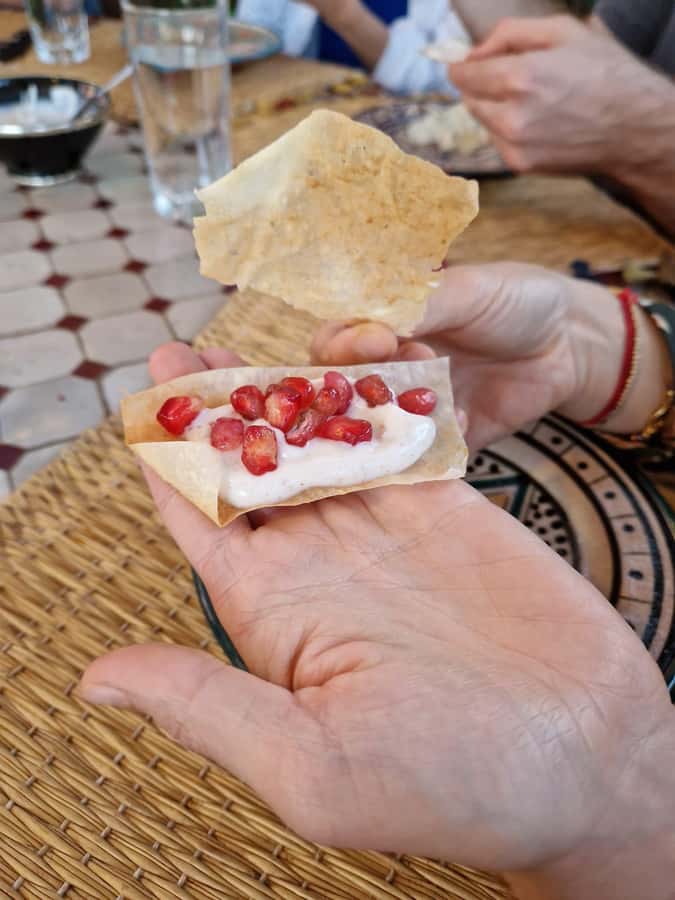
- Briwat brings you into a technique-and-fold world, where seasoning and wrapping matter as much as ingredients.
You’ll get the ingredients and everything needed for the recipes. You can take pictures if you want, which is useful if you plan to recreate the dishes later and want a reminder of plating or step order.
The main event: tajines, couscous, or tanjya-style dishes
Then comes the main dish, where Marrakech really shines: tajines, couscous, or tanjya-style cooking. If you’ve eaten Moroccan food before, you know the sauce is the star. If you’ve cooked before, you know sauce is where you win or lose.
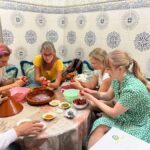
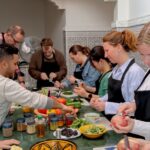
What makes this class valuable is that you’re not watching. You’re cooking. Past participants noted that the chef involves everyone in prep steps, including things like cutting and preparing the components for the tajine.
If your group is mixed, there may be people making meat dishes alongside your vegetarian/vegan options. One participant specifically mentioned that their class was mixed and they kept distance to focus on their veggie tagine, with vegan sides still on the menu. So if you’re vegan with strict separation needs, treat this as a conversation point early—ask how they manage separation and what’s vegan in the final spread.

Dessert and the sweet finish that actually makes sense
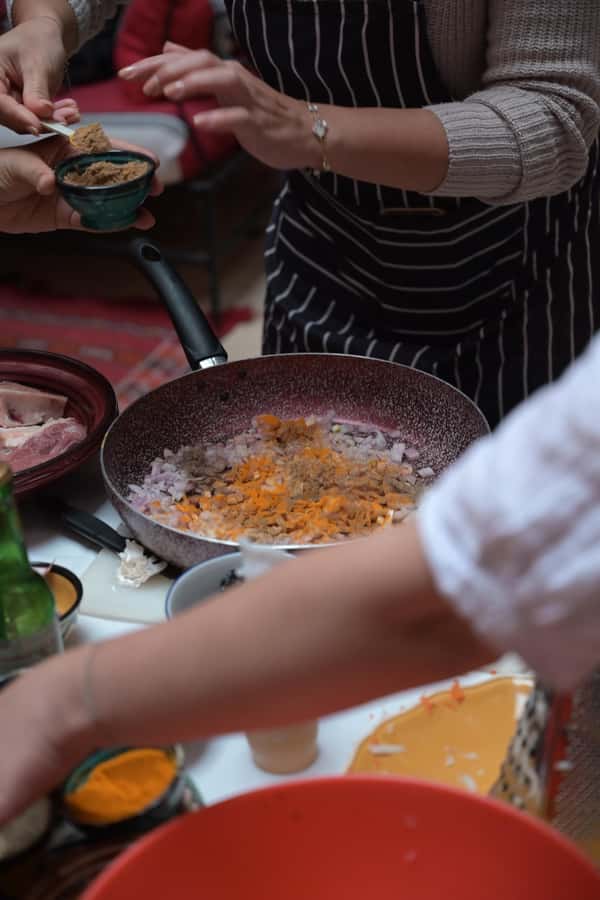
Moroccan dessert gets its own place in the schedule. After the main dish, you cook a Moroccan dessert, and the class structure is built so you’re not rushed. That’s a big deal, because desserts usually fall victim to time pressure in short classes.
One participant did note their dessert was a bit basic, so dessert quality may depend on the menu. Still, the value is that you learn how the sweetness works after a savory meal—how spices and textures carry through to the end. If you’re leaving Marrakech with a better understanding of Moroccan flavor logic, dessert is part of the lesson, not an afterthought.
Vegetarian and vegan: how they handle menus and restrictions
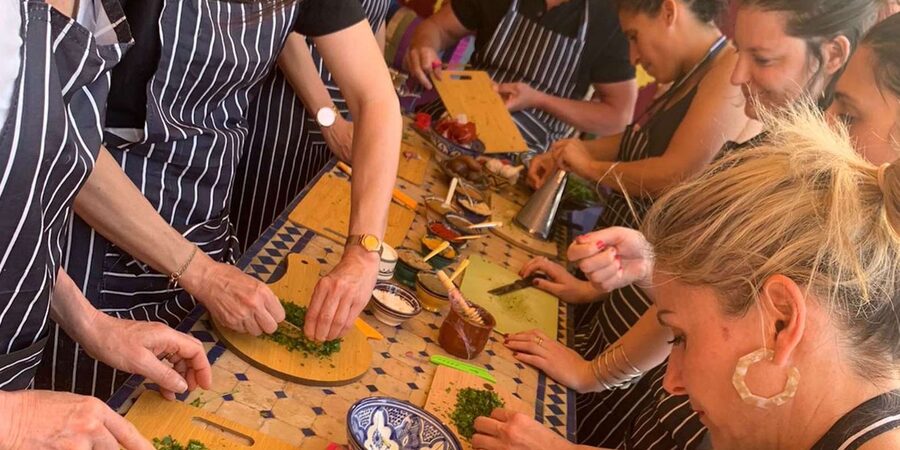
The headline here is clear: vegetarian, vegan, and allergies won’t be a problem. That doesn’t just mean you get a salad option. It means the chef suggests menus that fit what you eat, then guides you through cooking steps accordingly.
From the experience details, you can expect:
- Ingredient explanations tailored to what you’re cooking
- A structured flow through starter, main, and dessert
- A shared meal at the end where you eat what you made
Past participants highlighted accommodations for veganism and vegetarian preferences. One person mentioned their instructor sent recipes afterward via WhatsApp, which is exactly what you want when you’re trying to recreate things at home. Another person mentioned sides were vegan even when someone else in the group cooked chicken—again, a reason to ask how your meal will be arranged.
My advice: if you’re vegan, communicate clearly about what you avoid at the meeting point. If you’re gluten-free or have specific allergies, mention it too, so the chef can plan from the start.
The family meal afterward: what “best meal” usually means
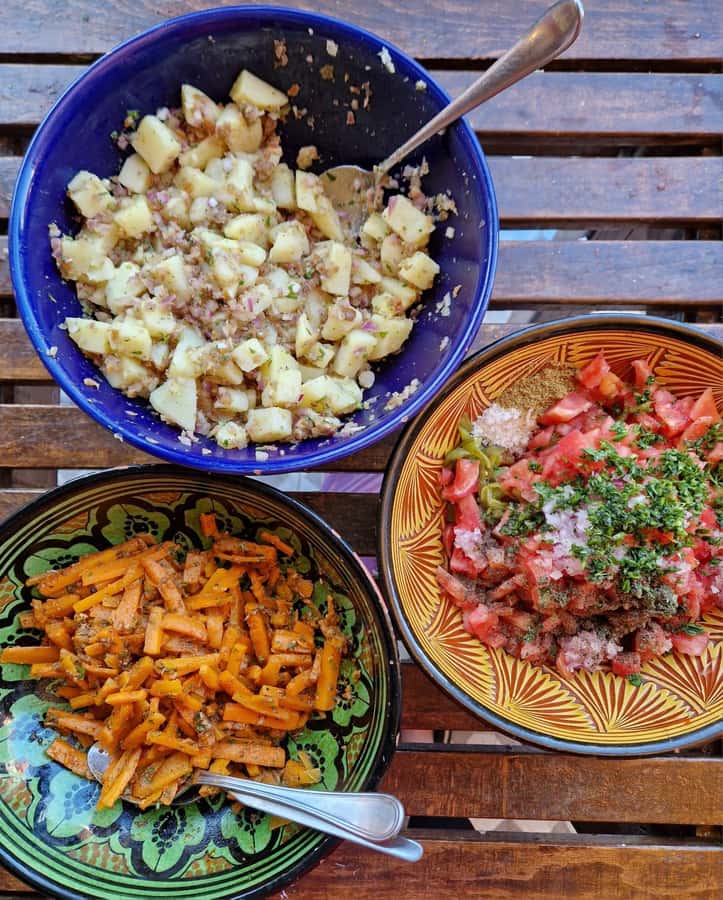
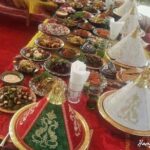
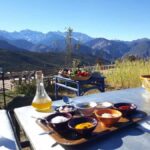
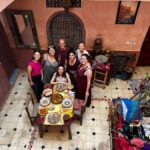
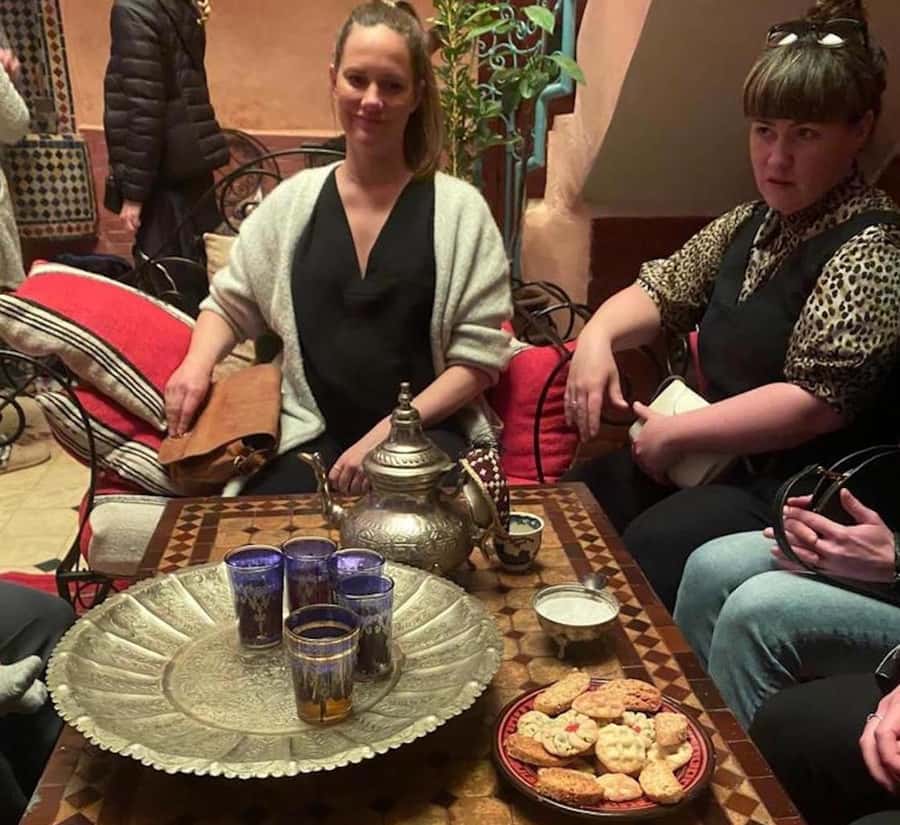
You don’t just cook and leave. You eat together as a group with the family. Before the cooking starts, you’re greeted with Moroccan tea, coffee, or juice, plus cookies. After cooking, you sit down and eat the meal you made.
This is where the class earns its “best meal” reputation. The food tastes better because you’re part of the process. You understand what you did—so you recognize the sauce, the balance, the spice warmth, and why the dish works.
It also helps that the setting is described as genuinely welcoming. Several past participants mentioned the atmosphere felt like being welcomed into a family home, with conversation and cultural sharing beyond just food.
There’s also a gift at the end of the lesson. It’s not the reason to book, but it’s a nice closing touch.
Value check: is $30 for 4 hours actually fair?
Let’s talk value in a way that’s useful, not just “it’s cheap.” This class is $30 per person for 4 hours, includes:
- cooking lesson
- drinks and cookies
- the meal you cook
Transport isn’t included, so you’ll pay that separately, but once you’re there, everything food-related is handled.
What makes the price feel fair is the ratio of time to involvement. Four hours isn’t the quick “90-minute demo” style that rushes cutting and seasoning. You have time to learn, cook, eat, and ask questions. And because it’s in a private home setting, you’re getting instruction plus a real cultural moment, not just a single dish.
If you’re comparing it to buying tickets for a show or paying for multiple restaurant meals, this can be one of your best “one activity, multiple payoffs” purchases: skills you can reuse plus a meal you already paid for.
Who should book (and who should ask extra questions)
This cooking class is a great fit if you want:
- A hands-on Marrakech activity in the Medina
- A vegetarian or vegan meal with real instruction, not a compromise
- A spice-focused experience you can repeat at home
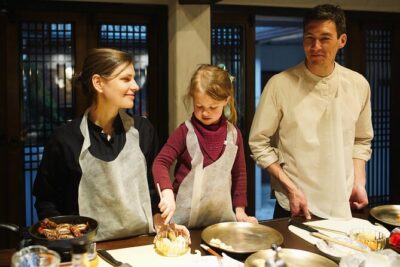
It’s especially good for couples and small groups because you’ll cook together and share the meal. It also works for families. One participant did this with a 12-year-old daughter, and it ended up being one of their best meals in Marrakech, largely because they cooked it themselves.
Who should ask extra questions:
- If you’re vegan and need strict separation from meat prep, ask how the kitchen handles mixed groups.
- If you’re worried about finding the house, plan extra time and use the meeting point next to Andalusia restaurant as your anchor.
- If you dislike sharing space with smokers, ask about the class environment. One participant raised a concern about a cigarette being smoked during the class, so it’s fair to check what rules are in place for your session.
Should you book this vegetarian Moroccan cooking class?
I’d book it if you want the best kind of Marrakech souvenir: not a trinket, but a skill and a full meal you helped cook. The structure is ideal—spices first, then starter, then main, then dessert, then sitting down to eat with the family. The 4-hour format gives you breathing room, and the vegetarian/vegan focus is built into the menu planning.
Skip it or ask more questions if you’re extremely sensitive to cross-contact issues around meat in mixed groups, or if you’re the type who needs super-clear, easy-to-find meeting points. For most people, though, this is one of the most practical, memorable ways to experience Moroccan food in a way that sticks.
FAQ
FAQ
How long is the Marrakech Moroccan cooking class?
The class lasts 4 hours.
Where is the meeting point?
The chef meets you next to Andalusia restaurant.
Is transport included?
No, transport is not included.
Does this class work for vegetarians and vegans?
Yes. Vegetarian, vegan, and allergies won’t be a problem.
What kinds of dishes will I cook?
You’ll cook a starter (Moroccan salads or briwat), a main dish (like tajines, couscous, tanjya), and a Moroccan dessert.
What happens after cooking?
You eat the meal you cooked together with the family.
What languages are used during the class?
The instructor speaks French and English. An audio guide is also included in English and French.
Can I take pictures during the lesson?
Yes, you can take pictures if you want.
Is the class wheelchair accessible?
Yes, it is wheelchair accessible.
Is there free cancellation?
Yes. You can cancel up to 24 hours in advance for a full refund.