REVIEW · MARRAKESH
Marrakesh: Moroccan Dishes Cooking Class with a Local Chef
Book on GetYourGuide →Operated by Marrakesh Local Experiences · Bookable on GetYourGuide
Mint tea and tagines, in one afternoon. This half-day class pairs a short market run with a hands-on cook session led by Hassan and his team, so you learn Moroccan flavors in the exact way locals do, not just from a cookbook. You’ll love the mint tea ceremony and the chance to shop for ingredients with your guide, then turn them into a shared feast. The one catch: the cooking room can run cool, so I’d bring a layer even if the space is air-conditioned.
What really makes this worth your time is how the session is built for learning. You work together, make multiple dishes (often 6), hear the stories behind the food, and leave with recipes you can actually repeat at home. Just be aware it’s not a fit if you have onion or garlic allergies, or if you need wheelchair access or have back problems.
In This Review
- Key things that make this cooking class click
- From Pharmacie Bab Doukkala to the market: where your cooking starts
- Moroccan mint tea ceremony: the ritual that sets the kitchen mood
- Hands-on Moroccan cooking: tagines, kefta, shakshouka, and zaalouk
- What you’ll likely make
- The techniques you practice
- Dietary options: when “local” doesn’t mean “limited”
- What you eat at the end: the buffet Moroccan feast you build
- Chef-led learning with Hassan and Ahmed: why small group matters
- Price and value: what $47 buys in a Moroccan kitchen
- Spices to take home: buying from the workshop at the end
- So, should you book it?
- FAQ
- Where is the meeting point for the class?
- How long is the cooking class?
- Does the class include a meal?
- Do I learn how to make Moroccan mint tea?
- What dishes will I cook?
- Are recipes provided after the class?
- Is this a small group activity?
- Can the class accommodate vegetarian, vegan, or gluten-free diets?
- What language is the class taught in?
- Is it suitable for kids?
Key things that make this cooking class click
- A market stop that changes how you cook: you pick vegetables and ingredients up close, with a guide, before you start cooking.
- Mint tea as the warm-up: you learn the traditional way Moroccan mint tea is prepared, then you sit and share it with the group.
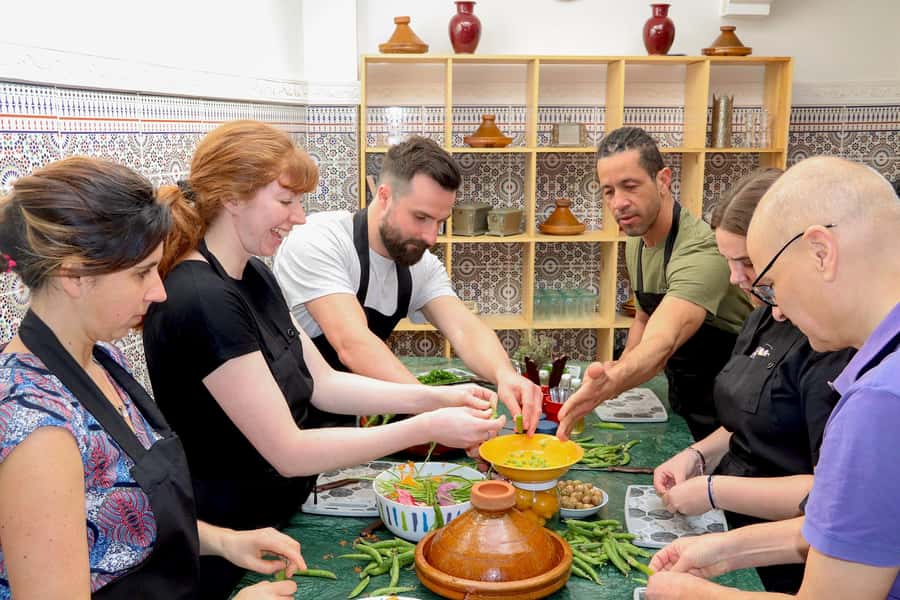
- Hands-on tagine skills (and seasoning judgment): you practice peeling, chopping, and getting the spices right on your dishes.
- Multiple dishes, not a single one-note meal: you usually cook about six dishes so you learn more than one flavor path.
- A real Moroccan buffet: everything you make lands on the table family-style, so you taste the full spread you built.
- Recipes sent after: you get recipe links after the class, so your kitchen work doesn’t end when the lesson ends.
From Pharmacie Bab Doukkala to the market: where your cooking starts
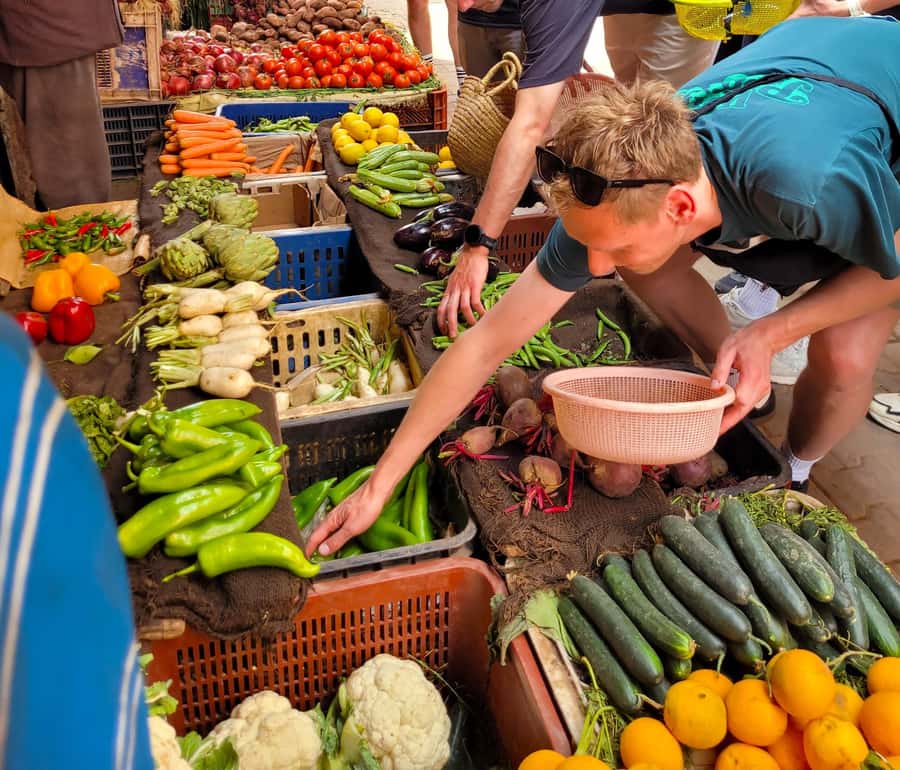
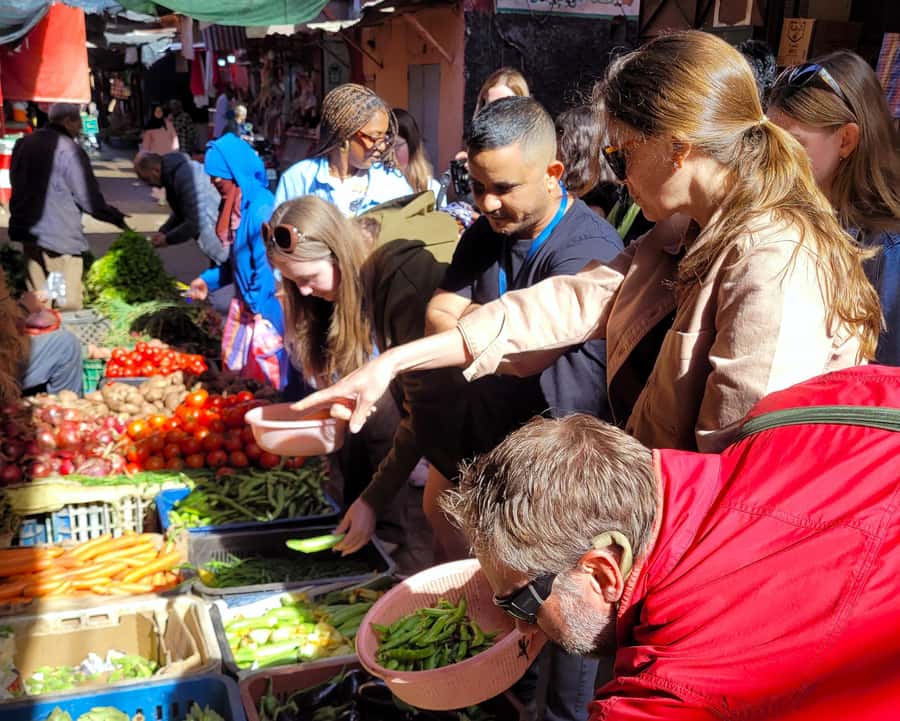
The class meets at Pharmacie Bab Doukkala (you can find it easily on Google Maps). I like that the day starts simple and local: no complicated route, no long preamble. From there, you head to a nearby food market for a quick ingredient shopping session.
This market stop is short—about 15 minutes—but it’s not a sightseeing detour. You’re shopping for the vegetables and ingredients that will become your meal, and your guide keeps it practical. You’ll get a feel for what’s fresh and what goes into specific Moroccan staples like tagines, preserved-lemon dishes, and pepper-based sides.
Why this matters for value: cooking classes can become “watch and hope.” Here, the shopping part tees up your success. When you’re later chopping and seasoning, the ingredients you handled at the market carry meaning. You also learn what to ask for and how ingredients typically look and feel when you’re actually buying them.
If you’re the type who likes to understand food beyond the plate—why preserved lemon shows up, how spices get used—you’ll enjoy the story-telling as the day goes on. The guide isn’t just feeding you tasks; they’re explaining context while you work.
You can also read our reviews of more tours and experiences in Marrakesh.
Moroccan mint tea ceremony: the ritual that sets the kitchen mood
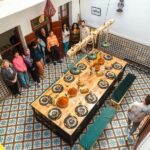
After the market run, you head back to the home kitchen and start with Moroccan mint tea. This is one of the most memorable parts because it’s not rushed, and it’s taught as a tradition, not just a drink.
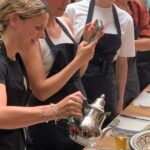
The session includes a tea ceremony (about 30 minutes) where you learn the traditional way to make Moroccan mint tea. Then you drink the tea while you get to know the group. It’s a small moment, but it changes the whole tone: you go from travel-mode to cooking-mode without feeling like you’re being thrown into the hardest part right away.
I also like that this part is bilingual when needed. If you’re in an English-and-French mix group, you’ll still get instruction. And if your group shares one language, the class runs in that language. Either way, you’re not stuck guessing what’s happening.
One practical note: even though the kitchen has air-conditioning, some people have found the room cool. If you get cold easily, wear something you can layer—your body will thank you once you’re standing and chopping.
Hands-on Moroccan cooking: tagines, kefta, shakshouka, and zaalouk
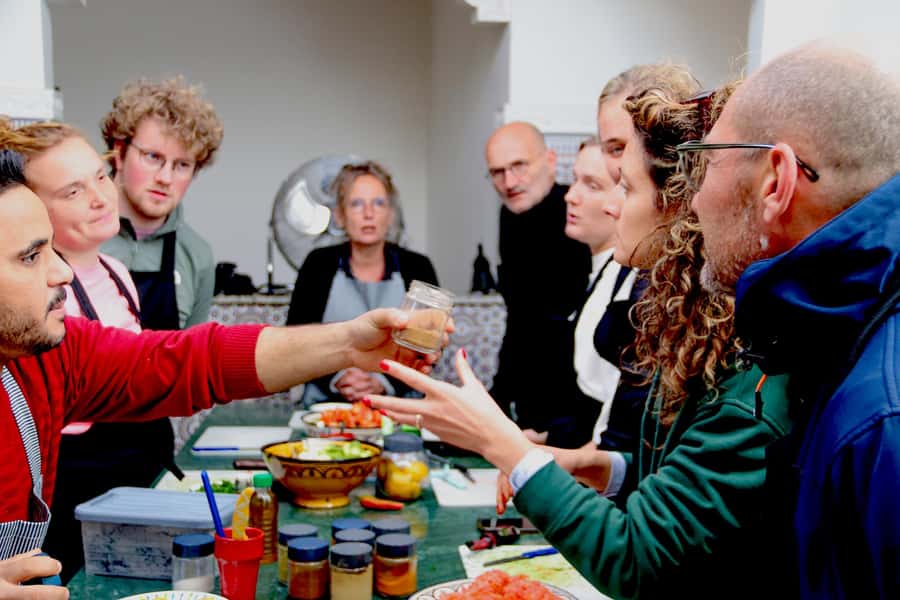
Once the tea is done, the cooking phase begins (about 3.25 hours after you meet). This is where the class turns into real skill-building.
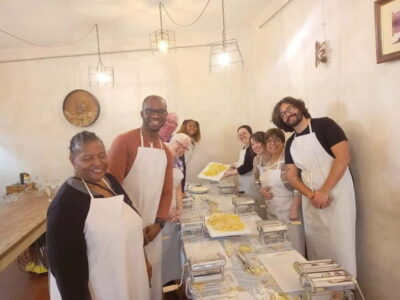
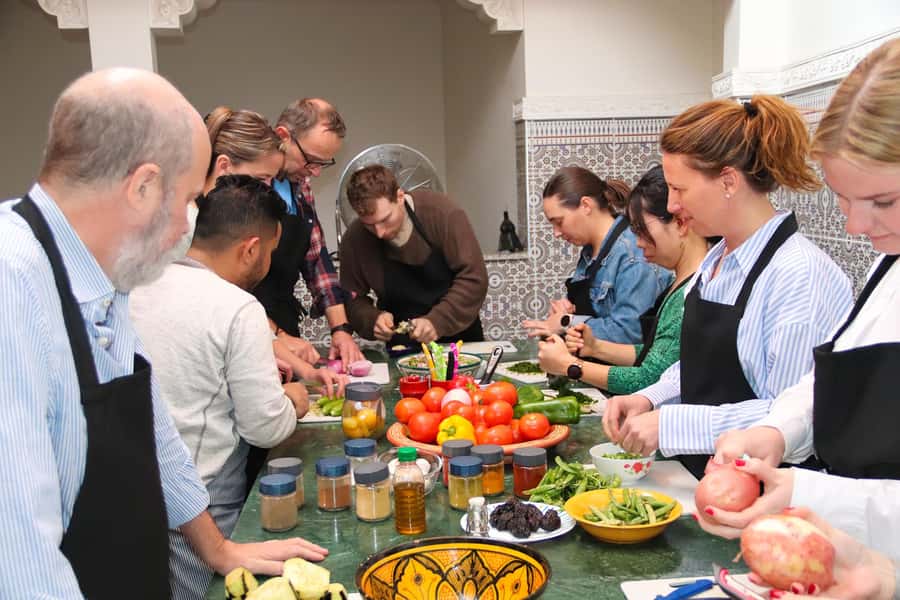
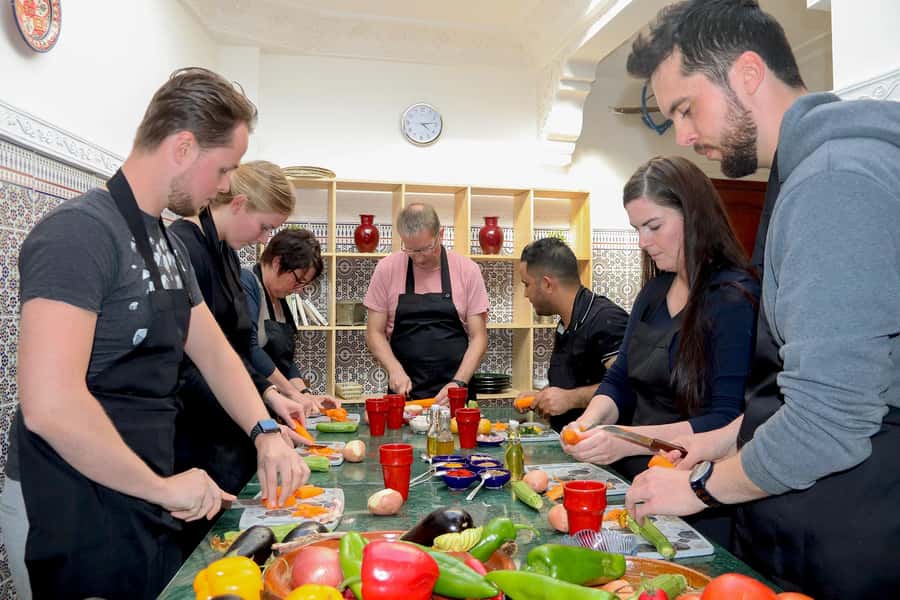
You’re not just cooking one dish. You’ll work together as a team, with everyone taking roles across several recipes. The dishes are made collectively, and that’s a big deal: you’re learning techniques and flavor logic across different dishes, rather than spending four hours only mastering one plate.
What you’ll likely make
The class usually produces around six dishes, depending on group size. Common dishes include:
- Beef with prunes tagine
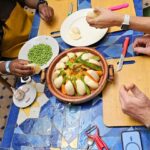
- Chicken with preserved lemon tagine
- Vegetables tagine
- Kefta: meatballs in tomato sauce with eggs
- Shakshouka: sweet peppers
- Zaalouk: fried or grilled aubergine salad
Sometimes there may be a side dish or two added based on dietary restrictions and how the group is set up. If the group is under 8 participants, the number of dishes can be fewer than 6—but the provider notes there’s always enough people for making all dishes, so nobody feels like they’re missing the “main event.”
The techniques you practice
From the way the class is described, the chef-guided focus is on:
- peeling and chopping
- seasoning with the right spices
- understanding how tagines get built so flavors develop correctly
And while you’re cooking, you get explanations about Moroccan culture, traditions, and history. That’s not fluff. When the chef tells you why certain spices go together, or how a preserved ingredient changes the dish, you end up with a mental recipe—not just a list of ingredients.
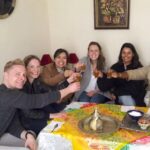
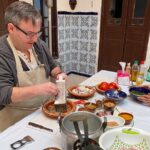
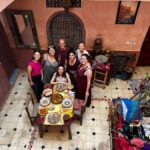
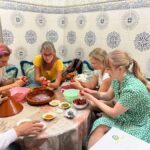
Dietary options: when “local” doesn’t mean “limited”
One of the most helpful details is that the class can cook vegan, vegetarian, and gluten-free food. That’s meaningful because it’s easy for cooking classes to quietly steer people into a default menu. Here, you’re more likely to get a real version of Moroccan flavors adapted to your needs.
The one dietary limitation to take seriously: it’s not suitable for people with onion or garlic allergies. If that applies to you, skip this one and look for a class that explicitly accommodates your allergy requirements.
What you eat at the end: the buffet Moroccan feast you build
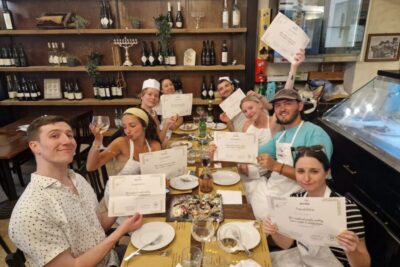
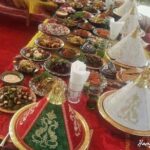
The end of class is the payoff. Food is served as a buffet, and you eat what you made. Because the dishes are spread across tagines, peppers, meatballs, and aubergine, the meal feels like a full Moroccan spread rather than a single standout course.
This matters because a lot of cooking classes end with a polite tasting. Here, the structure supports a proper meal: you taste from each dish, and the buffet format makes it easy to compare flavors.
A small but smart detail: you’ll have bread and water and tea included. That keeps the meal comfortable and helps you focus on the food and what you learned.
And yes, if you’re hoping for a moment to feel proud—this is the kind of experience where it’s obvious you cooked the meal. People often walk away thinking: I can recreate this, because I saw the process and worked through it with the group.
One more thing I appreciate: the class is designed to feel un-rushed. It runs about 4 hours from meeting to eating, but the tone is relaxed—less pressure, more home-kitchen pace.
Chef-led learning with Hassan and Ahmed: why small group matters
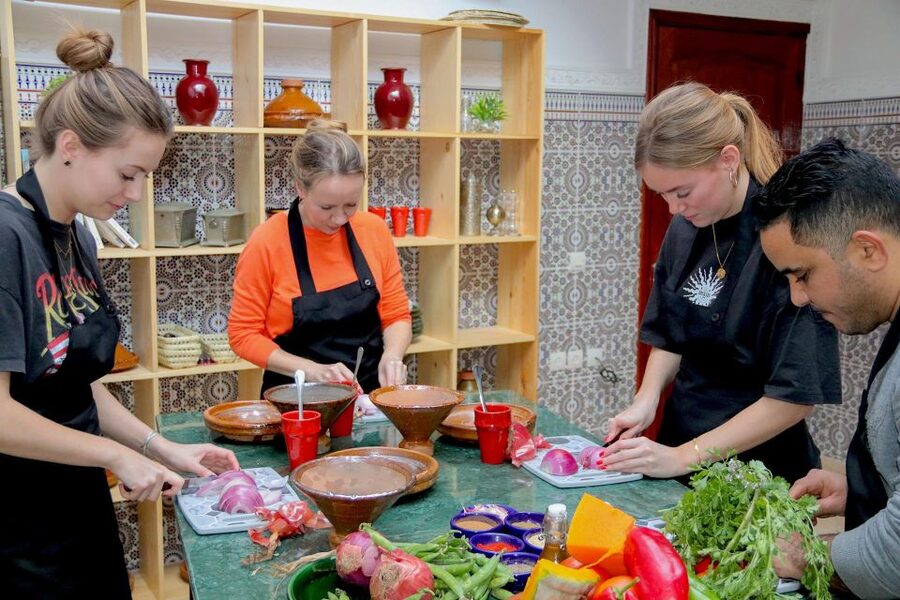
This is a small-group class, with a limit of around 9 participants (it can be 10 in rare cases). The point of the small group isn’t just comfort—it affects learning.
When you’re in a group that size, the chef and guide can actually circulate and correct your seasoning and chopping. You’re not stuck waiting your turn for a camera-friendly demonstration. You’ll get roles, and you’ll be included in the work.
From the stories shared about the experience, Hassan and Ahmed come through as warm, humorous, and attentive. People highlight that the chefs explain things clearly, assign tasks so everyone participates, and keep the atmosphere friendly. That’s exactly what you want: good teaching without a classroom vibe.
Also, if your comfort depends on communication, it helps that instruction is offered in English and French. When multiple languages show up in the group, the class is bilingual so you don’t fall behind.
Price and value: what $47 buys in a Moroccan kitchen
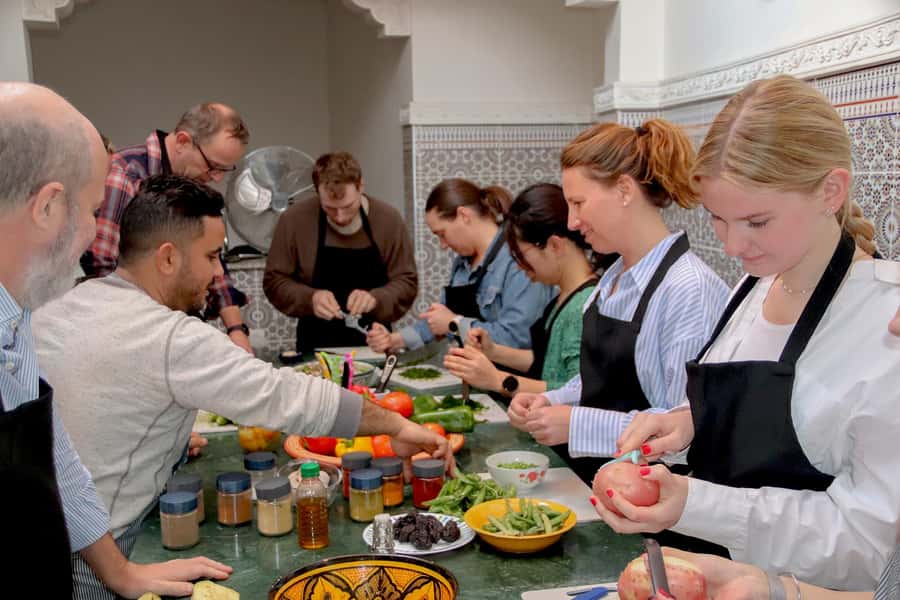
At $47 per person for about four hours, you’re paying for more than cooking instruction. You’re paying for:
- a guided market visit
- a tea ceremony experience
- guided cooking for multiple dishes
- the full meal (including bread) plus water and tea
- an apron for the session
- recipes sent afterward
The value feels strongest if you want to leave with repeatable results. Recipes alone are nice, but cooking multiple Moroccan dishes together—tagines plus sides like shakshouka and zaalouk—means you learn patterns. Patterns are what make your next attempt at home easier.
It’s also good value if you travel with friends or family and like shared activities. Since you cook together as a team and eat as a group, it’s not a solitary experience. You’ll be interacting the whole time, especially during the tea and the meal build.
A quick reality check: this class isn’t built for anyone who needs a wheelchair-friendly setup or who has back problems. And if you’re very sensitive to onion or garlic, it’s not suitable. If those are you, it’s better to find a different tour designed for your constraints.
Spices to take home: buying from the workshop at the end
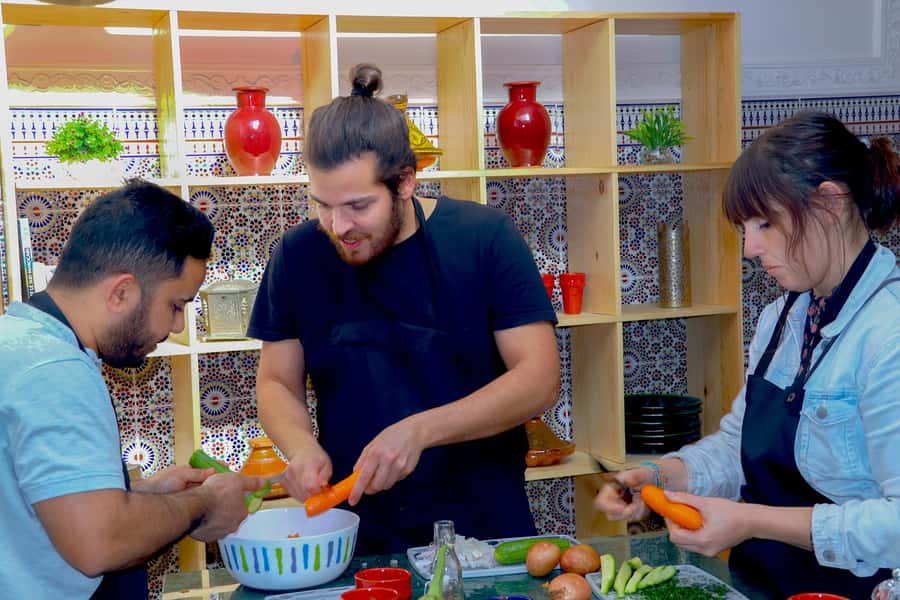
At the end of class, you can buy spices from the workshop. This is one of those small add-ons that makes your learning last.
If you learned a dish because of a spice blend or seasoning method, having those spices on hand can turn your recipe from a one-time event into something you cook again. Even if you don’t go wild, picking up a couple of key spices you used during class helps your at-home version taste closer to what you made in Marrakech.
So, should you book it?
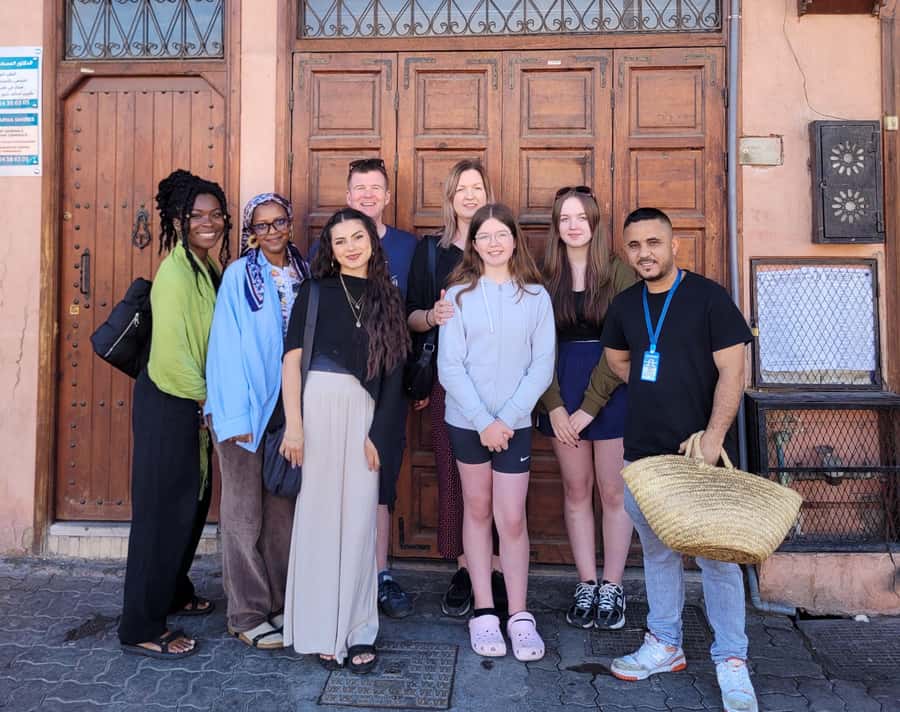
I think you should book this class if you want a practical Marrakech food experience—one that teaches technique, not just flavor. It’s best for people who enjoy hands-on cooking, like shared meals, and want to understand Moroccan food through real ingredients and a guided process. The small group size and the chance to cook several dishes (often 6) make it feel like you’re getting real value for the money.
I’d skip or reconsider if you have onion or garlic allergies, need wheelchair access, or have back problems. And if you’re easily bothered by cool indoor temperatures, plan to wear a layer.
If you’re unsure when to do it, I like doing it early or mid-trip because it helps you spot better options later when you’re ordering tagines and sides. After you cook them yourself, you start tasting with more intention.
FAQ
Where is the meeting point for the class?
You meet at Pharmacie Bab Doukkala in Marrakesh. It’s recommended to use Google Maps to search for the exact pharmacy name.
How long is the cooking class?
The experience is about 4 hours total, from meeting time to when you eat.
Does the class include a meal?
Yes. The food you cook is served as a buffet, along with bread, water, and tea.
Do I learn how to make Moroccan mint tea?
Yes. The schedule includes a Moroccan mint tea ceremony where you learn the traditional way to prepare it.
What dishes will I cook?
You’ll usually make about six dishes, which commonly include beef with prunes tagine, chicken with preserved lemon tagine, vegetables tagine, kefta (meatballs with tomato sauce and eggs), shakshouka (sweet peppers), and zaalouk (aubergine salad). The exact mix can vary by group size and dietary needs.
Are recipes provided after the class?
Yes. Recipes are sent after the workshop in a link format.
Is this a small group activity?
Yes. The class is limited to a small group, with a maximum group size listed as 9 people (and sometimes 10).
Can the class accommodate vegetarian, vegan, or gluten-free diets?
The class notes that it cooks vegan, vegetarian, and gluten-free food, depending on participant dietary restrictions.
What language is the class taught in?
It’s offered in English and French. If everyone speaks the same language, it’s held in one language; otherwise, it’s bilingual.
Is it suitable for kids?
Kids are allowed if they are +6 years old. It’s not suitable for children under 6.