REVIEW · ATHENS
Athens: Classic Cooking Class with Market Visit and Wine
Book on Viator →Operated by The Greek Kitchen · Bookable on Viator
Greek classics click when you make them.
In Athens, The Greek Kitchen pairs a guided stop at the Central Market with hands-on cooking of favorites like tzatziki and spanakopita, then you sit down to eat what you cooked with local wine and take-home recipes. I like how the pace keeps you working, tasting, and asking questions without turning into a lecture. The market side also makes the food feel grounded in real everyday shopping.
My favorite part is the practical cooking. You don’t just chop and stir once—you help build a full meal that includes tzatziki, spanakopita, dolmades, roasted eggplant with sauce and feta, and portokalopita, so you leave with a set of techniques you can reuse later. I also like the meal format: bread and olives show up as you cook, and you get 250ml of locally produced red or white wine with the food.
One thing to consider: the location is up stairs, and the market portion involves walking and sun exposure. Also, with a set menu in about four hours, the schedule can feel a bit tight if you prefer a slow, lingering tour.
In This Review
- Key highlights to know before you go
- Entering Athens Central Market the way locals shop
- The cooking space: a class that gets you moving
- Your Greek menu: what each dish teaches you
- Tzatziki: thick yogurt, cucumber, and garlic
- Spanakopita: phyllo coils with spinach and feta
- Dolmades: vine leaves rolled around rice and beef
- Imam baidi: roasted eggplant with sauce and feta
- Portokalopita: orange-and-cinnamon syrup dessert
- Food rhythm: bread, olives, wine, and sitting down together
- Price and time: does $83.44 feel fair?
- Who this Athens class is best for
- Practical tips so the afternoon goes smoothly
- Should you book The Greek Kitchen cooking class in Athens?
- FAQ
- How long is the Athens Classic Cooking Class with Market Visit and Wine?
- What does the tour cost?
- What time does the market visit happen, and how long is it?
- Is wine included?
- What dishes will I cook?
- Do I get recipes to take home?
- Is hotel pickup and drop-off included?
- Where do I meet the group?
- What’s the group size limit?
Key highlights to know before you go
- Central Market start: A short walking loop so you see where ingredients come from.
- Hands-on cooking: You prep and assemble, not just watch.
- A full Greek lineup: Tzatziki, spanakopita, dolmades, roasted eggplant with feta sauce, and portokalopita.
- Bread, olives, and snacks included: Small bites keep the energy up while you cook.
- Wine with your meal: 250ml of local red or white as you eat.
- Small group size: Maximum 16 people, which helps everyone get time at the counter.
Entering Athens Central Market the way locals shop
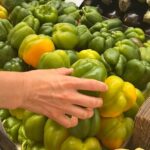
The class begins with a walk to Athens Central Market, and that first step matters more than it sounds. Athens food culture isn’t just about famous dishes—it’s about how ingredients get chosen, tasted, and used day to day. You’ll get a 30-minute market visit with seasonal snacks along the way, and it gives context for why each recipe needs certain flavors and textures.
This is not a “museum market” stop. You’re moving on foot, looking at what’s fresh, and learning what ingredients are typical for Greek home cooking. Wear comfortable shoes because you’ll be walking, and bring a bit of sun protection since the market portion involves time outdoors.
When you return to the kitchen, you’ll feel the difference between ingredients you saw briefly and ingredients you understand how to use. That’s why this class works well for beginners: it connects shopping habits to real cooking steps.
You can also read our reviews of more tours and experiences in Athens.


The cooking space: a class that gets you moving
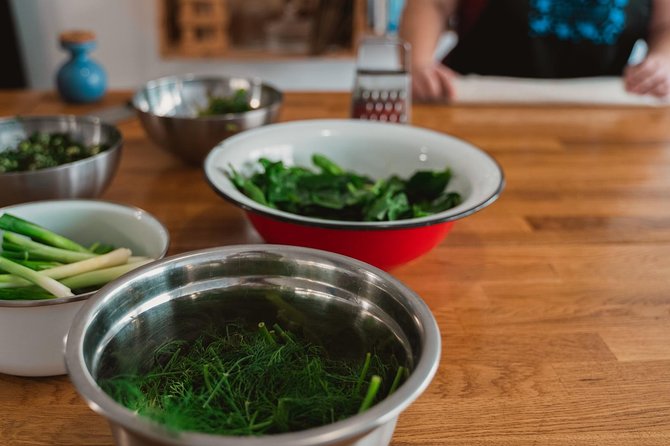
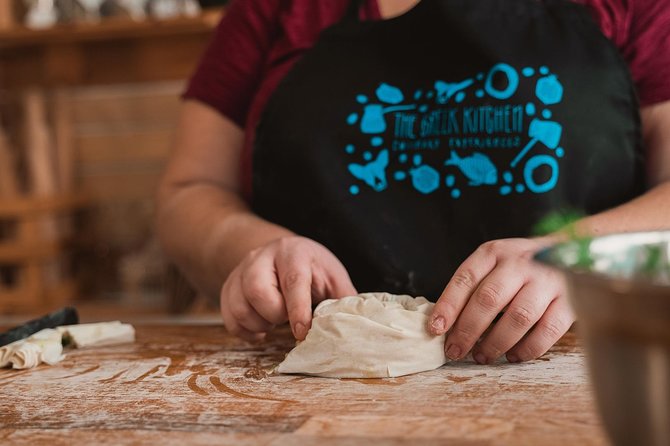
Back at The Greek Kitchen, the experience is designed so you actively cook. You’ll work at the station while a Greek home cook guides you through each dish. The group stays small—up to 16—so it’s easier for the instructors to check in and explain what matters, like texture targets for phyllo or how to roll vine leaves without rushing.
One extra detail I appreciate: you snack while you cook. Bread and olives show up during the class, and it keeps you from getting hungry while the meal comes together. That sounds simple, but it makes the whole afternoon feel like a shared process rather than a series of tasks.
Instructors can vary, and names from past classes include Vasia, Thanassius (also heard as Thanos/Tharnassus), Adoniya, and Antonia. Whoever’s leading, the tone is playful with clear instruction—exactly the mix that helps you stay confident.
Your Greek menu: what each dish teaches you
You’ll cook a full, classic set of dishes that cover a range of Greek flavors and techniques. The recipes you get afterward help you repeat them at home, which is the real value. Cooking classes that only leave you with memories are easy to forget. This one is built to give you something you can actually make again.
Tzatziki: thick yogurt, cucumber, and garlic
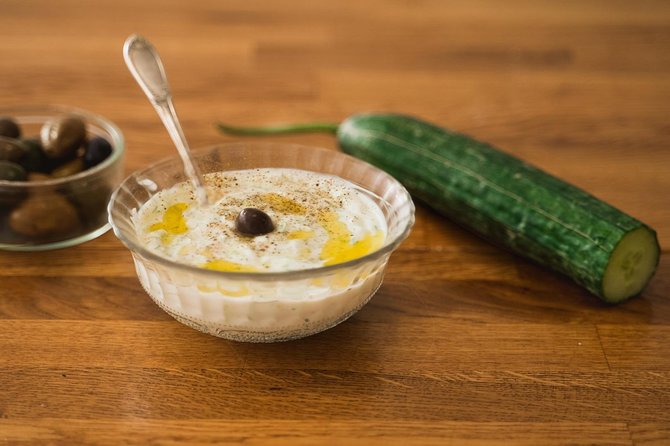
Tzatziki is the opening act for a reason. You’ll make it with thick Greek yogurt, fresh cucumber, and garlic—plenty of garlic, based on how the class describes the flavor. The lesson here is balance: yogurt makes it creamy, cucumber adds freshness, and garlic gives it that sharp Greek bite.
I like this dish because it’s forgiving. Even if you’re not a confident cook, the ingredients do most of the work. At home, you can also use the same base idea for variations.
Spanakopita: phyllo coils with spinach and feta
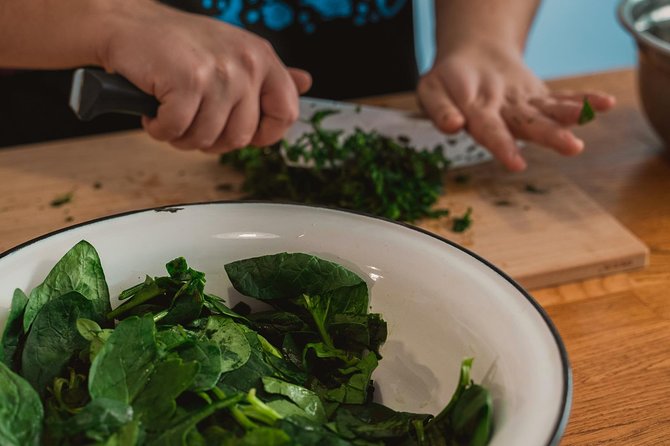
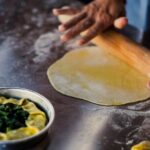
Next comes spanakopita, built from coils of phyllo filled with spinach, feta, and herbs. This is where you learn respect for phyllo: treat it gently, work efficiently, and don’t stress if it isn’t perfect the first time. The class format gives you hands-on time so you understand how to handle and assemble it.
This dish also teaches you how Greeks use herbs and feta together. The result tastes both savory and bright, and it’s a great “I can cook this” win.
Dolmades: vine leaves rolled around rice and beef
Dolmades are classic and slightly technical. You’ll roll vine leaves around fragrant rice and beef, and the process teaches patience. The key skill is rolling tight enough to hold shape but not so tight that filling gets squeezed out.
When you eat your own dolmades, you’ll understand why they’re such a staple at Greek table meals. It’s not just a dish—it’s a technique and a tradition.
Imam baidi: roasted eggplant with sauce and feta
Imam baidi (the class describes it as coming to Greece in the early 20th Century) gives you a different Greek cooking style: roasted eggplant topped with sauce and feta. The value here is flavor layering. Eggplant becomes soft and sweet when roasted, then the topping brings tang and saltiness.
This is one of the best dishes for learning how Greek home cooks treat vegetables—as something hearty and satisfying, not a side thought.
Portokalopita: orange-and-cinnamon syrup dessert
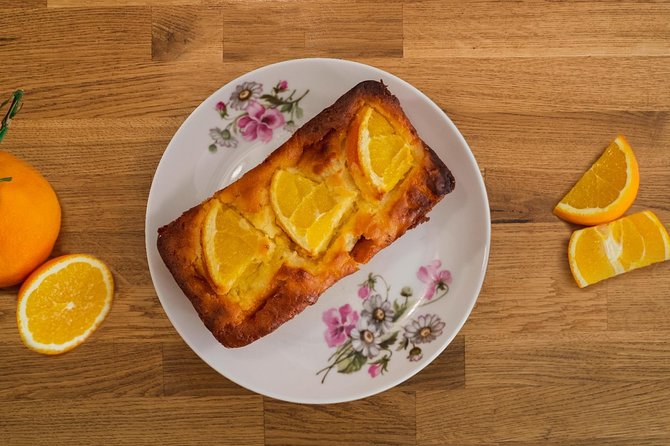
For dessert, you’ll make portokalopita, described as more like a cake than a pie. It’s built from shredded phyllo soaked in orange and cinnamon syrup. This is the part that makes the whole class feel complete, because you end on a sweet note that still tastes distinctly Greek.
At home, portokalopita is also your shortcut to impress guests without needing fancy equipment. The flavor comes from the syrup and aromatic spices.
Food rhythm: bread, olives, wine, and sitting down together
A lot of cooking classes end with a rushed plate. Here, the structure feels more like sharing a meal. You get bread and olives as you work through the recipes, plus seasonal market snacks along the way. Those snack breaks stop the energy from dropping and make it easier to focus on technique.
Then comes the main meal. You’ll eat what you cooked together as a group, and you’ll have a glass of red or white wine—250ml of locally produced wine included. For me, that turns the cooking into an actual dining experience, not a training session.
The class is also family-style in how food gets served at the table, which can be a plus if you enjoy a social vibe. If you’re sensitive to group seating dynamics, you might want to think about whether you prefer a more private, quiet meal environment.
Price and time: does $83.44 feel fair?
At $83.44 per person for roughly four hours, the value comes from what’s actually included: market walk time, a guided hands-on cooking class, bread and olives, seasonal market snacks, drinking water, a set menu you can’t easily recreate from scratch without guidance, and recipes for the dishes you made. The 250ml wine also helps bring the ticket closer to a “meal + experience” rather than “just instruction.”
You’re paying for three things that are hard to DIY in Athens:
1) guidance for techniques (phyllo, rolling vine leaves),
2) a structured menu that fits into one afternoon, and
3) recipes you can take home.
If you only want one or two dishes, it might feel like overkill. If you want a full meal plus repeatable recipes, it’s a solid deal.
Who this Athens class is best for
This is a great fit if you want hands-on Greek cooking without needing to be a confident chef. The recipes are described as approachable, and the group setup helps you participate even when you’re the only one in your table group who doesn’t cook much at home.
It also works well for solo travelers. People have shared that they were able to connect with others during cooking and eating, which makes the class feel like a social reset after sightseeing. The small group size helps. You should just be ready for the class to feel like a lively table—occasionally with families and children in the mix, depending on the day, and led with patience by the host.
If you want a flexible, slow-market wander or a deep focus on one dish only, this might feel a bit fast because everything is built to fit the set menu time.
Practical tips so the afternoon goes smoothly
Here’s how to set yourself up for success in about four hours:
- Bring comfortable shoes for the market walk and any stair effort getting to the kitchen. The meeting point is Athinas 36, and the venue is up two short flights of stairs.
- Protect yourself from sun. The market portion involves walking, and Athens sun can move faster than you expect.
- Plan to stay engaged. This is hands-on cooking, so you’ll get the most if you’re willing to work the station instead of hovering.
- Expect a set lineup. You’re making tzatziki, spanakopita, dolmades, imam baidi (roasted eggplant with sauce and feta), and portokalopita. The class is built around that flow.
- If you care about details like spice level or vegetarian adjustments, ask your instructor early. One class example showed vegetarian needs handled within the menu plan.
Should you book The Greek Kitchen cooking class in Athens?
I’d book it if you want a Greek meal you can recreate, not just a fun afternoon. The mix of Central Market context, full hands-on cooking of multiple classics, included wine, and take-home recipes makes this one of the more practical “do it once” experiences in Athens.
I’d skip it only if you hate stairs, dislike group settings, or know you’ll get impatient with a timed schedule. If that doesn’t describe you, this is a strong choice for getting real cooking skills in a short window.
One more reason to feel safe about booking: it offers free cancellation up to 24 hours in advance, so you can plan around your Athens schedule.
FAQ
How long is the Athens Classic Cooking Class with Market Visit and Wine?
The experience runs about 4 hours.
What does the tour cost?
The price is $83.44 per person.
What time does the market visit happen, and how long is it?
The class includes a 30-minute walk to Athens Central Market.
Is wine included?
Yes. You receive 250ml of locally produced red or white wine during the class meal.
What dishes will I cook?
The menu includes tzatziki, spanakopita, dolmades, imam baidi, and portokalopita.
Do I get recipes to take home?
Yes. You receive recipes of the dishes you made.
Is hotel pickup and drop-off included?
No. Hotel pickup and drop-off are not included.
Where do I meet the group?
You meet at Athinas 36, Athina 105 51, Greece. The activity ends back at the meeting point.
What’s the group size limit?
The maximum group size is 16 travelers.