REVIEW · HANOI
Hanoi Cooking Class: Market Tour, Free Liquor & Coffee Tasting
Book on Viator →Operated by Up Travel Vietnam · Bookable on Viator
Your dinner starts at the market. Then you roll up your sleeves and cook classic Vietnamese dishes with hands-on help. The market tour sets the stage, because you learn what shoppers look for and why ingredients matter before heat ever hits the pan.
I really like how the class is built around learning from scratch: knife work, traditional techniques, and a clear step-by-step flow for making four dishes across the meal. You’ll also leave with a digital recipe booklet, so your time in Hanoi can turn into repeat meals at home.
One thing to factor in: this experience requires good weather, since part of the day includes an outdoor market walk. If you’re traveling with tight plans, a little flexibility helps.
In This Review
- Key Things You’ll Like
- Old Quarter Start: how pickup and the first hour set the tone
- The Local Market Walk: what you learn before you cook
- In the Kitchen: how the class teaches knife skills and technique
- Your Four-Dish Meal: starters, mains, and dessert logic
- Coffee Tasting and Free Homemade Wine: a fun add-on with real pacing
- Hosts Who Make It Work: what the teaching style feels like
- Value at $32: what you’re really paying for
- Afternoon Option: fitting cooking around your schedule
- Who This Tour Fits Best (and who should think twice)
- Should You Book Hanoi Cooking Class with Market Tour, Free Liquor & Coffee Tasting?
- FAQ
- How long is the cooking class in Hanoi?
- How much does it cost?
- Does the tour include pickup and drop-off?
- Is there a market tour included?
- Can I choose a morning or afternoon class?
- What drinks are included?
- Is this a private group activity?
- Is free cancellation available?
Key Things You’ll Like
- Market-to-kitchen format: shop smart, then cook what you bought
- Hands-on roles: you’ll be doing the prep and cooking, not just watching
- Free coffee tasting plus unlimited homemade wine: drinks are part of the experience
- Four-dish meal: starter, main, and dessert style cooking in one sitting
- Practical take-home tools: a digital recipe booklet you can use anywhere
- Small-group feel possible: some days run with just a couple people, other days around 8 participants
Old Quarter Start: how pickup and the first hour set the tone
This is one of those Hanoi activities that starts by reducing friction. If you’re staying in the Old Quarter area, you’ll get hotel pickup and drop-off. That matters here because the schedule is only about 4 hours 30 minutes, and you don’t want to waste it zigzagging across town.
The meeting point is at 46 P. Sơn Tây, Điện Biên, Ba Đình, Hanoi, and the activity ends back there. You’ll get a mobile ticket, which is handy if you don’t want to print anything. Also, it’s designed as a private tour/activity, meaning only your group participates, not a mixed crowd.
When the session begins, you’ll get a welcome drink: either cold-brew coffee or homemade tea. It’s a small touch, but it makes the class feel like a real welcome instead of a quick check-in.
If you’re worried about timing before heading out for dinner later, there’s extra support. The experience includes free luggage storage for up to 2 days, and it can include free showers before class depending on availability. That’s useful in Hanoi, where you might be bouncing between sights in the heat and then want to freshen up.
You can also read our reviews of more tours and experiences in Hanoi.
The Local Market Walk: what you learn before you cook
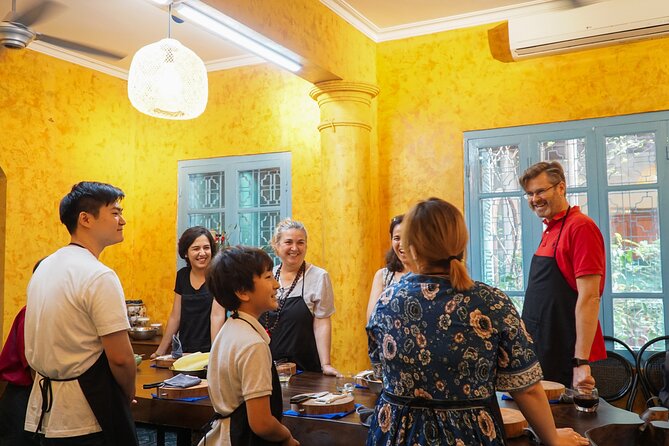
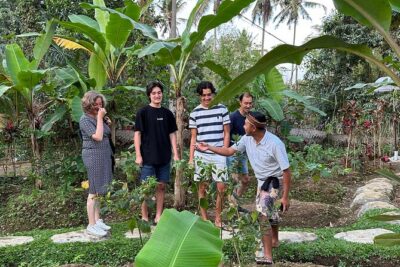
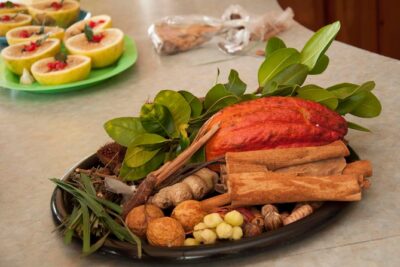
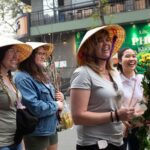
If you pick the morning option, the day typically starts with the local market. You’re not just walking past stalls and taking photos. The point is to understand how locals choose food—what looks fresh, what’s worth buying, and how ingredients behave once you cook them.
You’ll hear explanations from your local English-speaking hosts, and the market portion is where the stories start making sense. The class is focused on Vietnamese cuisine, and the market is where you see the “why” behind those flavors. It also helps you connect with the ingredients you’ll later handle at your cooking station.
A practical note: even with a host guiding you, market walking involves crowds, narrow aisles, and fast-moving vendors. Wear comfortable shoes. If you have a phone strap, use it. And if rain threatens, be ready for adjustments, since good weather is required for the experience to run.
In the Kitchen: how the class teaches knife skills and technique
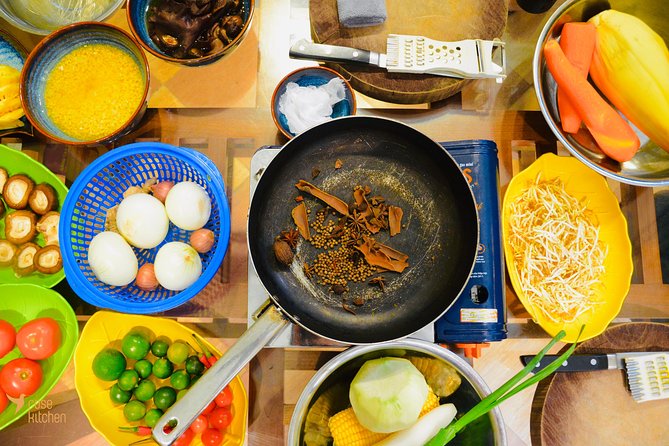
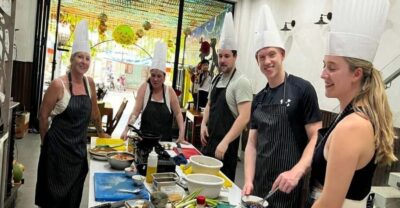
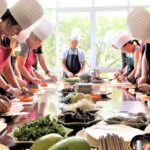
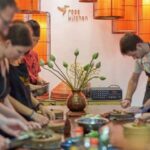
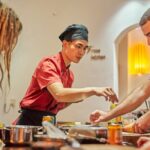
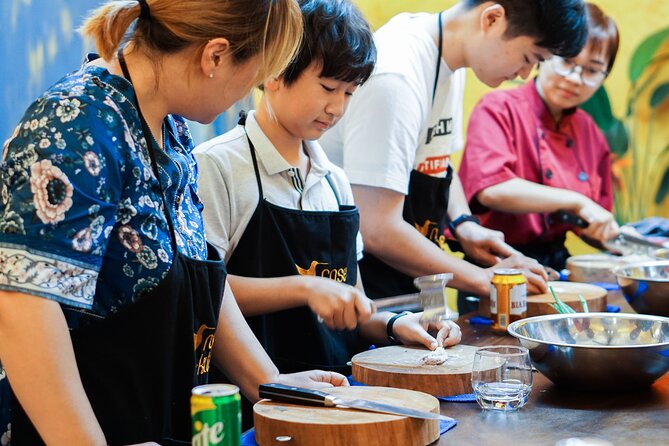
After the market, you move into cooking mode. The class covers four traditional Vietnamese dishes, and the structure is meant to teach you the process, not just the end result. You’ll work on starter, main, and dessert-style cooking, with a focus on essential knife skills and traditional cooking techniques.
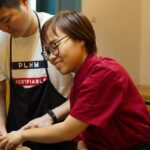
The biggest reason this works for most people is that it’s not set up as a show. You’ll be actively involved in the meal. In smaller groups, that experience becomes very personal, and you get more time for back-and-forth questions. In group sizes that are still small, you’ll usually rotate tasks so everyone has a turn with prep and cooking.
Food safety and hygiene are taken seriously. You’ll use fresh, top-grade ingredients, and the class mentions never-used oil for cooking. That’s reassuring when you’re eating what you cooked, especially if you’re sensitive to oil quality or you’re trying to avoid questionable “street pan” assumptions.
And yes, expect conversation. The hosts guide you through what you’re doing, while also talking about what’s normal in Vietnamese home cooking. It’s one of those rare activities where you learn both technique and culture without it turning into a lecture.
Your Four-Dish Meal: starters, mains, and dessert logic
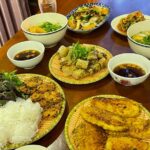
The meal is a full-course experience built around four iconic dishes. The description emphasizes that you’re learning from scratch, which is a big deal. If you only learn one recipe, you can’t build a sense of how Vietnamese cooking fits together. Here, you get a wider toolkit: flavors that start light, mains that carry depth, and dessert elements that close the loop.
Even if you don’t recognize every dish name ahead of time, the structure makes it easier. You’ll understand the role of each part of the meal, which helps you recreate them later. That’s especially useful because the class provides a digital recipe booklet. It’s not just a list of ingredients. You get instructions you can follow later, whether you cook for friends or just want a Hanoi memory that doesn’t fade.
One thing to plan for: cooking classes are hands-on by nature, so it’s smart to show up with an appetite and a calm mindset. You’ll likely be standing, chopping, tasting, and adjusting as you go. If you prefer a quiet, sit-and-watch format, you might find this style more energetic than you expected.
Coffee Tasting and Free Homemade Wine: a fun add-on with real pacing
Drinks are built into the flow, and they’re not random extras. You’ll have welcome drinks at the start, and you’ll also get a coffee tasting with iconic Hanoi-style options. The class specifically lists Salted Coffee, Egg Coffee, or Coconut Coffee, with coffee tasting connected to the dessert portion.
This is a great angle if you like tasting as learning. Coffee in Vietnam isn’t just caffeine—it’s part of how meals feel. Trying these styles as the dessert-style finish also makes it feel connected, not like a separate side quest.
Then there’s the part you should think about before you join: free and unlimited homemade local wines. For some people, that makes the class feel like a celebration. For others, it could be too much, especially if you’re not used to wine or you don’t drink.
If you do drink, consider going slow. You’re cooking, tasting food you made, and walking through a market earlier in the day. Stay hydrated and listen to your body. If you don’t drink alcohol, you can still enjoy the cooking and coffee portion; the wine is included, but it doesn’t replace the core lesson of learning the recipes.

Hosts Who Make It Work: what the teaching style feels like
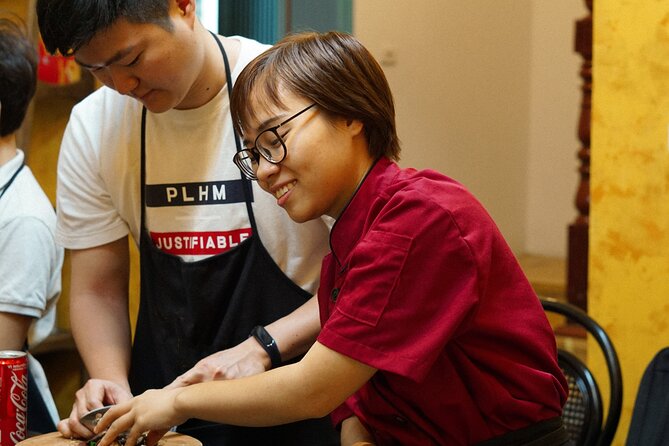
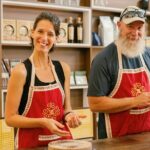
The quality of a cooking class often comes down to the person teaching. This one seems to shine because the hosts put effort into explaining clearly and keeping everyone involved.
I saw praise for instructors like Mango, described as fun, confident in the kitchen, and an enthusiastic teacher. I also saw Cherry recognized for guiding in a way that feels tailored, especially when the group is small. Another name that came up was Ruby, with comments about the venue experience and the way the market and cooking felt organized.
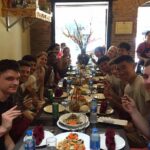
A useful takeaway for you: if your group is small, you’ll likely get more personal attention and more chances to ask questions. Even in a group that’s not tiny, the class is designed to make sure people get hands-on turns rather than stuck on the sidelines.
Value at $32: what you’re really paying for
At $32 per person, this class competes well because it bundles a lot of practical value into a single block of time. Yes, you’re paying for the cooking instruction. But you’re also paying for ingredients, a full meal, transport within the Old Quarter area, and the social parts that make it feel like an authentic Hanoi evening or dinner alternative.
Here’s where the value adds up:
- Market-style ingredient learning (especially on the morning option)
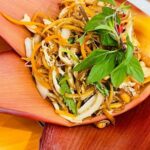
- A full-course meal built from four dishes
- Welcome drinks plus coffee tasting
- Unlimited homemade local wine
- A digital recipe booklet so you can replicate what you learned
- Transfers from the Old Quarter area
- Food safety details like never-used oil
- A small charity component: $1 donation per booking for charity meals supporting pediatric patients in Hanoi hospitals
That charity detail matters more than people think. You’re not just buying a fun activity; a small portion of each booking supports a real local need. It’s not huge money on an individual scale, but it’s direct and tied to the booking itself.
If you’re comparing costs to other cooking experiences in Hanoi, the key is whether you want a hands-on meal plus drinks plus a take-home recipe guide in one package. This one aims right at that.
Afternoon Option: fitting cooking around your schedule
You can choose a morning or afternoon class to match your plans. Morning is the one where the local market visit is explicitly part of the experience. The afternoon option is built for flexibility, so you can still get the cooking instruction and the full meal experience without forcing your entire day around a market.
If you’re thinking about which time to choose, consider your energy level. Morning market walks mean you’ll be on your feet with lots of visual stimulation. Afternoon can feel easier if you’ve already done other Hanoi sights and want a food-focused reset before dinner plans.
Either way, you’ll still get welcome drinks and you’ll still end up with the meal you cooked, plus the coffee tasting portion. And if you care about freshening up, the option for free showers can be useful for afternoon sessions too, depending on availability.
Who This Tour Fits Best (and who should think twice)
This class is a great match if you:
- Want a practical way to learn Vietnamese cooking at home later
- Like a hands-on style rather than watching
- Enjoy markets and want to see how locals choose ingredients
- Want a social meal that includes free tastings and conversation
- Prefer small-group energy, especially if you like asking questions while you cook
You might think twice if:
- You prefer a low-walking day or you don’t handle crowds well
- Weather is a tight constraint for your trip, since good weather is required
- You don’t drink at all, since wine is included and unlimited
For most people, the solution is simple: go with curiosity, plan for comfortable shoes, and treat the wine as optional.
Should You Book Hanoi Cooking Class with Market Tour, Free Liquor & Coffee Tasting?
I’d recommend booking if you want more than a single recipe. This experience is set up as a full chain: ingredients first, then hands-on cooking, then tasting the results with coffee and homemade wine. The inclusion of a digital recipe booklet is a real deciding factor, because it turns your class time into something you can repeat.
Book it if you’ll enjoy markets, hands-on cooking, and a small-group feel. Consider it less if you’re highly weather-dependent or you want zero alcohol around your meal.
If you’re choosing between morning and afternoon, pick morning when you want the ingredient-learning market walk, and pick afternoon when you want cooking focus with more flexibility in your day. Either way, this is a solid value way to understand Hanoi food beyond restaurant menus.
FAQ
How long is the cooking class in Hanoi?
The class runs about 4 hours 30 minutes.
How much does it cost?
It’s $32.00 per person.
Does the tour include pickup and drop-off?
Yes. You get hotel pickup and drop-off within the Old Quarter area.
Is there a market tour included?
Yes. The experience includes a local market visit (market tour is noted for the morning class).
Can I choose a morning or afternoon class?
Yes. You can choose between a morning or afternoon class.
What drinks are included?
You’ll get welcome drinks (cold-brew coffee or homemade tea), a coffee tasting (Salted, Egg, or Coconut coffee), and free & unlimited homemade local wines.
Is this a private group activity?
Yes. It’s listed as private, so only your group participates.
Is free cancellation available?
Yes. You can cancel for a full refund up to 24 hours in advance. Within 24 hours, the amount paid is not refunded. The experience also requires good weather.