REVIEW · CHIANG MAI
Evening Thai cooking class
Book on Viator →Operated by Aromdii Cooking School · Bookable on Viator
A Thai cooking class that starts at the market. The best part is the market hunt with a local guide, where you pick produce and spices, then turn that shopping into real dishes you can actually recreate later. I also like that the class pushes beyond basic recipes and gets hands-on with curry paste made from scratch.
One thing to plan for: the kitchen and eating area have no aircon, just fans. In warm months, you’ll feel the heat while you cook and then sit down to eat, so wear light clothes and expect a sweaty, normal-feeling cooking class.
In This Review
- Key highlights at a glance
- Why this evening class works so well in Chiang Mai
- Starting at Kad Kom Market: picking ingredients that taste right
- Choosing your dishes before you cook (so you don’t get stuck with someone else’s idea)
- Aromdii Cookery School: what the kitchen setup really means
- The cooking flow: stir-fry, then soup/appetizers, then curry paste and dessert
- 1) The stir-fry start: get comfortable fast
- 2) Soup and appetizers: balancing sour, salty, and fresh
- 3) Dessert and curry paste: the skill-builder you’ll remember
- What you eat: an entire dinner made from your own cooking
- Price and value: is $27.58 worth it?
- Weather, timing, and the reality of an evening kitchen
- Who should book this cooking class in Chiang Mai
- Practical tips before you go
- Should you book Aromdii’s Evening Thai cooking class?
- FAQ
- Where does the class start?
- What time does it begin and how long does it last?
- Is hotel pickup included?
- How many people are in the group?
- What dishes can I choose to cook?
- What’s included in the price?
- Is alcohol included?
Key highlights at a glance
- Kad Kom Market ingredient shopping in a short, practical stop
- Choose your menu ahead of time, so you cook what you want
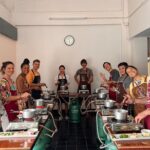
- Small group size (max 8) for more attention as you cook
- Curry paste from scratch and several classic curry choices
- Dinner-style meal from your own dishes: stir-fry, soup/appetizers, curry, and dessert
- Recipe download included, so you leave with a clear home plan
Why this evening class works so well in Chiang Mai
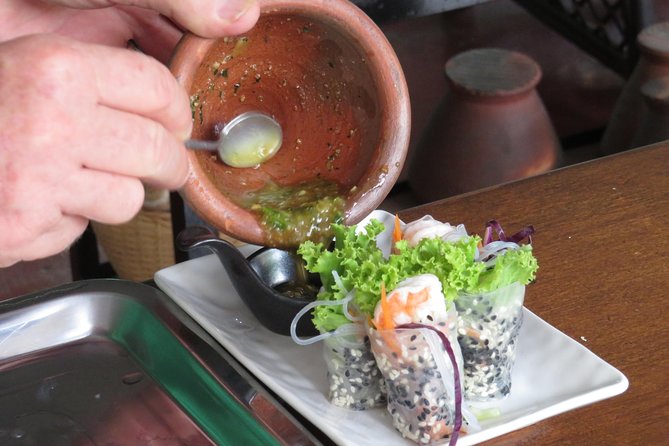
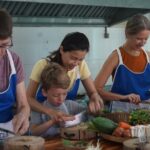
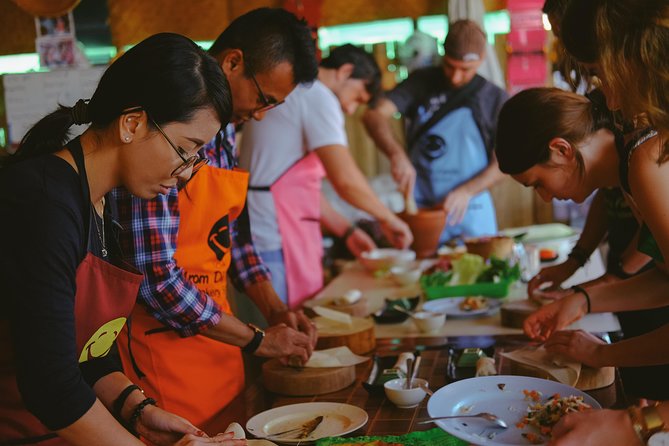
Chiang Mai evenings are perfect for food-focused activities, and this one hits the sweet spot between guided and hands-on. You start with ingredients, not a lecture. Then you cook in a steady flow that makes the whole thing feel doable, even if Thai cooking has never been your thing.
The class is built around step-by-step instruction, which matters more than people think. Thai food often looks like it requires special techniques, but the structure here helps you learn the order, timing, and flavor logic. You’re also not cooking for hours before you get to eat. The meal comes from what you make during the session.
Finally, the group stays small, capped at 8. That usually means you’re not stuck waiting while someone else gets help. It’s especially useful when you’re working with fresh herbs, balancing sour-salty-sweet in soups, or trying to get the right curry paste texture.
You can also read our reviews of more tours and experiences in Chiang Mai.
Starting at Kad Kom Market: picking ingredients that taste right
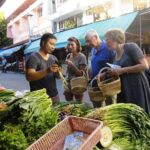
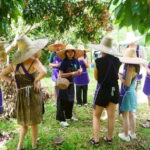
The experience begins at Kad Kom Market, and the market stop is short—about 15 to 20 minutes. That’s intentional. You’ll be walking with purpose, not wandering for an hour. Everyone chooses the menu before class starts, so you shop with that selection in mind.
In the market section, you’ll learn what matters about Thai produce. You get shown Thai veggies, plus the spices and herbs that show up in the dishes. You can take photos, and you’ll have the chance to buy spice to bring home if you want.
Why this is valuable: Thai cooking is strongly tied to ingredient quality. If you’ve ever tried to make Thai food at home and wondered why it didn’t taste the same, the answer is often the spice and herb mix, not your stirring speed. The market stop gives you a direct path to better ingredients.
One practical note: you may not have much time to compare options, so decide what you like during the menu choosing phase. If you’re picky, look at the dish list early so you don’t feel rushed when you’re standing in front of ingredients.
Choosing your dishes before you cook (so you don’t get stuck with someone else’s idea)
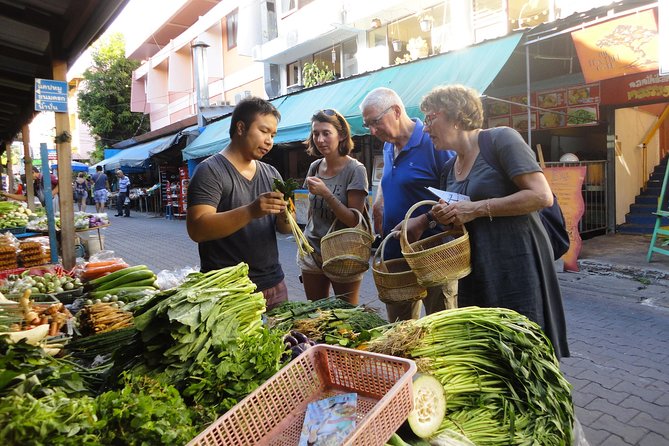
This class lets you pick from a clear set of options across the whole meal. That’s a big deal because Thai cooking classes often feel like a one-size-fits-all menu. Here, you’re selecting what you want to learn and eat.
Your choices include stir-fry items like Pad Thai, Fried Drunken noodles, Pad See Ew, or Fried cashew nuts. For appetizers you can go for papaya salad, fresh spring rolls, fried spring rolls, or mixed fruits salad.
Soup options include Hot & Sour Prawns thick soup, Coconut chicken, Tom Yum Chicken, or Hot & Sour prawns clear soup. Then comes curry, with choices like Khao Soi (Chiangmai noodles), Green curry, Massaman curry, or Red curry. The curry part is especially important because you make the curry paste from scratch.
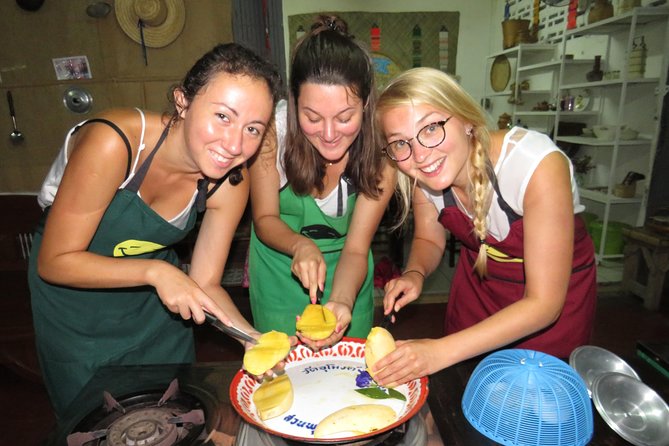
Dessert finishes the meal with Mango sticky rice or Pumpkin in coconut milk.
How this helps you: when you pick from a menu, you’re matching your cooking to your taste. You’re also more likely to remember what you did, since you’re learning one dish you actually care about. It’s a better way to study flavors than cooking something you didn’t plan to order.
Aromdii Cookery School: what the kitchen setup really means
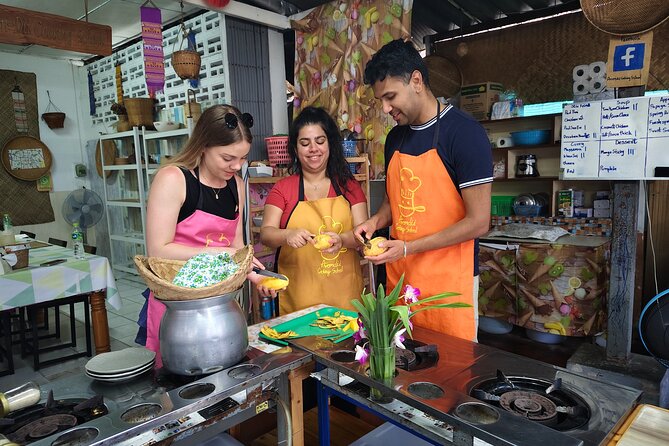
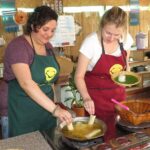
You’ll spend about 4 hours 30 minutes total at the school, with the cooking portion taking up most of it. The sequence matters. The class is started with a stir-fried dish, then moves into soup and appetizers, and later you’ll do dessert plus curry.
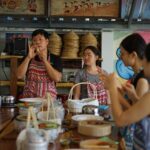
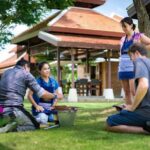
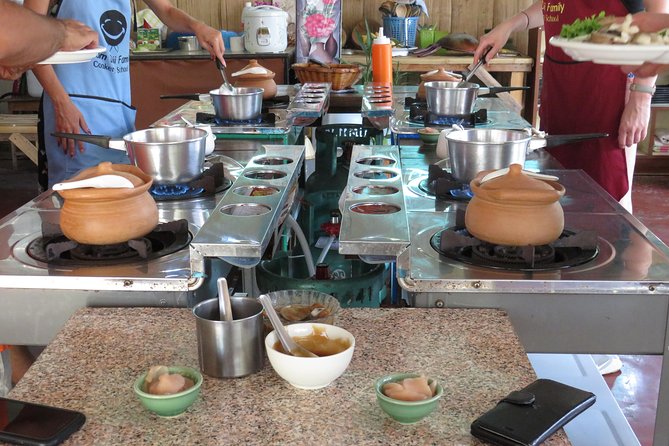
The kitchen setup is simple. There’s no air conditioning, and the eating room uses fans only. This isn’t a dealbreaker, but it does shape your experience. You’ll want to dress for heat and humidity, not for a showroom.
I also like that the class doesn’t hide behind complicated gear. When a cooking class is built for real instruction, it’s often easier to follow and easier to copy at home. Stir-fry, soups, and curry paste all teach core Thai cooking skills you can reproduce in your own kitchen—if you understand the steps.
The cooking flow: stir-fry, then soup/appetizers, then curry paste and dessert
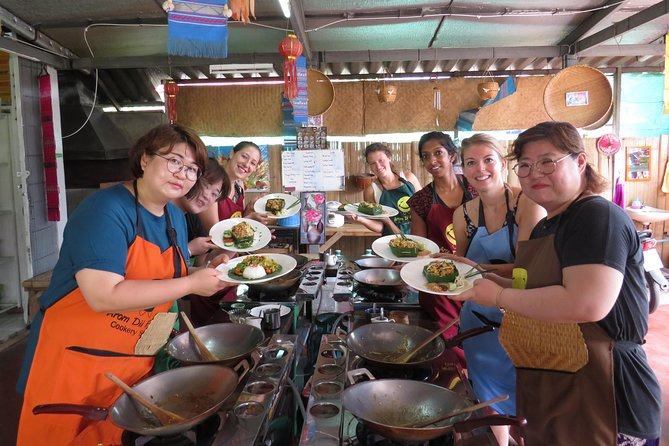
Here’s the practical rhythm you can expect, and why it’s a good way to learn.


1) The stir-fry start: get comfortable fast
The class begins with a stir-fried dish. This usually works as a confidence builder because stir-fry teaches speed, heat control, and how quickly flavors come together. It also sets up your timing for later steps.
If you choose items like Pad Thai or Pad See Ew, you’ll see how sauces, aromatics, and noodles (or cashews) come together under direct heat. Even if you’ve never cooked Thai before, this stage helps you get the basics of Thai flavor layering.
2) Soup and appetizers: balancing sour, salty, and fresh
Next you’ll move into soup and appetizers. This section is where Thai food feels like Thai food, because soups carry strong sour and savory profiles.
With options such as Tom Yum Chicken or Hot & Sour Prawns thick or clear soup, you’ll see how Thai cooking uses balance rather than just heat. Coconut chicken and Tom Yum styles also show how creamy vs. sharp flavor directions work in the same general cooking world.
Appetizers like papaya salad and spring rolls add texture lessons too. You’ll learn that crunch and freshness aren’t optional in Thai meals. They’re part of the flavor engine.
3) Dessert and curry paste: the skill-builder you’ll remember
The class wraps into dessert and curry, with curry paste made from scratch. You’ll tackle curry paste before making curry dishes such as Green, Massaman, or Red curry, or you can choose Khao Soi.
Making curry paste from scratch is a big step because it forces you to understand flavor components. Instead of relying on a jar, you learn what drives the curry’s taste—aromatics, spices, and how they combine into a thick, fragrant base.
Dessert options keep the session satisfying rather than heavy. Mango sticky rice is sweet and creamy, while Pumpkin in coconut milk gives you a warm, soft finish that feels very Thai and very comfort-food.
What you eat: an entire dinner made from your own cooking
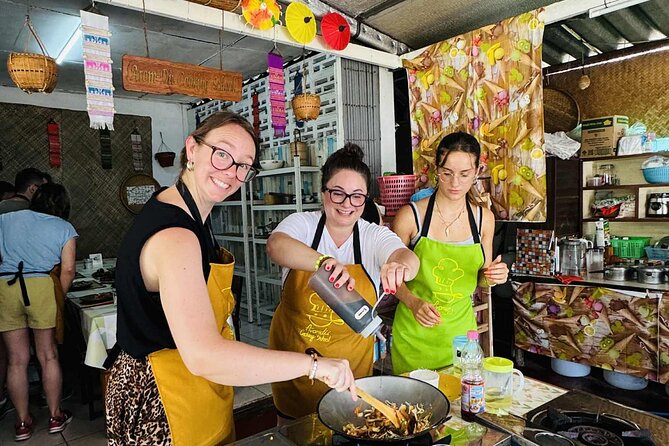
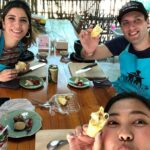
This experience includes dinner, and the dinner is made from the dishes you cook across the class. You’ll be eating what you just made—stir-fry, soup and appetizers, curry, and dessert.
That matters for value. Many cooking classes give you small samples. This is built as a real meal, so the time is easier to justify. You’re not just learning steps; you’re also getting a full Thai dinner out of it.
Also, the portion and meal structure make it easier to taste the differences between dishes you might choose. If you order something like pad Thai versus a curry, you’ll feel the shift in flavor style: street-style stir-fry versus simmered depth, plus sweet dessert at the end.
Price and value: is $27.58 worth it?
At $27.58 per person, this is a competitively priced cooking class for Chiang Mai—especially because it includes several key things that normally cost extra elsewhere.
You’re getting:
- A full dinner from multiple dishes (not just one)
- A market ingredient stop with instruction
- Step-by-step guidance throughout
- A recipe download from the school’s website
- Bottle water
- Welcome snack
You also have transportation support if you’re within about 3 km from the school area, and hotel transfers are offered from select areas. That reduces the hassle of finding the right place and makes an evening class simpler to pull off.
What’s not included is alcohol. So if you want beer, you’ll need to plan on adding that yourself.
My take: the price is strong if you want a guided evening meal plus actual cooking skills. If you’re simply looking for a restaurant-style dinner with no cooking, you’d probably do better with a food tour or a meal somewhere else. But if you want hands-on learning and you like Thai flavors, this is priced like a smart deal.
Weather, timing, and the reality of an evening kitchen
This class starts at 3:30 pm and runs about 4 hours 30 minutes. That timing works well if you want to keep your day flexible and still get a meaningful activity without feeling like your whole schedule collapses.
The experience is said to require good weather. If weather is poor, you’ll be offered a different date or a full refund. Also, since the kitchen has no air conditioning, warm conditions can make the cooking portion physically warmer than you might expect.
I’d plan for that by:
- Wearing lightweight clothes you don’t mind getting a little messy
- Bringing a spare layer or at least expecting sweat
- Expecting fans to help, but not to make it cool
Who should book this cooking class in Chiang Mai
This is a great fit for:
- Food lovers who want a guided path to Thai ingredients
- People who want to learn dishes across a full meal, not just one item
- Couples or small groups who like personal attention (max 8)
- Anyone who wants a recipe download to use later at home
It may be less ideal for:
- Anyone who hates heat and dislikes kitchens without air conditioning
- People who expect alcohol to be part of the package
- Anyone who wants a long, slow market experience instead of a quick ingredient selection
Practical tips before you go
- Check your dish choices early. You’ll shop based on menus chosen before the cooking starts, so pick what you truly want.
- Be ready for curry paste. If you’re curious how flavors are built, this is the most educational part.
- Bring a light attitude about timing. A short market stop plus a full cooking meal is designed to be efficient.
Should you book Aromdii’s Evening Thai cooking class?
If you want real Thai home-cooking skills with a structured flow—from market ingredients to stir-fry, soups, curry paste, and dessert—this class is a solid pick. The price is reasonable for what you receive: a full dinner, transport support from nearby areas, recipe download, and hands-on instruction in a small group.
The only clear caution is the lack of air conditioning. If you’re heat-sensitive, go in prepared. If that doesn’t bother you, you’ll come away with both a great meal and a useful cooking blueprint you can use again.
FAQ
Where does the class start?
The class starts at Kad Kom Market (บ้านเลขที่19 3มบ เวียงทอง 1 Tambon Chang Khlan, อ.เมือง Chang Wat Chiang Mai 50100, Thailand).
What time does it begin and how long does it last?
It starts at 3:30 pm and runs for about 4 hours 30 minutes.
Is hotel pickup included?
Transportation is included if you are not far from the school within 3 km, and hotel transfers are offered from select areas.
How many people are in the group?
The experience has a maximum of 8 travelers.
What dishes can I choose to cook?
You can choose from stir-fry options (like Pad Thai, Pad See Ew, Fried Drunken noodles, Fried cashew nut), appetizers (like papaya salad and spring rolls), soups (including Tom Yum Chicken and hot & sour options), curries (Green, Red, Massaman, or Khao Soi), and desserts (mango sticky rice or pumpkin in coconut milk).
What’s included in the price?
The price includes a welcome snack, bottle water, dinner, a handmade recipe download from the website, and transportation (if within about 3 km).
Is alcohol included?
No. Beer or any alcohol is not included.