REVIEW · UBUD
Bali Cooking Class with Culture Experience
Book on Viator →Operated by Lobong Culinary Experience · Bookable on Viator
A Balinese breakfast can taste like a lesson. This 6-hour Ubud class pairs a morning market ingredient hunt with hands-on cooking at a family home, guided by Lobong Culinary Experience. I love the way the day starts with real herbs and spices in the market, then turns into a full menu you can actually repeat at home. I also like the built-in payoff: you snack, cook, then eat the lunch you made with a chef-led flow.
One consideration: the start time is 7:30 am, so if mornings aren’t your thing, plan your energy and timing accordingly.
Along the way you’ll meet Dewa, who greets you with a hot drink and his famous Pisang Goreng, and you’ll learn about Balinese life through the family setting—home shrines and daily culture talk included.
In This Review
- Key moments that make this class worth it
- From Ubud Market to the Lobong cooking pavilion
- Dewa, coffee or tea, and the real taste of Pisang Goreng
- What you’ll actually cook: full menu, chef-led structure
- The market ingredient hunt that makes the food click
- The family home cultural layer (without turning it into theater)
- Price and value: why $62 makes sense here
- Timing, transfers, and what to plan for
- Who should book this cooking class in Ubud
- Should you book Lobong Culinary Experience in Ubud?
- FAQ
- What time does the Bali cooking class start?
- How long is the cooking class?
- Where does the experience take place?
- Is pickup offered?
- How big is the group?
- What happens at the beginning of the day?
- Will I eat during the class?
- Do I get recipes or instructions to cook at home?
- What ticket format do I receive?
- Is free cancellation available?
Key moments that make this class worth it
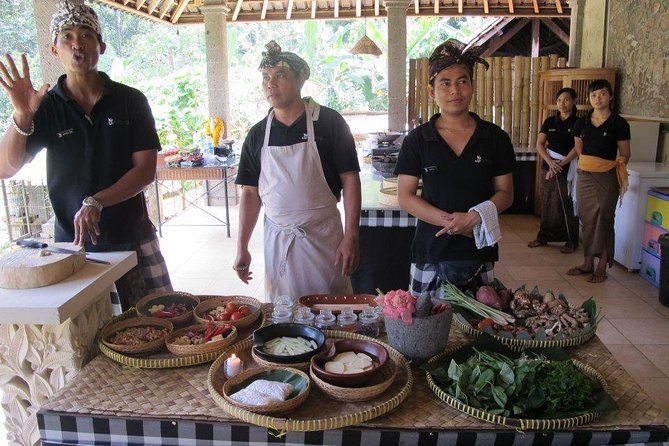
- Start at a morning market: shop for herbs, spices, fruits, and vegetables with your Family Host
- Dewa’s coffee or tea plus Pisang Goreng: a warm, crunchy welcome before the cooking work begins
- Small group size (max 12): enough attention to keep things moving without feeling rushed
- Chef-guided full menu: appetizers, multiple entrees, sides, and dessert
- You leave with a detailed booklet: menu, recipes, directions, photos, tips, and space for notes
From Ubud Market to the Lobong cooking pavilion
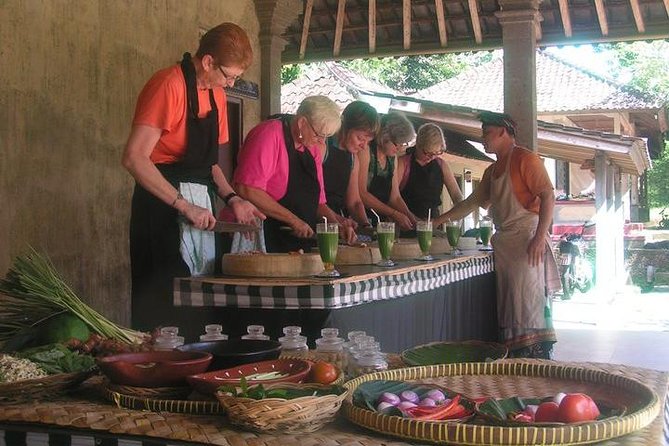
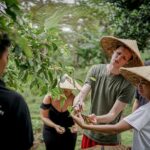
You meet at 7:30 am in Ubud and the day gets moving right away. The tour starts with a trip to a local morning market, where your Family Host buys and explains the ingredients used in the class. This matters because Balinese cooking is built on aroma and balance, not just “hot food.” When you see the produce and herbs in person first, the later steps make more sense.
You’ll also get that early-day advantage: markets are naturally better in the morning. The pace is practical here. You’re not sightseeing for the sake of sightseeing—you’re gathering what you’ll use later, so your questions feel useful.
Next comes the cooking pavilion at the family home compound. Expect a shift from colorful, noisy market energy to a more kitchen-centered rhythm. The staff also double-checks that the cooking space is ready, so you’re not standing around waiting for equipment to appear.
If you’re choosing this as a food-only activity, it still works. But what really makes it special is the sequence: shop → learn the ingredients → cook → eat.
Pickup is offered from central Ubud hotels, which is a big help if you don’t want to coordinate transport at dawn. And because it’s near public transportation, you’re not stuck if you prefer to go on your own.
You can also read our reviews of more tours and experiences in Ubud.
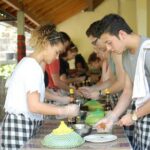
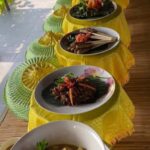
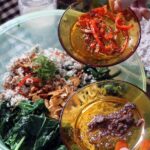
Dewa, coffee or tea, and the real taste of Pisang Goreng
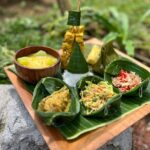
Before you jump into chopping and mixing, Dewa greets you with a pipping hot cup of coffee or tea or mineral water. Then comes Pisang Goreng—his famous banana fritters, freshly made and crispy.
This first bite is more than a snack. It’s your palate warm-up, and it signals how the day will go: practical, friendly, and food-first. You’re also given a moment to settle in while the group gets oriented.
While you sip and eat, you’ll learn about Balinese lifestyle through the family setting. The information isn’t presented as a distant lecture. Instead, it connects to what you’re seeing, like home shrines and family routines. One review called out a ritual of gratitude after the meal—so you’re likely to get a sense that food here isn’t just taste, it’s part of how people show appreciation.
If you prefer cultural context that stays attached to daily life, this is a good fit. If you want culture-only without cooking, you may find it too food-focused. But for most people aiming for hands-on understanding, it lands well.
What you’ll actually cook: full menu, chef-led structure
This class isn’t a single dish or a quick stir-fry. You’ll prepare a complete menu that includes:
- An appetizer
- Multiple traditional entrees
- Accompanying side dishes
- Dessert
That’s the main value driver for me. A shorter class can teach technique, but a full menu forces you to learn how Balinese flavor works across steps—how ingredients show up in different roles and how the kitchen timing stays coordinated.
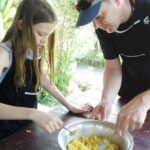
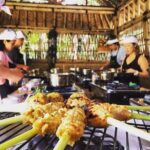
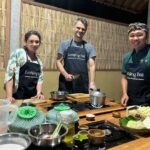
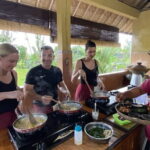
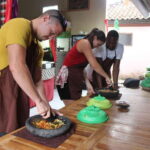
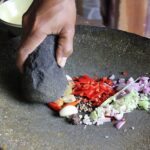
The cooking session happens in a cooking pavilion setting at the family compound. The flow is chef-guided, with ingredients and steps handled in a way that helps you succeed even if you’ve never cooked Balinese food before.
You’ll also get an illustrated instructional gift booklet before you leave. It’s designed for repeat cooking at home, not just for a souvenir shelf. The booklet includes the menu and recipes, plus directions, photos, tips, and space for your notes. That last part is underrated—when you cook from memory later, you’ll want a place to write what worked for you, what to adjust, and what you’d do again.
After lunch, you finish with dessert you make yourself. It’s the kind of endcap that makes the whole day feel complete, not like you only did the hard work of cooking and then moved on.
The market ingredient hunt that makes the food click
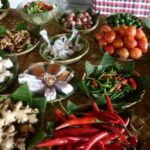
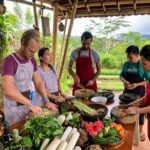
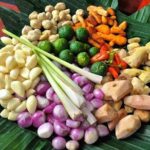
The market segment is one of the biggest reasons this experience scores so high. You’re not just looking at fruit and moving on. Your Family Host purchases and explains fresh herbs, spices, fruits, and vegetables used in the class.
Here’s what I think makes this portion genuinely useful: it turns ingredients into vocabulary. Later, when you’re cooking at home, you’ll recognize what you’re supposed to be aiming for—aroma, texture, and how certain ingredients behave in Balinese cooking.
The market also adds variety. You’ll likely taste some items along the way, and you’ll be exposed to fruits and flavor notes that aren’t always easy to find in the US. That’s especially true if you’re used to only a limited set of produce.
One practical note: since the day includes a morning market visit, you’ll want to be ready for some walking and standing. Don’t over-plan your schedule after. You’ll be fed, but it’s still a 6-hour morning outing with active time in between.
The family home cultural layer (without turning it into theater)
This tour is set at a Balinese home with a family compound vibe. You’re greeted at home, you learn about family life, and you hear about home shrines and culture while the cooking setup is checked.
In many cooking tours, the cultural piece can feel pasted on. Here, the cultural layer is tied to the setting: you’re welcomed into a real home environment. That can make the day feel more personal and less like a scripted show.
The staff also help keep it organized. Your meal is prepared and scheduled, and you’re guided toward finishing with dessert. Some experiences stall into chaos when everyone has to do too much at once. This doesn’t seem to be that kind of class—everything is structured, and you’re given enough support to learn without feeling overwhelmed.
One review even referenced a gratitude ritual after a traditional meal. Even if you don’t follow every detail, it adds meaning to the whole day. You’re eating something you made, in a context where food has a role beyond calories.

Price and value: why $62 makes sense here
At $62, this isn’t the cheapest food activity in Bali, but it’s also not overpriced for what you get. The value comes from the combination:
- Round-trip transfers from central Ubud hotels (when pickup is offered)
- A market ingredient tour led by a Family Host
- Hot drink plus mineral water option, and Pisang Goreng on arrival
- A full hands-on cooking menu with multiple dishes
- Lunch you prepared
- A detailed illustrated instructional booklet with recipes, photos, and tips
- A small group limit of 12 travelers
If you compare it to booking a market tour plus a separate cooking workshop plus buying lunch somewhere, the math starts to look better. The class is structured so you don’t waste time between experiences. You go directly from ingredients to cooking to eating, then you leave with instructions to keep cooking at home.
Also, a small group matters. When you’re cooking, you need enough attention to keep your steps on track. A max of 12 travelers suggests you’re more likely to get real guidance rather than just watching a chef work.
Timing, transfers, and what to plan for
The schedule starts at 7:30 am and runs about 6 hours. That timing is ideal if you want to get one big, rewarding activity done early and still have the rest of the day open in Ubud.
Transfers can reduce stress. If your hotel is in central Ubud, pickup is offered, which means you’re not trying to coordinate a vehicle while everyone else is also starting their morning plans.
You’ll get a mobile ticket, and you can expect confirmation within 48 hours of booking, subject to availability.
Because it’s near public transportation, you’re not forced to rely entirely on the pickup option. But if you know you’ll be short on time or you simply don’t want to think about logistics that early, pickup is worth using.
Who should book this cooking class in Ubud
This experience is a great match if you want:
- Hands-on cooking with a professional chef-led menu
- A market visit that’s focused on ingredients, not just photos
- A cultural visit that happens in a family home setting
- Something you can repeat at home using the illustrated booklet
- A small group experience (max 12) with practical guidance
It’s also a solid choice for couples and friends who want shared activities with a satisfying meal at the end. And if you’re traveling solo, the group structure can feel welcoming because you’re working together in the kitchen environment.
If you’re the kind of traveler who dislikes early starts or you only want a quick tasting class, you might find the 7:30 am start and 6-hour length a bit much. But if you can handle mornings, this is exactly the kind of day that gives you skills, not just photos.
Should you book Lobong Culinary Experience in Ubud?
I’d book it if you care about learning how Balinese flavors come together, not just eating a nice meal. The combination of market shopping with your Family Host, Dewa’s welcome with Pisang Goreng, and a full menu you cook and eat is a strong way to spend a morning.
One thing to weigh: it’s best when you’re willing to participate fully—market, kitchen work, and finishing with dessert. If that sounds like your kind of day, you’ll get value from the $62 price because you’re leaving with both food and a detailed recipe resource.
If you’re trying to choose between a quick class and a full menu experience, go for the one that gives you instructions to repeat it at home. This one is built for that.
FAQ
What time does the Bali cooking class start?
The experience starts at 7:30 am.
How long is the cooking class?
It runs for about 6 hours.
Where does the experience take place?
The class is in Ubud, Indonesia.
Is pickup offered?
Yes. Round-trip transfers from central Ubud hotels are offered.
How big is the group?
The experience has a maximum of 12 travelers.
What happens at the beginning of the day?
You start at a local morning market where your Family Host purchases and explains fresh herbs, spices, fruits, and vegetables.
Will I eat during the class?
Yes. You’ll enjoy a breakfast snack including a hot drink and Pisang Goreng, and you’ll have a delicious lunch you prepared, plus dessert at the end.
Do I get recipes or instructions to cook at home?
Yes. You’ll receive an illustrated instructional gift booklet with the menu, recipes, directions, photos, tips, and space for notes.
What ticket format do I receive?
You get a mobile ticket.
Is free cancellation available?
Yes, free cancellation is offered. You can cancel up to 24 hours in advance for a full refund, with local-time cutoffs.