REVIEW · SEOUL
Royal Seoul Cooking Class in a 100-Year-Old Hanok
Book on Viator →Operated by Royal Seoul Cooking Class · Bookable on Viator
This is Seoul on a different clock. In a preserved 100-year-old hanok, you learn royal cuisine with real hands-on direction, not just a demo.
I especially like the way the class stays small, so you actually get coaching while you work on dishes like LA Galbi and fresh kimchi.
One thing to consider: this experience is paired with a set route through major sights, so plan for walking time around the palaces and markets before you settle in to cook.
In This Review
- Key highlights you’ll feel from minute one
- Entering a 100-Year-Old Hanok in Jongno
- Royal Dishes You Actually Make (Not Just Watch)
- Bangjja Plates, Makgeolli, and the Proper Way to Finish
- The Max 6 Group Size: Why It Changes Everything
- The Day Route: Palaces, Markets, and Hanok Street Time
- What the Instructor Does With Your Hands (and Your Questions)
- Price and Value: Is $98.98 Fair for This Setup?
- Who Should Book Royal Seoul Cooking Class
- Should You Book This Class?
- FAQ
- How long is the cooking class?
- What is the group size limit?
- Where do I meet for the experience?
- What dishes will I cook?
- Do I eat what I make?
- Is makgeolli included?
- Is the ticket mobile?
- Is free cancellation available?
Key highlights you’ll feel from minute one
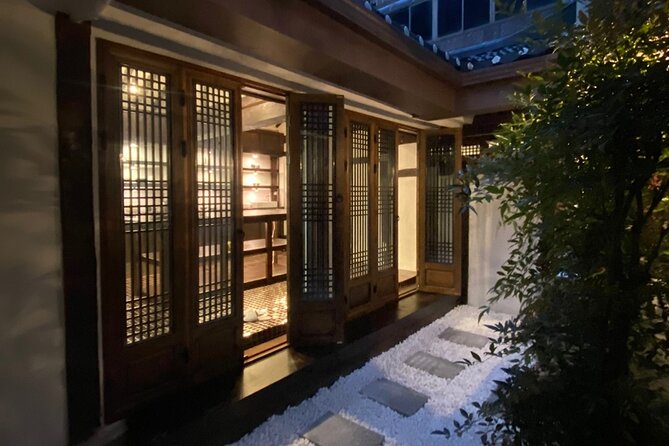
- A restored hanok setting: you eat and cook inside a home that’s been preserved for decades of Korean living
- Max 6 people: small group attention, ideal for first-timers
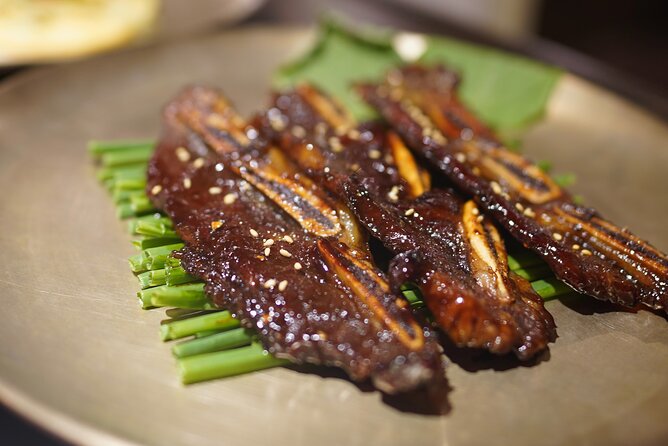
- Royal-style menu: LA galbi, kimchi, and pajeon plus Tapyeongchae, with cultural context tied to each dish
- Handmade bangjja bronzeware: you dine on traditional tableware made for a Korean-style meal
- Makgeolli and dessert included: a full finish, not just a plate of food
- English-friendly hosting: clear instruction and lots of conversation in the room
Entering a 100-Year-Old Hanok in Jongno
The meeting point is in Jongno District at 25 Samil-daero 32ga-gil, and the activity ends back there. That matters because Jongno is convenient for a first visit to Seoul, and you’re not fighting across town after class.
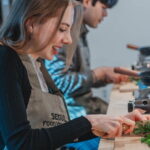
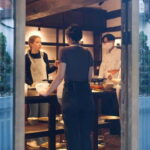
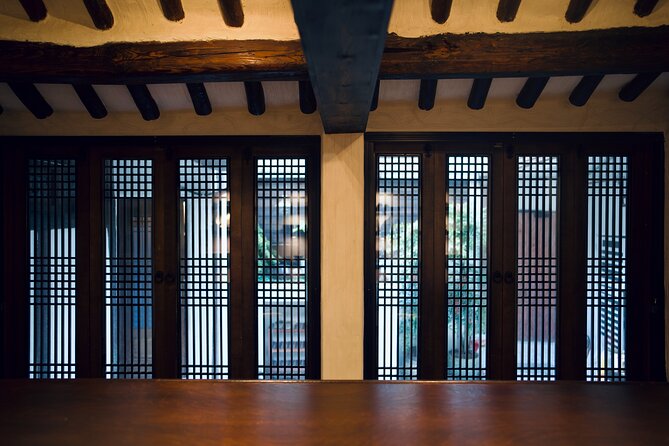
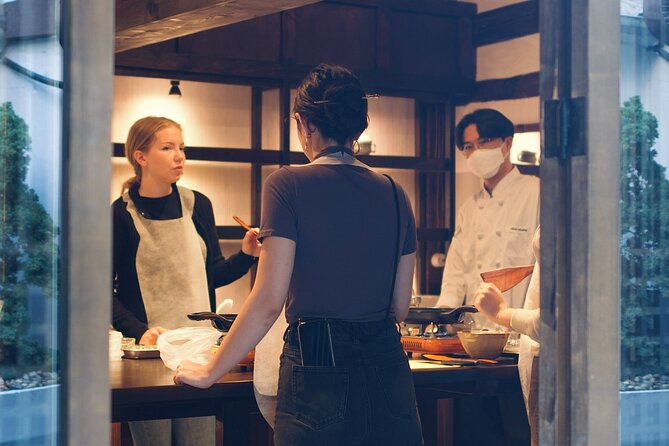
The real draw is the home itself: a 100-year-old hanok that’s been restored and used as a living space for the class. You’re not just touring a cultural site from the outside. You’re doing something active inside it—cooking, eating, and talking—so the heritage feels practical, not performative.
If you care about atmosphere, this is the kind of experience where the setting does real work. The warm, traditional dining space helps keep the evening calm, even while you’re moving around a compact kitchen and learning by doing.
You can also read our reviews of more tours and experiences in Seoul.
Royal Dishes You Actually Make (Not Just Watch)
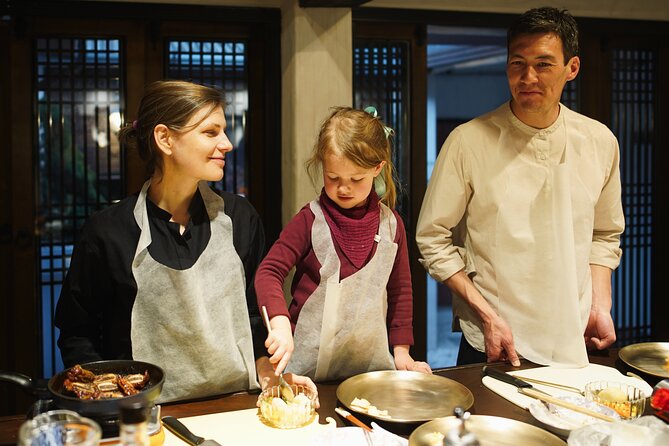
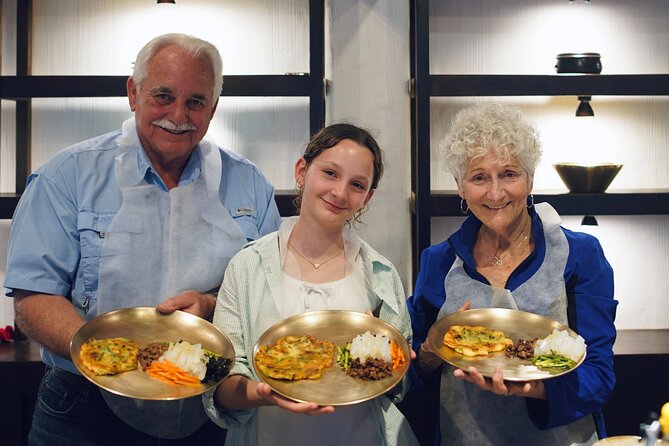
The menu is built around famous Korean dishes with a royal-cuisine angle. The highlights include LA Galbi, fresh kimchi, Haemul Pajeon (seafood pancake), and Tapyeongchae. You’ll cook these with guidance that’s designed to be doable even if your cooking experience is basic.
What I like about this lineup is that it covers different Korean flavors and techniques instead of repeating one theme. Grilling-style galbi teaches you how seasoning and texture show up fast. Kimchi adds fermentation and balance. Pajeon brings you into batter-and-pan technique, and Tapyeongchae gives you a contrasting side that feels lighter but still structured.
This class is also described as a journey through Korean food from various regions, tied to royal cuisine and famous dishes. That’s helpful if you’re trying to understand Korean cooking beyond “one more street snack.”
Bangjja Plates, Makgeolli, and the Proper Way to Finish
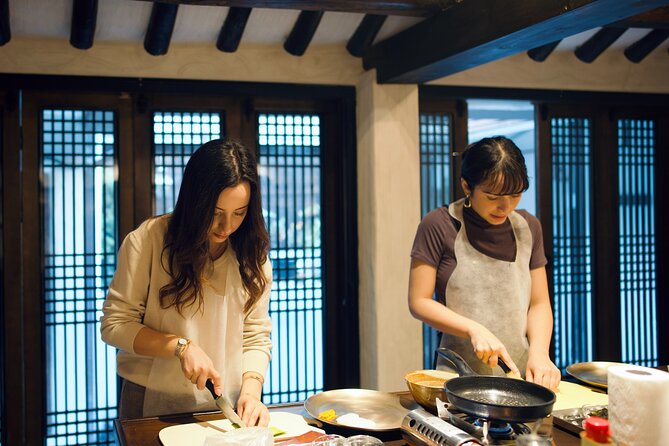
After you cook, you sit down and eat in true Korean style, using handmade bangjja bronzeware. That’s a big deal for two reasons. First, it makes the meal feel like a shared cultural experience rather than a take-home tasting. Second, bronzeware dining is part of the traditional texture and temperature experience of Korean table culture.
You’ll also get a glass of freshly brewed makgeolli, plus traditional Korean desserts. That combination makes the class feel complete. You leave with a full eating experience, not just a sampling plate and a photo.
One practical note: because this is a sit-down meal in a traditional dining area, you’ll want to pace yourself. If you’re also doing palace and market walking before the class, you’ll enjoy the cooking more if you don’t arrive overly stuffed.
The Max 6 Group Size: Why It Changes Everything
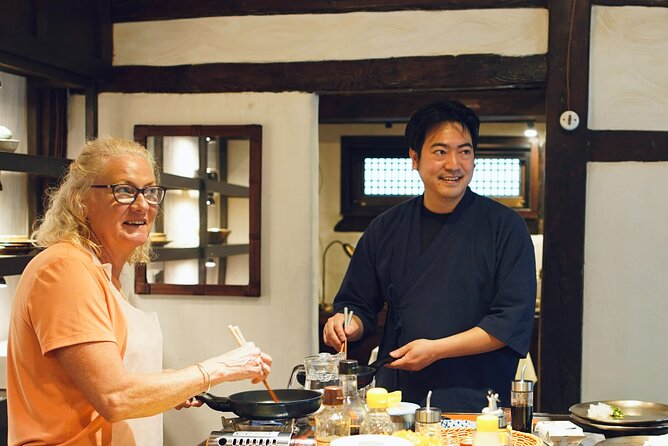
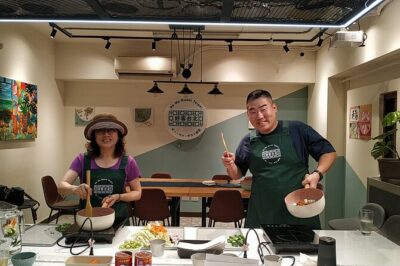
This tour keeps the group small, with a maximum of 6 people. In practice, that small cap affects your whole evening: you’re more likely to get individual help at the moment you need it, and the flow of conversation stays easy.
I like the way the class is positioned as beginner-friendly. It’s not selling you on a “you must already know cooking basics” vibe. The help comes from experts with an official culinary certificate, and the format is built so even if you start from zero, you can still make a good plate.
You’ll also notice how much conversation can happen when the group is tiny. In feedback, the instructor is described as funny, kind, and very good at explaining not just technique but food culture and context. That’s the kind of detail that turns a meal into something you’ll remember, and it helps you understand why the flavors work.
The Day Route: Palaces, Markets, and Hanok Street Time
The itinerary lists stops that cover some of Seoul’s best-known areas: Gyeongbokgung Palace, Changdeokgung Palace, Kwangjang Market, Ikseon-dong Hanok Street, and Gwanghwamun Square. Then it ends back at the meeting point.
Here’s how to think about that route. It’s a classic Seoul highlights mix, but it’s not a slow museum day. You’ll be moving between sites, so it’s best if you’re comfortable doing some walking before you start cooking.
Why this pairing can be smart: Korean food culture makes more sense when you’ve already seen the palaces and older neighborhoods where traditions are visibly rooted. Even if you’re mainly there for the hands-on cooking, the stops act like a narrative setup—especially for royal cuisine themes.
The trade-off is simple: if you prefer a pure cooking-only evening with zero extra walking, this format may feel like more “doing” than “resting.” If you’re the type who likes packing a day, you’ll probably enjoy the momentum.
What the Instructor Does With Your Hands (and Your Questions)
The class is led by Chef Park, also referred to by some as Ricky. Multiple accounts highlight clear instruction, strong English, and a teaching style that blends cooking technique with history and culture behind the dishes.
The key practical point is that the instructor prepares the setup so you can focus on the actual cooking. That matters on a time-limited class where you don’t want to spend half the evening figuring out tools, ingredients, and timing.
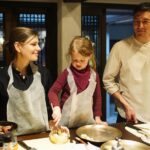
You can also expect a friendly room where it’s easy to ask questions. Some participants describe the class as good for solo visitors and as comfortable for kids and multiple generations too, with the instructor adjusting for different paces. One person even mentioned being accommodated with a stool for leg comfort, which is a nice sign that needs can be handled if you ask.
Price and Value: Is $98.98 Fair for This Setup?
At $98.98 per person for about 2 hours 15 minutes, this isn’t the cheapest cooking class in Seoul. But you’re not only paying for food.
You’re paying for four things that add value:
- A restored hanok location where you cook and eat
- Small group teaching (maximum 6)
- A menu that includes multiple dishes plus makgeolli and dessert
- Traditional dining on handmade bangjja bronzeware
When I judge value, I look at what you get at the end: you should leave with plates you made, drinks you enjoyed, and recipes you can replicate. Feedback also mentions follow-up photos and recipe materials, plus helpful directions to find the home. That kind of support increases the odds you’ll cook again after the trip, which is where a class becomes more than a one-night meal.
If you’re comparing against a larger group class where you watch more than you cook, the price starts to feel more reasonable. If you’re purely price-sensitive and want a street-food day instead, you might choose differently. But for a special night in Seoul, this looks like solid spending.
Who Should Book Royal Seoul Cooking Class
This is a great fit if you want one of those Seoul experiences that feels personal. I’d book it if you:
- want a hands-on Korean cooking night without feeling out of your depth
- care about eating in a real traditional hanok setting
- like getting culture context alongside technique
- enjoy meeting a few people and chatting, but not in a crowded room
It’s also a good option for groups with different ages, because the teaching is described as workable for both kids and adults, and the instructor is patient with different speeds.
If you’re the type who wants a totally unscheduled evening and hates any walking, you might feel a bit pressed by the palace and market stops. But if you like building a day around iconic Seoul landmarks, the combination is a strong one.
Should You Book This Class?
Book it if you want your Seoul trip to include more than sightseeing. The hanok setting plus the hands-on royal-cuisine menu plus the small group size is a rare combo that makes the evening feel like a real local home moment.
Pass on it only if your top priority is resting, or if you’re looking for a strictly cooking-only class with no extra route time. Otherwise, this feels like a very worthwhile way to spend an evening: you learn dishes you’ll recognize, you eat them properly on traditional tableware, and you get the kind of guidance that helps you repeat the recipes back home.
FAQ
How long is the cooking class?
The experience lasts about 2 hours 15 minutes.
What is the group size limit?
The class has a maximum of 6 travelers, so it stays small.
Where do I meet for the experience?
You meet at 25 Samil-daero 32ga-gil, Jongno District, Seoul, South Korea.
What dishes will I cook?
The class includes LA Galbi, Fresh Kimchi, Pajeon (including Haemul Pajeon), and Tapyeongchae.
Do I eat what I make?
Yes. You cook the dishes and then dine on what you’ve prepared.
Is makgeolli included?
A glass of freshly brewed makgeolli is included, along with traditional Korean desserts.
Is the ticket mobile?
Yes, the experience includes a mobile ticket.
Is free cancellation available?
Yes. You can cancel up to 24 hours in advance for a full refund.