REVIEW · UBUD
Ubud: Balinese Cooking Class, Rice Field & Market Tour
Book on GetYourGuide →Operated by AP Holidays · Bookable on GetYourGuide
A day this focused on real Balinese life beats another cooking show.
What I like most is the market start—you learn ingredients the way locals actually shop—and the hands-on cooking where you make classic dishes from scratch. The only real catch is timing: if you book an afternoon class, you may miss the market visit because the market is already closed.
I also appreciate the pacing: it is not just one room and one recipe. You move from food ingredients to rice farming and then into a Balinese home, so the cooking has context instead of feeling random. One consideration: you do need to do some walking and standing, so comfortable shoes and water matter.
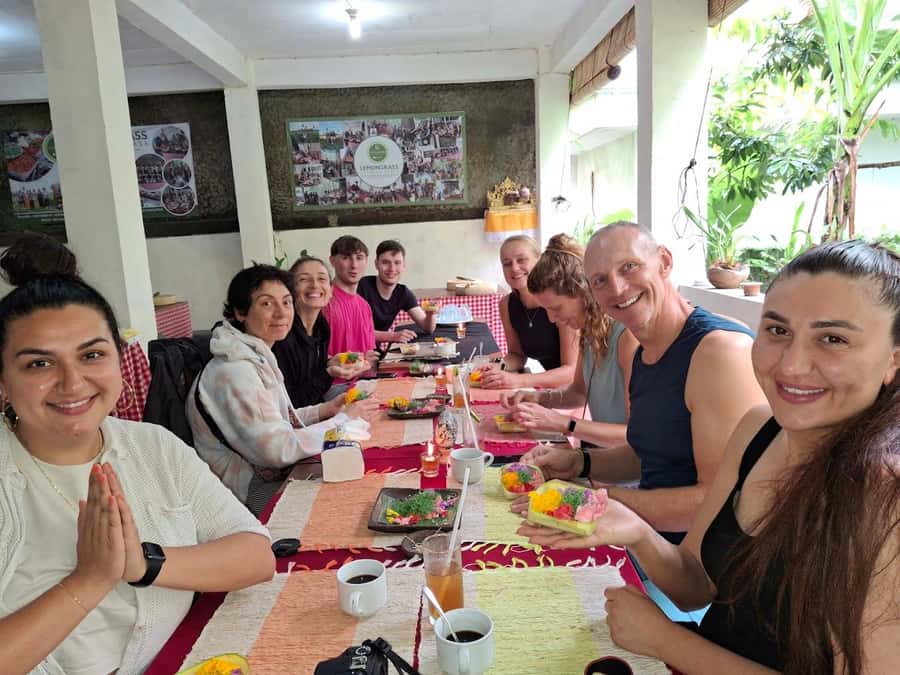
Finally, this runs as a small group (up to 6), with an English instructor. In past groups, guides like Ari, Ery, and Padma were specifically mentioned for clear explanations and patient teaching—exactly what you want when you’re trying to learn spice and technique fast.
In This Review
- Key moments you’ll remember
- The real value: one ticket that links food to place
- Morning flow: from traditional market to rice fields
- What to watch for
- Rice field lesson: understanding Subak irrigation
- Quick comfort notes
- Inside a Balinese home: architecture that shapes family life
- Canang Sari offering making: a daily ritual with a purpose
- The cooking class: Base Gede / Base Rajang and real technique
- If you care about taking notes
- What this tour does well (and where it’s not perfect)
- The main drawback: heat, walking, and session timing
- Value for $23: when this feels like a bargain
- Who should book this?
- Who might pass?
- Should you book this Ubud cooking class day?
- FAQ
- How long is the Ubud Balinese cooking class experience?
- Does this tour include hotel pickup?
- Is the class taught in English?
- What’s included in the price?
- What should I bring?
- Will I visit the market if I book an afternoon session?
- Is this tour suitable for children?
- What dishes or sauces will I learn?
- Can I cancel and get a refund?
Key moments you’ll remember
- Traditional market tastings: fruit, vegetables, spices, and ingredients explained in plain terms
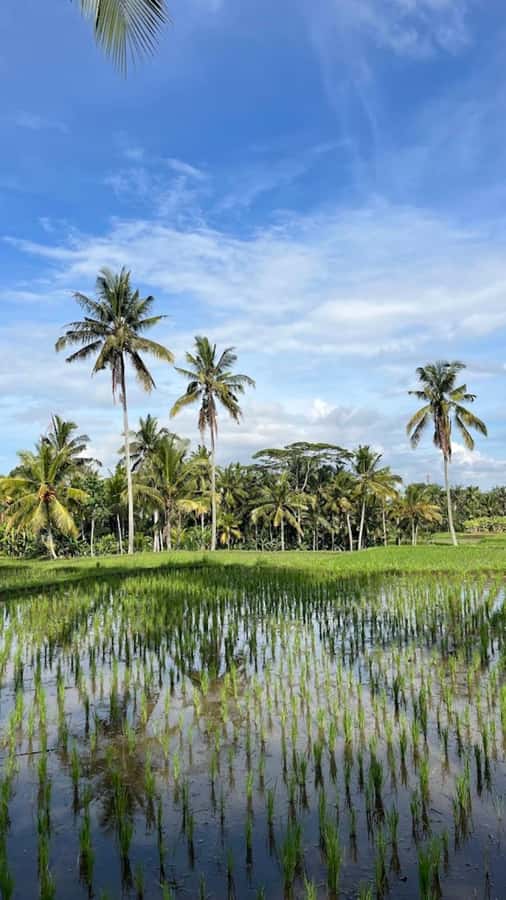
- Subak water system: learn how rice irrigation is managed through Balinese community structure
- Balinese home rules and architecture: how family life connects to how buildings are arranged
- Canang Sari offering meaning: make an offering and understand why it’s done daily
- Base Gede / Base Rajang sauce: learn the foundational sauce used across multiple dishes
- English instruction in a tight group: small size makes it easier to ask questions
The real value: one ticket that links food to place
For Bali, a lot of cooking classes teach recipes. This one tries to teach the reasons behind them. You start with ingredients in a working market, then you see rice farming in the Subak system, and you finish by cooking with a sauce that acts like a backbone for several dishes.
That matters because Balinese cooking is not just about spice level. It’s about balance—fresh aromatics, grounded seasoning, and sauces that carry flavor across the plate. When you understand where rice comes from, and why offerings are part of daily life, the food stops being a museum piece and starts to feel practical and lived-in.
Price-wise, $23 for a 5-hour experience is strong when you compare it to the total “stuff” you get: market tour, rice-field visit, home and offering making, plus a full class with explanations and what you eat at the end. The included hotel transfer only covers pickup inside Ubud, so your location will affect convenience, but once you’re in the Ubud pickup zone, this is a lot for the money.
You can also read our reviews of more tours and experiences in Ubud.
Morning flow: from traditional market to rice fields
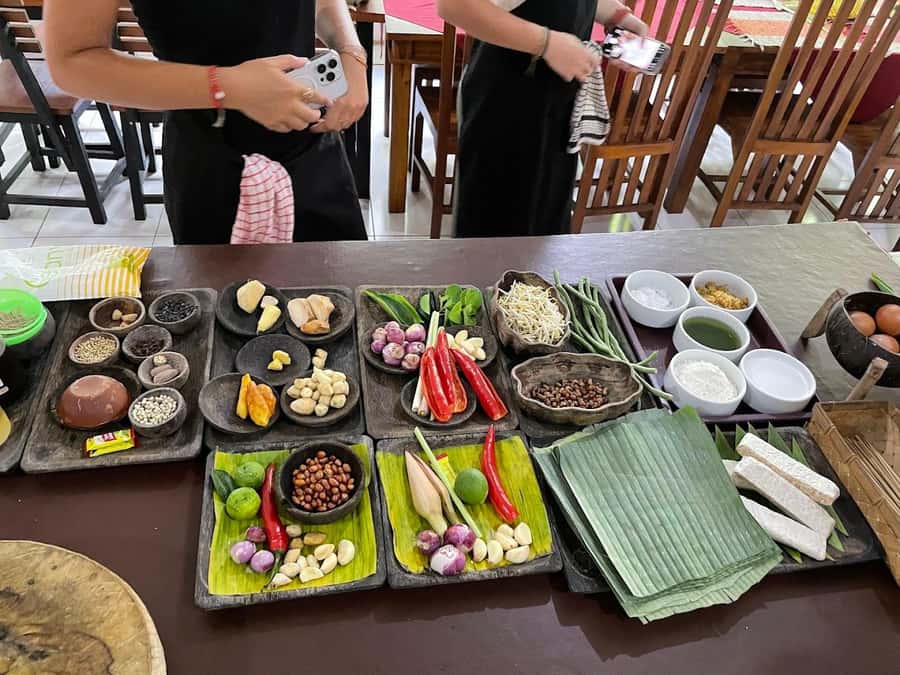
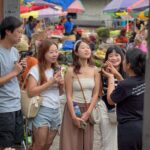
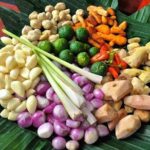
Your day typically starts with a traditional Balinese market. Expect to see and talk about the core foods that power everyday meals—rice, spices, fruits, vegetables, fish, and meat. This is where you learn how ingredients are chosen and recognized, not just how they taste.
A market stop is also useful because it trains your palate. You’re not only looking at “pretty produce.” You’re learning which items are used for spice bases, which turn up in daily dishes, and which ones show up in offerings. Even if you’ve eaten Indonesian food before, markets in Bali can feel like a crash course in local grocery logic.
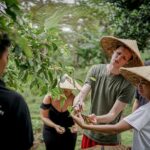
Then you head to the rice fields. This part can be hot and sunny, so bring water, a hat, and plan for the walking. The walking itself is part of the value—rice is not something you appreciate from a bus window.
What to watch for
- If you’re doing an afternoon version, you may not get the market stop since it closes earlier.
- If your hotel is outside Ubud, you may need to meet at the designated point in Ubud rather than rely on pickup.
Rice field lesson: understanding Subak irrigation
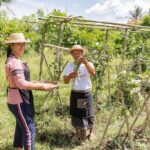
The rice-field portion is where this tour earns its name in my book. Instead of only pointing at green terraces, your guide explains the Subak water system—how irrigation is organized and how rice growing is connected to community planning.
Why this is worth your time: rice farming in Bali is not just agriculture. It’s a shared rhythm. When you hear how water management works, you start to understand why meals revolve around rice and why rice is treated with care instead of seen as background.
You’ll also learn the practical flow of planting and harvesting. The goal is less “botany lecture” and more “how the process actually runs,” so you can picture the steps from field to plate. If you’ve been wondering why Balinese meals feel steady and grounded, this stop provides the missing link.
Quick comfort notes
You’ll be outdoors, so comfortable shoes are non-negotiable. Even if the route is not long, the ground can be uneven and you’ll want grip.

Inside a Balinese home: architecture that shapes family life
Next comes the Balinese house and the ideas behind it. You’re not only seeing buildings; you’re learning concepts about how family life is organized. The tour explains the Balinese building and life concept, including the rules and philosophy that guide traditional family compounds.
This is a meaningful shift from the market and fields. Markets focus on ingredients. Rice fields focus on water and growth. The home focuses on living—how people structure daily life around shared beliefs and roles.
And then you get to the offering piece, which turns the cultural lesson into something you do with your hands.
Canang Sari offering making: a daily ritual with a purpose
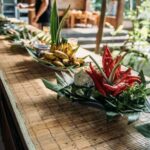
You’ll learn the philosophy behind Canang Sari, the daily offering made as a thankfulness gesture to the gods. This is not presented as a weird tourist craft. It’s taught as a meaningful practice with a role in day-to-day balance.
Then you make a traditional offering yourself. That part is surprisingly satisfying because it’s hands-on learning. You see what goes where, you understand the structure, and you hear why it matters in the rhythm of the day.
Even if you’re not religious in the same way, the cultural logic comes through: offerings are a way of staying connected—to gratitude, to community order, and to the spiritual layer that sits alongside work and food.
The cooking class: Base Gede / Base Rajang and real technique
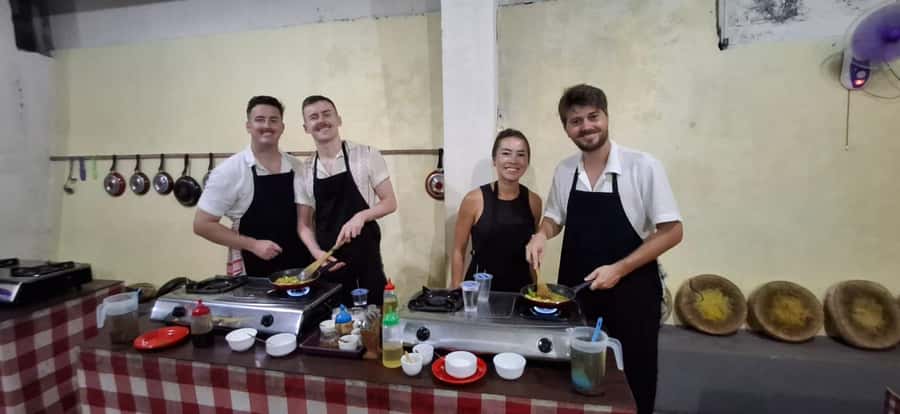
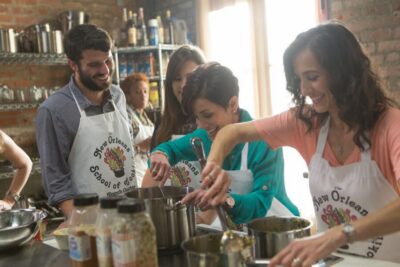
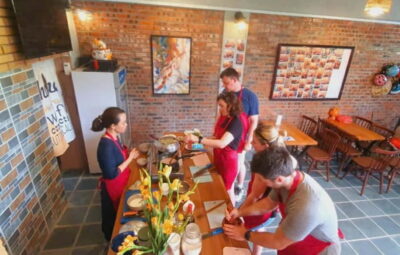
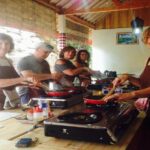
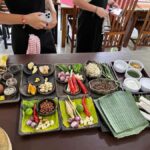
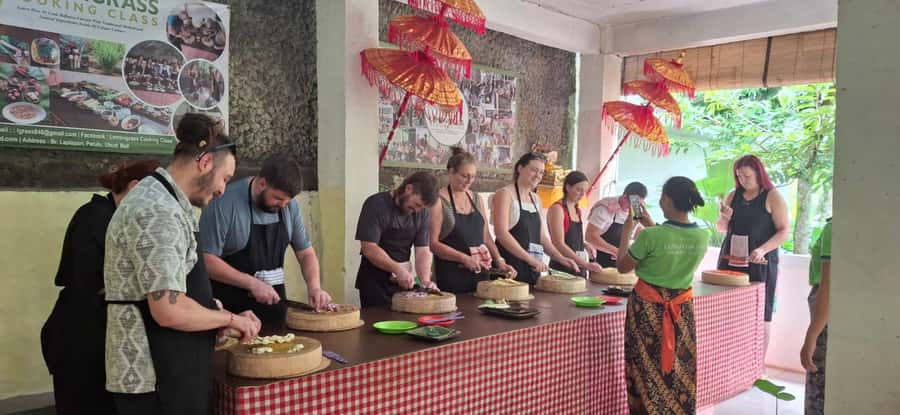
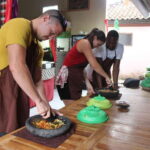
Now you cook. The class is designed so you’re not standing around watching someone else work. You’ll get detailed ingredient explanations, then you make dishes step-by-step.
A major highlight is learning the traditional sauce called Base Gede / Base Rajang. In practice, sauces like this are the “glue” of Balinese flavor. Once you understand the base, you’ll start recognizing how different dishes get their character—spice bloom, thickness, aroma, and that familiar cooked depth.
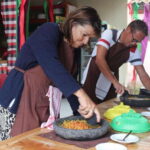
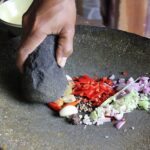
You’ll also do real prep work. Expect grinding or mixing spices and handling ingredients in the way a home cook would. Past groups praised the feeling of learning each step clearly, and the best hosts were credited for keeping explanations simple while still covering what each ingredient does.
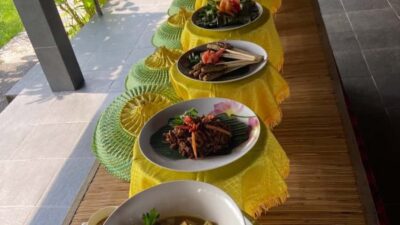
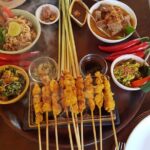
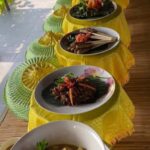
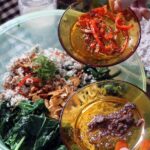
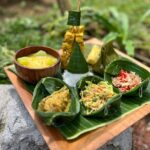
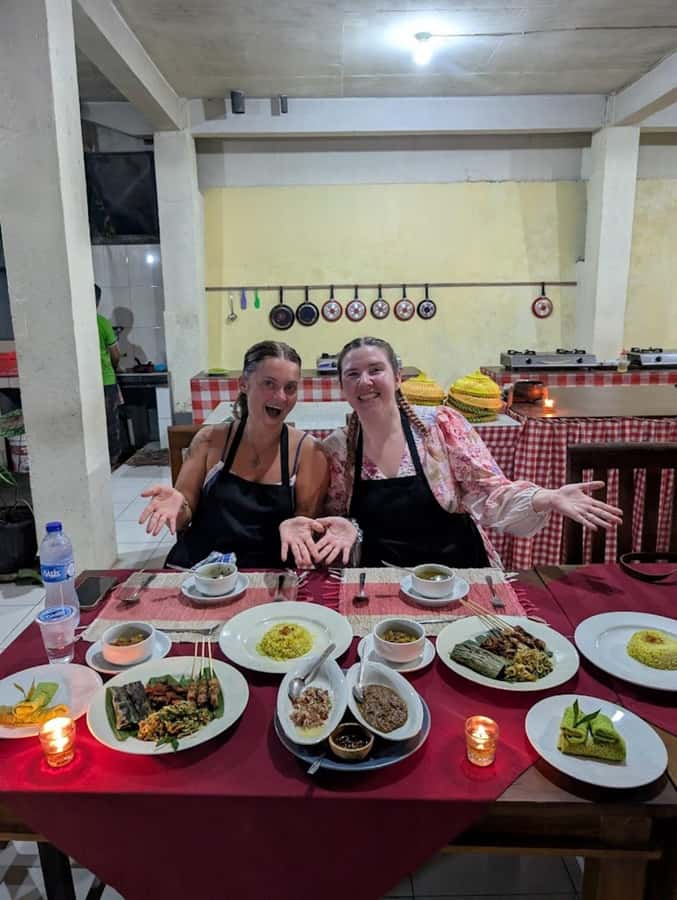
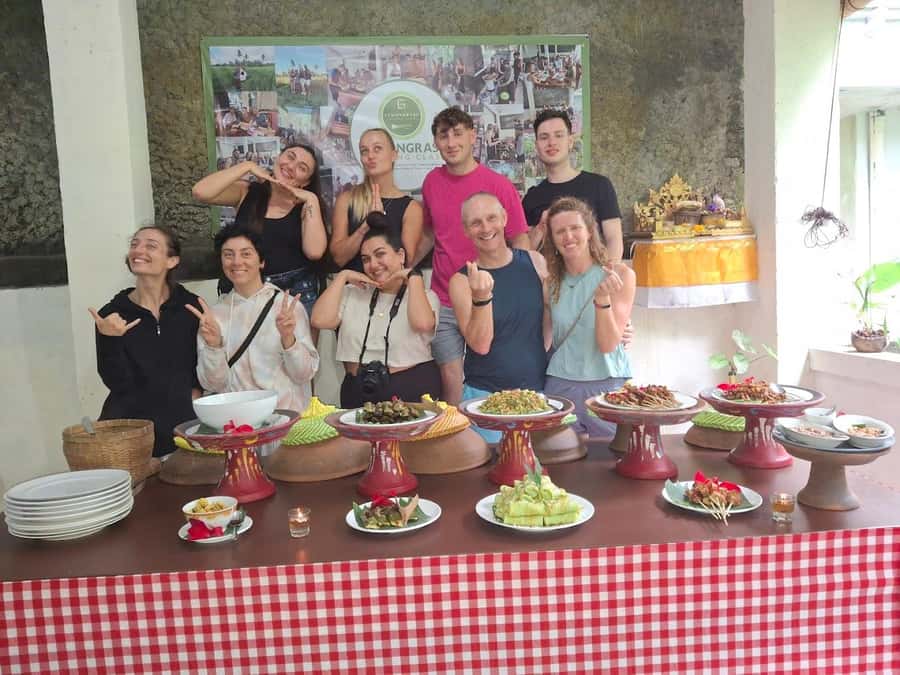
At the end, you eat what you prepared. That’s not just a reward. It’s also the fastest way to connect lesson to flavor. If something tasted more sour or more fragrant than you expected, you’ll remember it because you made it.
If you care about taking notes
One group specifically mentioned receiving a recipe book with what they cooked. If that’s important to you, ask when you confirm your booking if a recipe handout is included for your session.
What this tour does well (and where it’s not perfect)
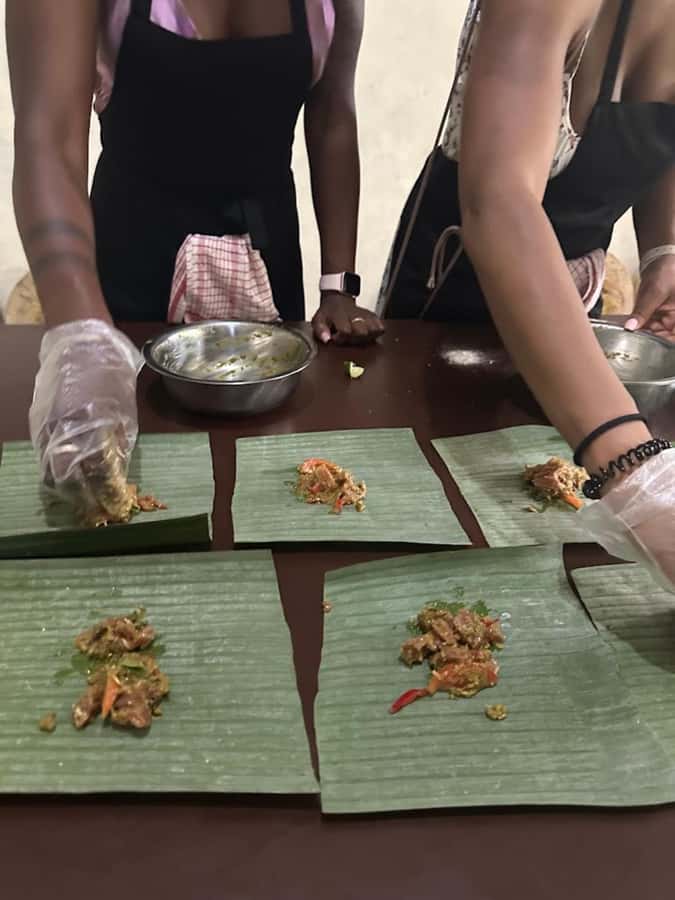
This is a strong pick if you want more than a recipe list. The combo of market + rice system + home life means you’re learning food in a cultural context that actually makes sense.
It also feels well-run for the small-group size. With only up to 6 participants, you’re more likely to get individual help when your chopping technique goes sideways or you’re unsure about how something should smell.
The main drawback: heat, walking, and session timing
The tour lasts 5 hours, and parts of it are outdoors and involve walking. If you’re sensitive to heat or you hate standing on uneven ground, plan for that.
Also check the time of day you choose. Morning is usually the best bet if you want the full sequence including the market, since afternoon sessions may not include it once market hours pass.
Value for $23: when this feels like a bargain
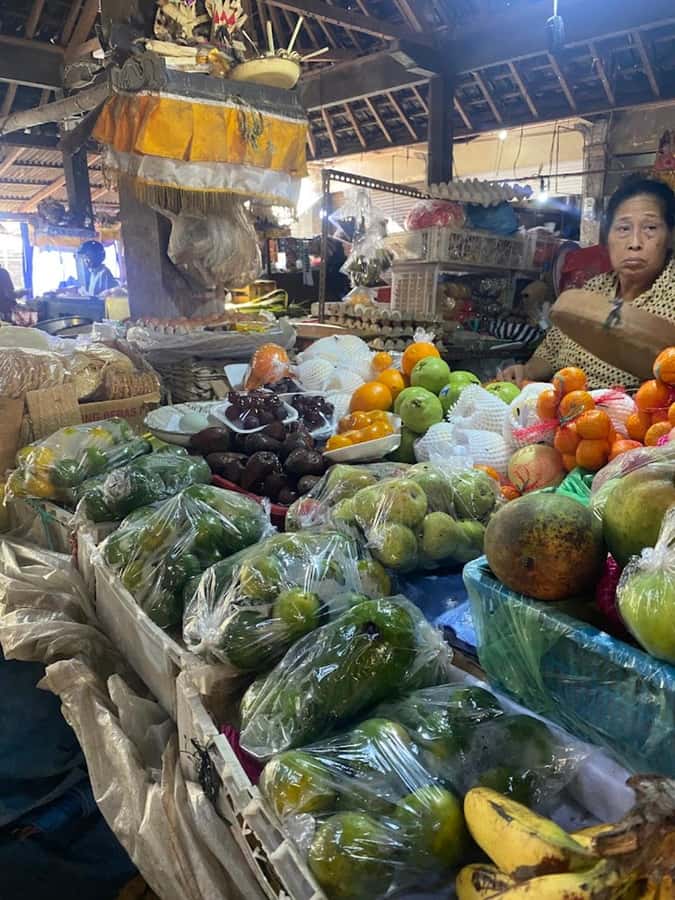
At $23 per person, the value comes from what’s included rather than what’s optional. You’re not paying extra for the “experience layers”—market, rice field, Balinese home discussion, offering making, and the cooking class with ingredient guidance are built in.
Compare that to typical Ubud classes where you might get only cooking and maybe a short ingredient stop. Here, your cooking becomes the final step in a bigger learning arc.
The transfer inclusion is a plus too, as long as you’re staying inside the Ubud area. If you’re elsewhere—Sanur, Kuta, Nusa Dua, or outside Ubud—you may need to arrange your own transport to reach the meeting point.
Who should book this?
- You want an authentic Ubud day that connects food to place
- You enjoy markets, culture, and practical cooking (not just tasting)
- You prefer small groups so questions are easy
- You’re okay with walking and want a full 5-hour experience
Who might pass?
If you want a low-walking, mostly indoor day, or if the outdoor heat is a big deal for you, this may feel like more effort than you want.
Should you book this Ubud cooking class day?
I’d book it if you’re the type of person who enjoys understanding what you’re eating—where ingredients come from, why rituals exist, and how a sauce base shapes multiple dishes. This tour’s biggest strength is that it doesn’t treat cooking as a stand-alone show.
But I’d think twice if you’re relying on afternoon timing and you really care about the market stop, since afternoon sessions may not include it. Also be honest about your comfort with outdoor walking for a full morning-to-midday schedule.
If you want a practical, culturally grounded Ubud day for a fair price, this one is hard to beat. You’ll leave fed, with new cooking technique, and with a clearer picture of why Balinese food tastes the way it does.
FAQ
How long is the Ubud Balinese cooking class experience?
It lasts about 5 hours.
Does this tour include hotel pickup?
Pickup is included for Ubud area hotels. If you’re staying outside Ubud (like Sanur, Kuta, or Nusa Dua), you’ll likely need to arrange your own transportation to meet at the designated meeting point in Ubud.
Is the class taught in English?
Yes, the instructor is English-speaking.
What’s included in the price?
The experience includes hotel transfer (within Ubud), a visit to a Balinese traditional market, a rice field visit, explanation of Balinese house and life concepts, making an offering and the philosophy of Canang Sari, and the cooking class with ingredient explanations and making a traditional sauce.
What should I bring?
Bring comfortable shoes, a hat, a camera, sunscreen, and water.
Will I visit the market if I book an afternoon session?
The info provided says there is no market visit in the afternoon class because the market is already closed.
Is this tour suitable for children?
It is not suitable for children under 10 years.
What dishes or sauces will I learn?
You’ll learn to make traditional Balinese dishes and you’ll make a traditional sauce called Base Gede / Base Rajang, used as a base for many dishes.
Can I cancel and get a refund?
Yes—there is free cancellation up to 24 hours in advance for a full refund.