REVIEW · UBUD
Authentic Balinese Cooking Class in Ubud
Book on Viator →Operated by Bali Natural Tours · Bookable on Viator
Spice starts before the first pot. This Ubud cooking class turns the whole morning into a food journey, from market spices to grinding pastes in a mortar. You’ll love the hands-on teaching style and the way the day includes real Balinese home life, not just a demo. One thing to consider: the experience depends on good weather, since part of the day happens outdoors at the farm and around the market.
I especially like that you get 2-way pickup and drop-off from your Ubud-area address, plus a small group size (max 15). It makes the class feel relaxed and practical, so you can focus on learning instead of logistics. The second big win is the ingredients: you pick the spices from the farm, then cook with fresh items you helped source.
If you’re short on time, it helps to choose your departure time carefully—this runs about 5 hours and includes a market visit (morning option), a home stop, and then the cooking session. That’s a lot packed into one stretch, but it’s the good kind of busy.
In This Review
- Key highlights you’ll care about
- Ubud’s countryside setting, minus the tourist noise
- The market stop: spices, shopping skills, and cultural context
- A home visit that’s about culture, not just photos
- Farm harvesting: where the class gets real
- How the cooking lesson actually works: lesung, pastes, and banana leaves
- Menu choices: vegetarian options without feeling like a compromise
- What you eat: lunch plus the skills to recreate it later
- Price and value: is $49 a smart deal in Ubud?
- Transfers and timing: making the schedule work for your day
- Who should book this cooking class?
- Should you book this Balinese cooking class?
- FAQ
- What is the price of the Balinese cooking class in Ubud?
- How long is the cooking class?
- Does the class include pickup and drop-off?
- Is lunch included?
- Do you get a recipe after the class?
- Is there a vegetarian menu option?
- Is the class limited to a small group?
- What happens if the weather is bad?
Key highlights you’ll care about
- Small-group format (max 15) makes it easier to get personal help while you cook
- Market option in the morning lets you buy local spices and see how people shop
- Farm harvesting first means you cook with ingredients chosen the same day
- Lesung grinding (mortar and pestle) is taught as a core Balinese technique
- Banana-leaf cooking shows you a signature presentation method
- Vegetarian and regular menu choices let you pick what fits your taste
Ubud’s countryside setting, minus the tourist noise
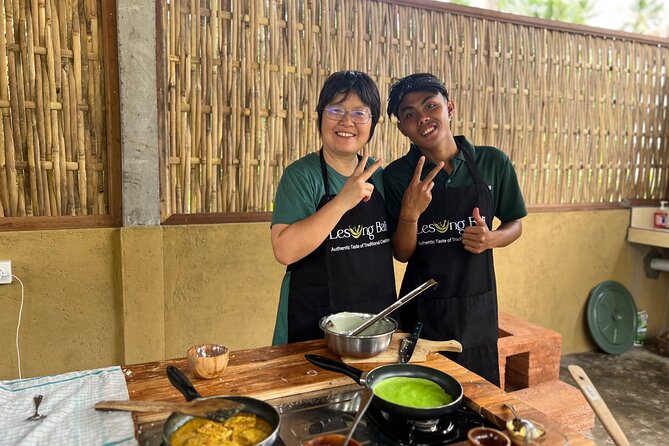
This class is based on the west side of Ubud, where the area feels more like countryside than city. That matters, because your “learning to cook Balinese food” experience doesn’t start in a classroom. It starts in a setting that feels like where the ingredients come from—green surroundings, quieter roads, and a slower pace.
For you, the practical benefit is mood. A food workshop works better when you’re not stressed. When I think about classes that get too rushed, it’s usually because the day feels like a factory tour. Here, the flow is more like: see how people live with ingredients, then cook using the same logic.
You also get an air-conditioned vehicle for transfers, which is a real plus in Bali’s heat. The schedule is about 5 hours, and the fact that pickup/drop-off is included for the Ubud area helps keep your day efficient instead of turning it into a scavenger hunt.
You can also read our reviews of more tours and experiences in Ubud.
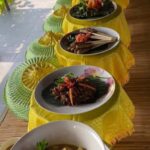
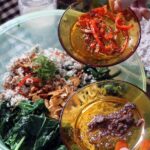
The market stop: spices, shopping skills, and cultural context
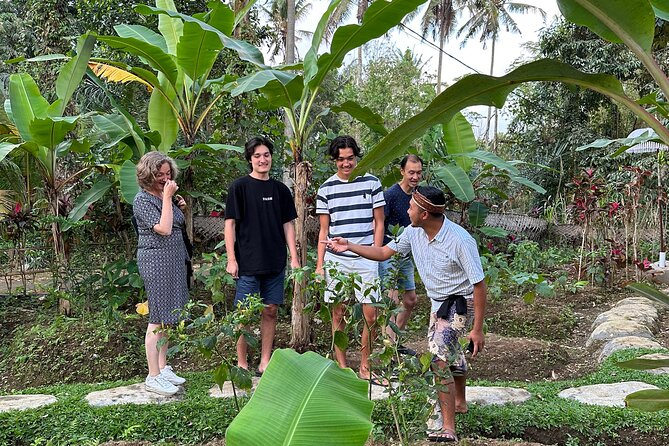
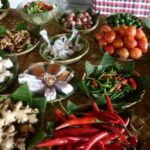
If you book the morning class, you’ll add a traditional market visit before the cooking starts. You’ll go to a market where locals buy everyday spices, then you’ll buy some spices yourself. This is one of those activities that sounds simple, but it gives you something lasting: ingredient awareness.
In a lot of cooking classes, you learn recipes. Here, you also learn how Balinese cooks think about flavors—because spices aren’t treated like “seasoning packets.” They’re treated like the foundation. You can almost feel the logic as you move from buying to grinding to cooking.
Practical tips if you’re doing the morning option:
- Bring cash for market shopping (the class includes the visit and shopping, but you’ll still be purchasing items)
- Wear comfortable shoes. Markets and farm areas often involve standing and walking
- If you’re sensitive to spice, tell your chef early so your menu can be adjusted within what’s offered
This market stop also helps explain why the rest of the day feels authentic. You’re not just making a dish—you’re seeing where the key flavors come from and how they’re chosen.
A home visit that’s about culture, not just photos
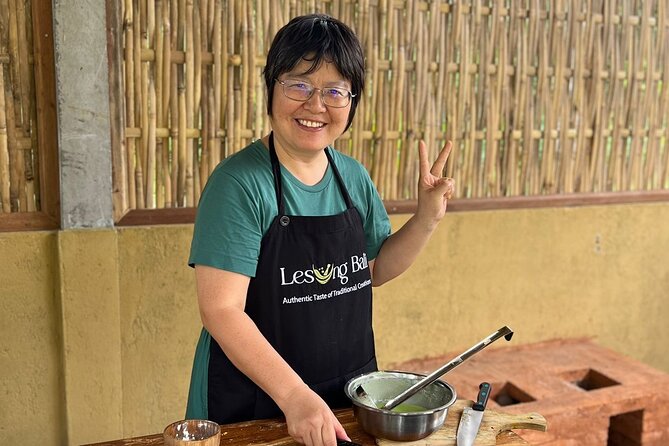
Next comes a visit to a typical local house. This isn’t framed as a quick photo break. You’ll see and learn about Balinese culture and lifestyle, including how the placed the building at the house (the layout and relationship to daily life).
What I find valuable here is that Balinese cooking is tied to daily rhythms: family work, ceremonies, and how food fits into social life. Even when you’re focused on cooking, understanding that context changes how you interpret what you taste.
A neat detail from past experiences is that sometimes the house visit can coincide with a family ceremony. For example, one day included a celebration for a baby’s one-month birthday in line with the Balinese calendar. You might not always see a ceremony, but this is a good reminder that Balinese homes aren’t “staged” for visitors. They’re living spaces.
Farm harvesting: where the class gets real
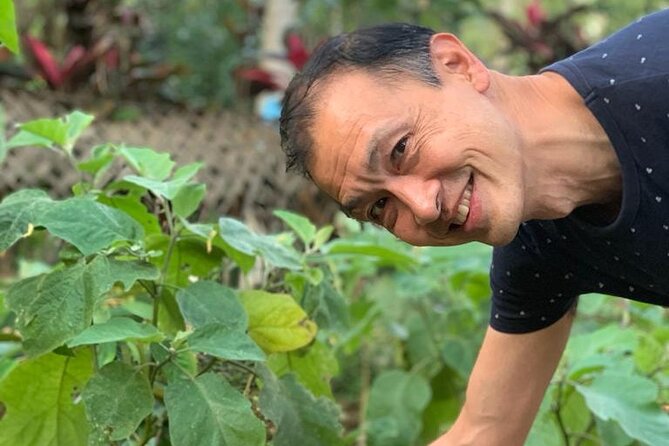
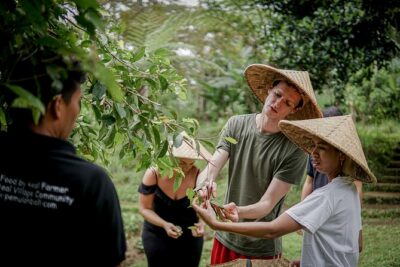
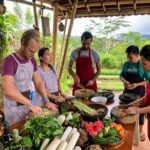
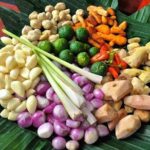
After the market and home stops, the day shifts to the farm. This is where you’ll start actively participating: you explore the farm and harvest the spices you’ll use in your cooking class.
This part changes the whole experience. If you’ve cooked before, you know the difference between using ingredients you bought and ingredients you gathered. You’ll pay more attention to aroma, texture, and how spices behave when ground.
Also, the farm portion helps explain techniques later in the lesson. The chef isn’t teaching grinding just because it’s traditional. You learn the connection between ingredient and method: how the spices are prepared affects the final flavor.
Be ready for a bit of outdoor time. Even if the rest of the day is comfortable, harvesting is typically active. If you’re planning this during the hottest part of the day, wear breathable clothing and bring water (bottled water is included).
How the cooking lesson actually works: lesung, pastes, and banana leaves
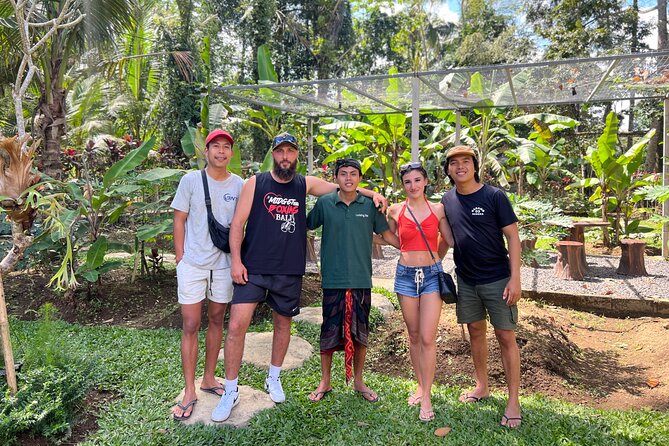
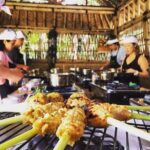
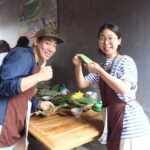
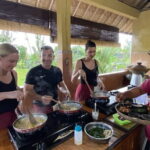
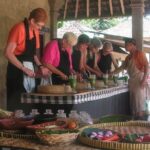
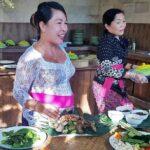
The cooking part is where you’ll learn the steps behind authentic Balinese flavor. The chef demonstrates, then you follow along with your own hands.
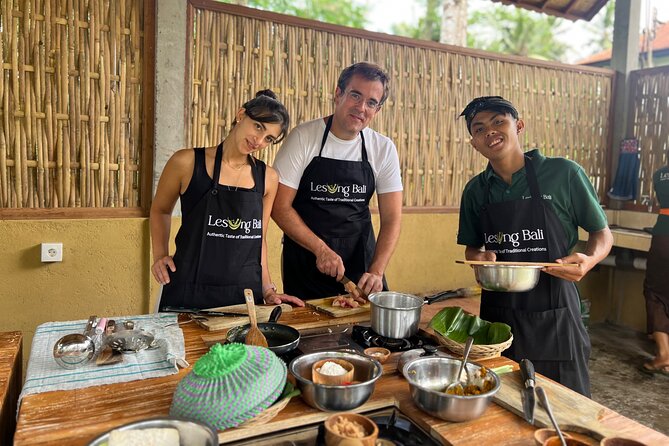
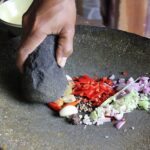
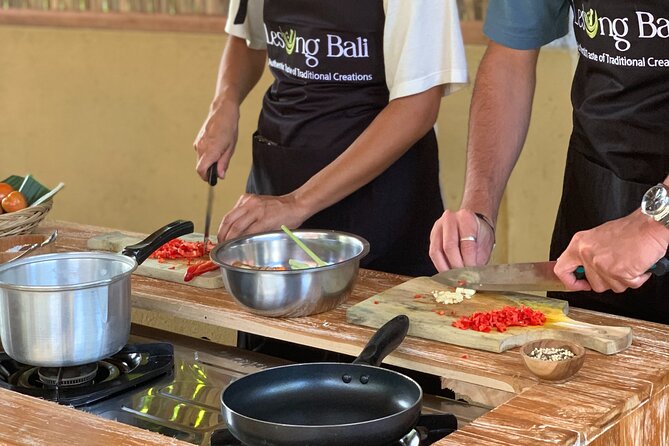
You’ll practice techniques like chopping and pounding spices using a lesung (mortar and pestle). This is a signature element because Balinese cooking often starts with spice pastes. The more attention you pay during grinding, the more you’ll notice the flavor difference later when the paste hits the pan.
You also learn about the cooking process based on the menu you choose. The chef explains:
- what ingredients are used
- how they fit together
- what else you need depending on the dish
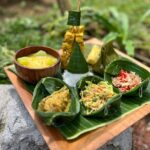
And you’ll cook in a Balinese way that can include preparing food in banana leaves. That method isn’t just for looks. It’s tied to how food is wrapped and handled in traditional cooking, and it helps make the final plate feel distinct from typical Western-style cooking.
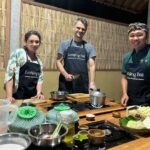
Group size helps here. With a max of 15 people, the chef and helpers can keep an eye on what you’re doing. That’s important for a hands-on day—especially if you’re new to grinding spices or assembling ingredients.

Menu choices: vegetarian options without feeling like a compromise
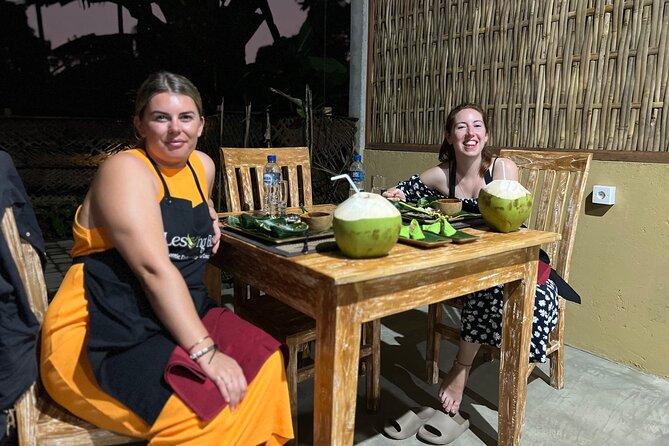
One of the practical upgrades here is the menu flexibility. You have a choice between a vegetarian option and a regular menu during the class.
That matters because vegetarian travelers sometimes get stuck with a “seems similar” dish. Here, the course is designed around your menu choice, and you’ll learn techniques tied to that menu rather than being handed a watered-down substitute.
If you’re vegetarian, this is also where it helps to speak up early. Let the chef know your preferences (for example, whether you avoid eggs or specific ingredients) at the start of the session. The structure is set by the class menu, but your communication can still help you get the best version of what they can prepare.
What you eat: lunch plus the skills to recreate it later
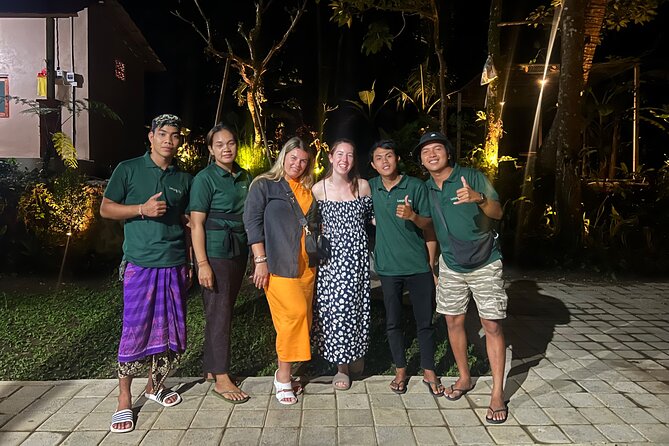
Lunch is included. Along with the meal, you’ll get bottled water, and coffee and/or tea during the experience.
The most useful “souvenir” is the recipe material. You’ll receive a PDF recipe after the class, plus a recipe guide (the class mentions recipe in PDF format). That’s the difference between an experience that’s fun today and one you can recreate later.
You also get practical gear:
- cooking utensil use during the class
- an apron
That means you don’t need to show up with cooking tools or worry about borrowing equipment that doesn’t match what the chef expects.
If you like taking food home (both literally and mentally), this is a good deal: you’ll leave with flavors you can recreate, not just a memory of a meal.
Price and value: is $49 a smart deal in Ubud?
At $49 per person for about 5 hours, this class prices itself like a mid-range Ubud food activity. The key question is value, and the inclusions do a lot of the work for you.
Here’s what’s included that you’d normally pay extra for in many “short” experiences:
- pickup and drop-off within Ubud area
- lunch
- bottled water
- coffee and/or tea
- air-conditioned vehicle
- cooking utensil use plus an apron
- PDF recipe
- market visit (morning option) and the broader cultural stops
Compare that to typical cooking classes where you show up, cook, and leave with maybe a handout. This adds multiple layers: market, home context, farm harvesting, and a teaching-heavy cooking session. That combination makes the time feel justified, especially if you’re only in Ubud for a short stretch.
One more value factor: it runs as a small group. When you pay for cooking, you’re paying for instruction and attention. With a max of 15 people, you’re more likely to get the help you need at the exact step you’re trying to learn.
Transfers and timing: making the schedule work for your day
This is a 5-hour experience, and it includes multiple stops before you even start cooking. For you, that means timing matters.
I like it most when:
- you can handle a morning or late morning slot
- you want to fill a day in a way that also gives you culture
- you’d rather do one “big” food experience than several half-tours
Departure time choice is a perk. You can plan your day around it, rather than forcing your itinerary to match a single start time. If you want the market, book the morning session. If you prefer fewer stops and a simpler flow, choose a later departure time (still expect the home visit and farm cooking part).
Also note the location: west-side Ubud, around countryside green areas. That can be great if you want a break from central crowds. Just be realistic about travel time from where you’re staying.
If you’re staying outside the main Ubud area, pickup isn’t included in all cases. The class lists extra car fees for areas like Sanur, Kuta/Seminyak/Canggu, Nusa Dua/Jimbaran, and Uluwatu. If your lodging is outside Ubud, check the surcharge before you assume the base price covers transport.
Who should book this cooking class?
This experience is a strong fit if you want:
- a hands-on cooking class rather than a show
- a deeper look at Balinese life through home and market context
- the chance to cook with ingredients you harvest that day
- vegetarian-friendly menu options
- a class that gives you a recipe PDF to take home
It’s also great for couples and families. One past participant did the class with spouse and child, and the day worked as a family-friendly learning experience. And if you’re traveling solo, the small group structure is a comfort—there’s space to learn without feeling lost.
Should you book this Balinese cooking class?
I’d book it if you want more than a meal ticket. The best reason is the combination: market spice shopping (morning), a local home visit, farm harvesting, then a real cooking lesson with techniques like lesung grinding and banana-leaf preparation.
Skip it or think twice if you strongly prefer minimal walking or you know you’re planning around unpredictable weather. Since the experience requires good weather and includes outdoor farm time, it’s not the kind of activity you treat like a guaranteed indoor option.
One last practical nudge: if you want the most “Bali” version of this class, choose the morning departure. It adds the market and makes the day feel like a complete food story rather than just a cooking session.
FAQ
What is the price of the Balinese cooking class in Ubud?
It costs $49.00 per person.
How long is the cooking class?
The experience lasts about 5 hours.
Does the class include pickup and drop-off?
Yes. Pickup and drop-off are included for the Ubud area. Other areas may require an extra car fee.
Is lunch included?
Yes. Lunch is included, along with bottled water and coffee and/or tea.
Do you get a recipe after the class?
Yes. You receive a recipe in PDF format.
Is there a vegetarian menu option?
Yes. There is a choice between vegetarian and regular menu options.
Is the class limited to a small group?
Yes. The maximum group size is 15 travelers.
What happens if the weather is bad?
This experience requires good weather. If it’s canceled due to poor weather, you’ll be offered a different date or a full refund.