REVIEW · UBUD
Ubud : Regular or Vegetarian cooking class with market visit
Book on GetYourGuide →Operated by Group Wonderful Activities · Bookable on GetYourGuide
The smell of spice and the hands-on cooking make this class feel real. You’ll learn Balinese flavors while tasting your work as you go, and you get a cultural warm-up with a morning market and rice paddies. I especially like the step-by-step guidance from local chefs and hosts (names like Komah and Yogi show up often), and I like that they cater to both vegan and non-vegan appetites in the same group. One thing to consider: if you’re sensitive about animal welfare, the morning market stop may feel uncomfortable.
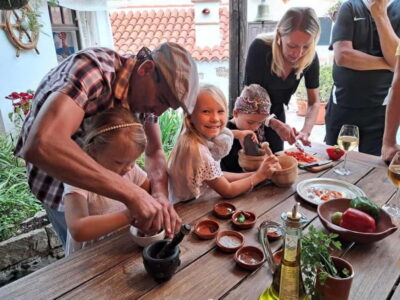
On the cooking side, you’re not watching from the side. You’ll make the dishes with your own hands, then sit down for a shared lunch or dinner buffet. The visit to the market and rice fields (for the morning option) adds context for what you’re cooking, not just how to cook it. The main drawback is practical: it can be hot, and the kitchen area isn’t set up for wheelchair users due to steps.
In This Review
- Key things I’d focus on before you book
- Why this Ubud cooking class feels more authentic than a typical lesson
- The morning market and rice fields: where your cooking starts to make sense
- Lunch gets real when you cook the Balinese dishes yourself
- Vegetarian and vegan options that don’t turn into a compromise
- The guides and the classroom energy: what to expect when you walk in
- Pickup, Ubud Palace, and the logistics that can make or break the morning
- The heat factor: plan for comfort in the kitchen and around the day
- What you take home: PDF recipes and the chance to cook again
- Price and value: why $23 can still feel like a bargain
- Who should book this class (and who should choose the afternoon)
- Should you book this Ubud vegetarian or vegan cooking class?
- FAQ
- What time does pickup start?
- Do they offer vegetarian or vegan cooking options?
- How many dishes will I make?
- Is the market tour included every day?
- Is the rice field visit included?
- What’s included for eating and take-home?
- Is the class suitable for wheelchair users?
Key things I’d focus on before you book
- Morning market + rice paddies (optional choice): you’ll see how ingredients get sold and how rice grows before you cook
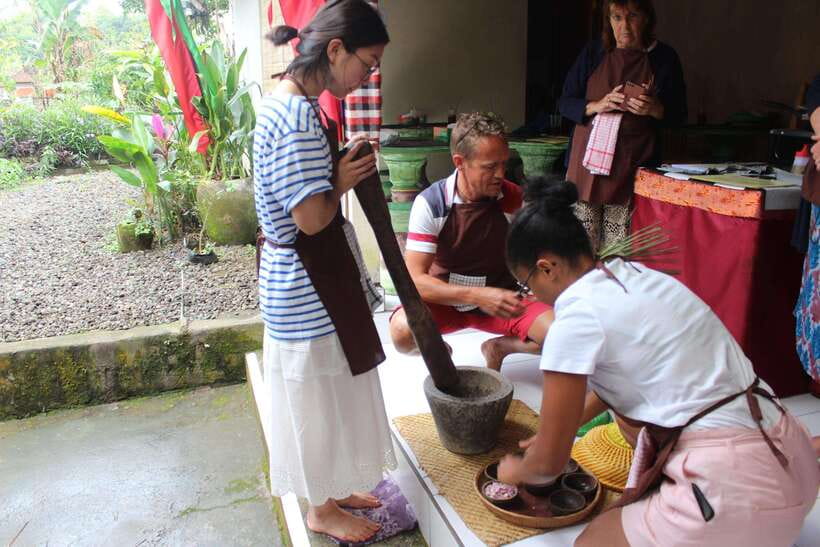
- Hands-on cooking with a Balinese chef/host: you make the food yourself, not just assemble it
- Vegetarian or vegan friendly: they can handle mixed preferences (vegan people and meat-eaters in the same class)
- Big plate lunch/dinner: you’ll cook multiple dishes and then eat together in a buffet-style meal
- You take recipes home: you get a PDF file so you can recreate it later
- It’s organized and easy to find: pickup starts at the front of Ubud Palace area and transport is handled for you
Why this Ubud cooking class feels more authentic than a typical lesson
Ubud has a lot of cooking classes. What makes this one worth your time is that it treats food like part of daily life in Bali, not just a one-hour demo. You’ll start with ingredient context (market and rice fields on the morning option), then you’ll get your hands into the process and your lunch is the payoff.
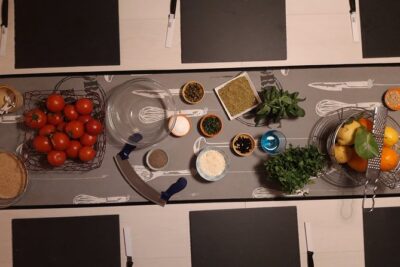
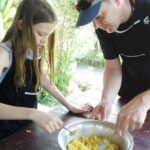
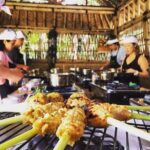
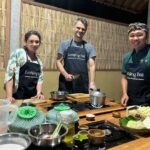
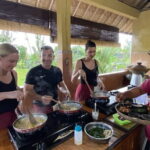
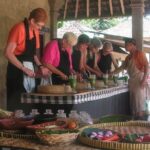
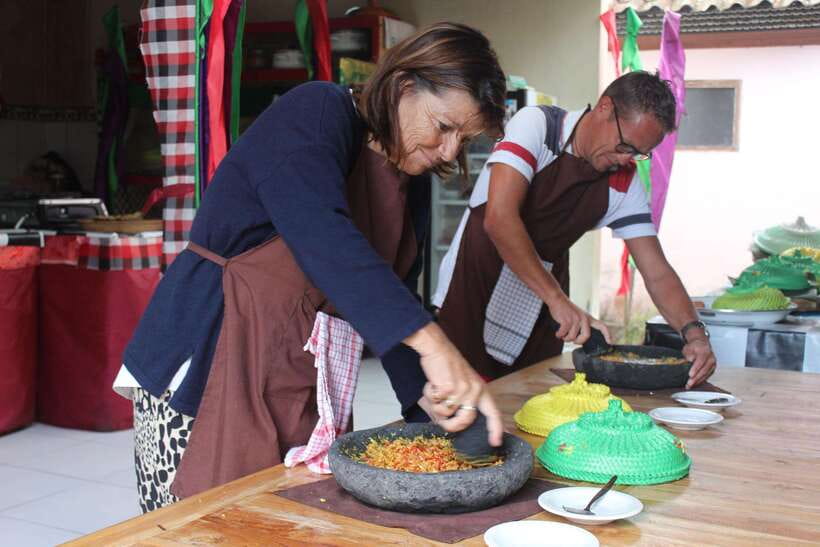
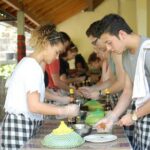
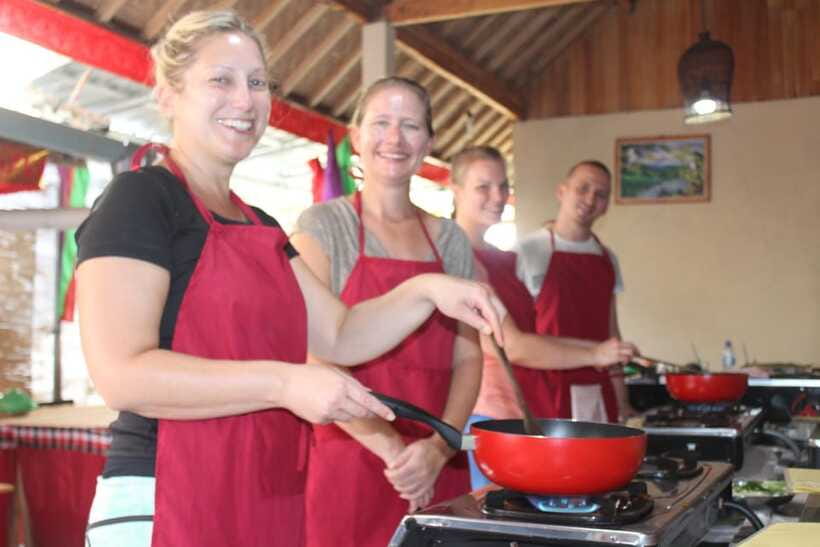
I like that the class is built for real participation. You’ll be working at the kitchen stations with equipment provided, making Balinese dishes step by step. And you’re not left waiting in line for food—you taste along the way.
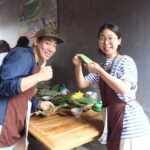
The other reason it works is the friendliness and energy people report from the guides. Names like Tata and Yogi show up in the feedback, and Komah is mentioned as a teacher who keeps the class fun while still explaining what you’re doing. It’s a good mix: calm enough to learn, lively enough that you don’t feel rushed.
You can also read our reviews of more tours and experiences in Ubud.
The morning market and rice fields: where your cooking starts to make sense
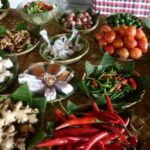
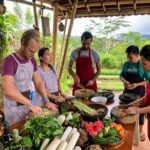
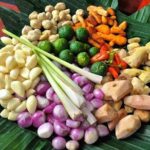
If you book the morning option, the day begins with a local market visit. You’ll spend about 25–30 minutes there with a local host, learning how people sell and buy ingredients. This is the part that helps you connect the flavors on your plate to the real sourcing and choices behind them.
After the market, you’ll go to rice paddies for an explanation of how rice grows. You’ll learn that Bali’s rice production has different types of rice and that harvest timing depends on the cycle, not a single calendar date. It sounds simple, but it changes how you think about the meal you’re about to cook—rice isn’t just rice, it’s the result of time, water, and local farming routines.
What I’d watch for: the market stop may not feel comfortable for everyone. If animal welfare is a big concern for you, consider choosing the afternoon class option so you skip the market tour. (The afternoon class keeps the cooking focus, without that first stop.)
Lunch gets real when you cook the Balinese dishes yourself
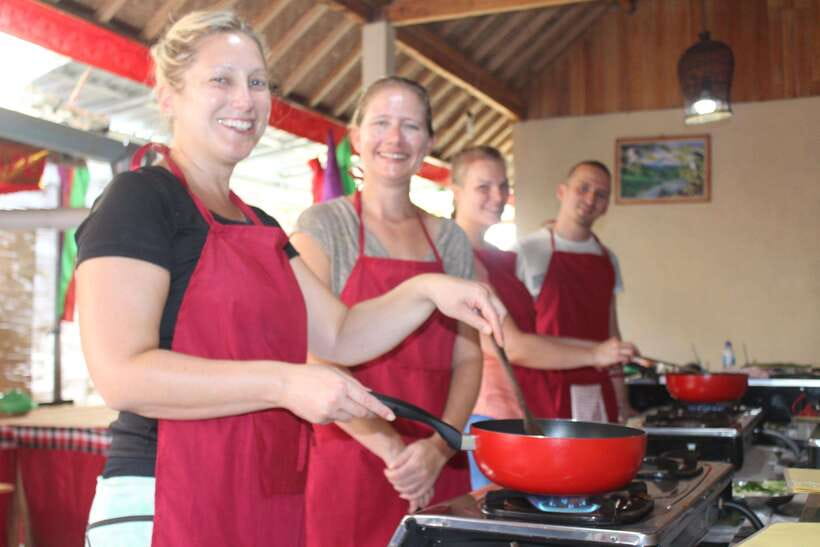
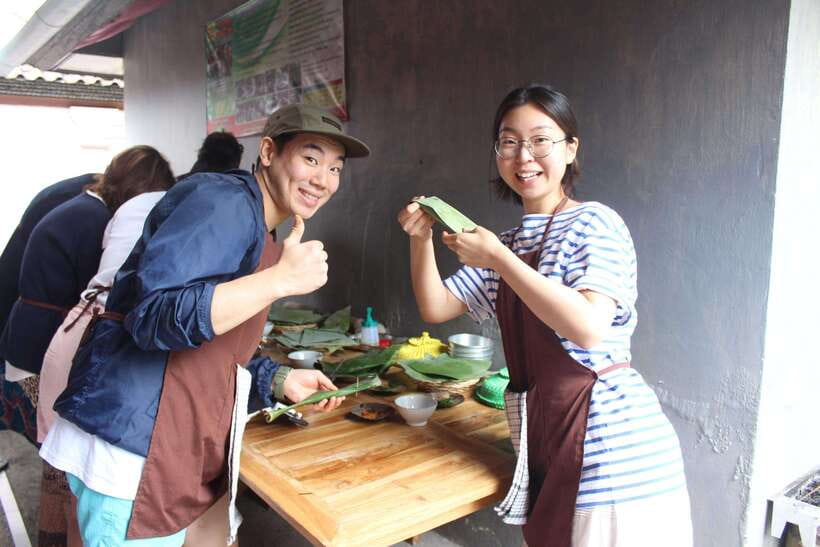
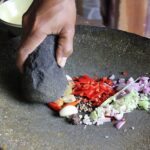
This is a hands-on cooking class. The format is straightforward: you cook at your station, guided step by step by a Balinese chef/host. The program is described as learning how to make Balinese food with your hands, and you’ll end up preparing a menu that’s listed as 8 dishes—with the overall teaching described as covering at least 9 recipe items. Either way, you’re leaving with the sense that you can recreate the process at home.
You’ll also learn cultural details that go beyond “here’s the ingredients.” One optional piece is making a Hindu offering called Canang—included on the afternoon option. If you’re curious about how Balinese daily rituals show up alongside cooking, that part gives you a more rounded view of why food and offerings are connected.
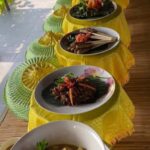
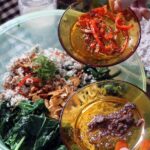
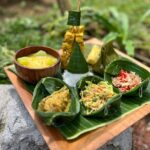
And yes, you’ll eat what you make. After cooking, there’s a lunch or dinner buffet where you share the meal. People also note food tasting during the class, so you get to check flavor and texture while you’re working, not only at the end.
Vegetarian and vegan options that don’t turn into a compromise
What you care about most is whether the class actually adapts to your diet. This one is explicitly vegetarian and vegan friendly, and it’s set up so that vegan and non-vegan eaters can be in the same class. That matters in Bali, where some cooking classes quietly become “veg for you, separate for everyone else.”
You can also adjust spice and heat level if you want it milder. One piece of feedback highlighted that the class can accommodate requests like avoiding extra chili, which is a big deal if you’re sensitive to heat.
If you travel with mixed diets—friends, partners, or family with different preferences—this setup is a practical win. You’re not forced into a separate tour or separate cooking session just to eat safely.
The guides and the classroom energy: what to expect when you walk in
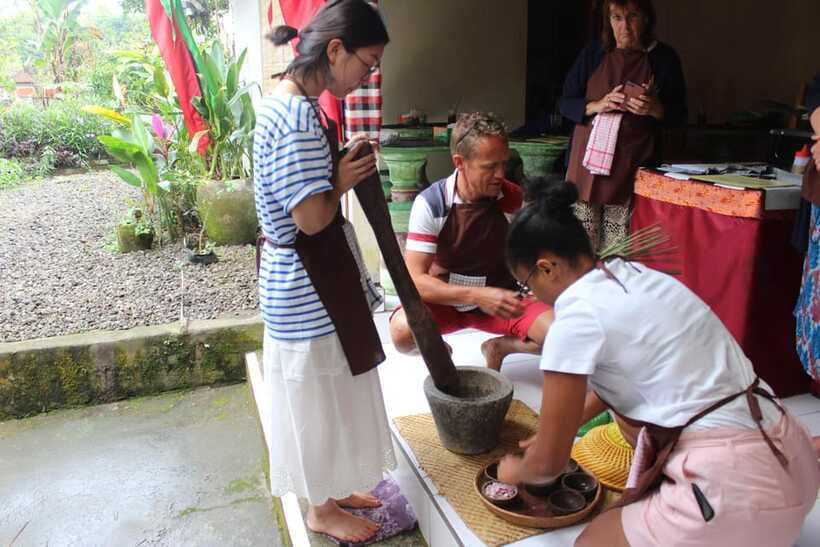
The class runs with a Balinese local guide/host team, and several names show up in feedback: Tata, Yogi, Komah, and Harry. The pattern is consistent: guides explain things clearly, keep the mood friendly, and manage the flow so everyone is cooking instead of waiting.
A small detail I appreciate from the way the class is described is organization. People mention clean kitchens, enough water, and well set-up cooking stations. There’s also mention of teaching materials like laminated photos of what dishes should look like, which helps when you’re learning techniques by sight.
If you’re someone who gets nervous cooking in a foreign country, the vibe here is usually the opposite. You’re learning, not performing. Expect lots of “do this next” guidance and a group pace that doesn’t leave you behind.

Pickup, Ubud Palace, and the logistics that can make or break the morning
Timing matters in Ubud. Pickup is 7:30am, and it’s designed mainly for the Ubud area center. The guide waits at the front of Ubud Palace area. If you’re staying outside the center, you may be asked to meet the shuttle at the front of Ubud Palace.
Transport is included, and people report air-conditioned vehicles and efficient, careful driving. That’s more than a comfort detail. It reduces the stress of coordinating a driver for a morning class and helps you arrive on time without spending half your trip figuring out routes.
Bring cash, as it’s specifically listed. Also, skip oversize luggage; that restriction is common for small vehicles and tight kitchen spaces, and you don’t want to get stuck renegotiating the bag situation.
The heat factor: plan for comfort in the kitchen and around the day
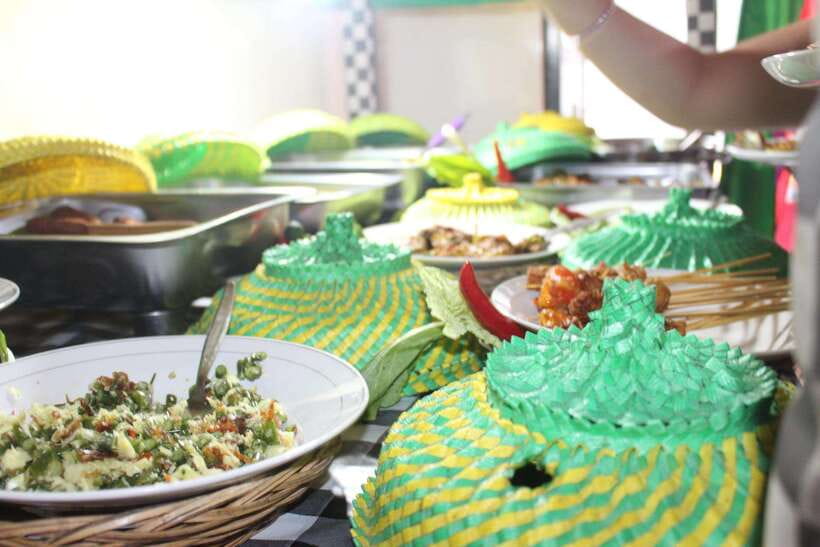
Even when the class is well run, Ubud weather is not gentle. One comment notes the class can feel very hot, especially for the afternoon session where there may be limited fans. Bottled mineral water is included, so hydrate, but you’ll still want to dress smart.
My practical advice: wear breathable clothes you don’t mind getting spice-scented, and consider lightweight layers. It’s a cooking class—getting comfortable with a little sweat is part of the deal.
What you take home: PDF recipes and the chance to cook again
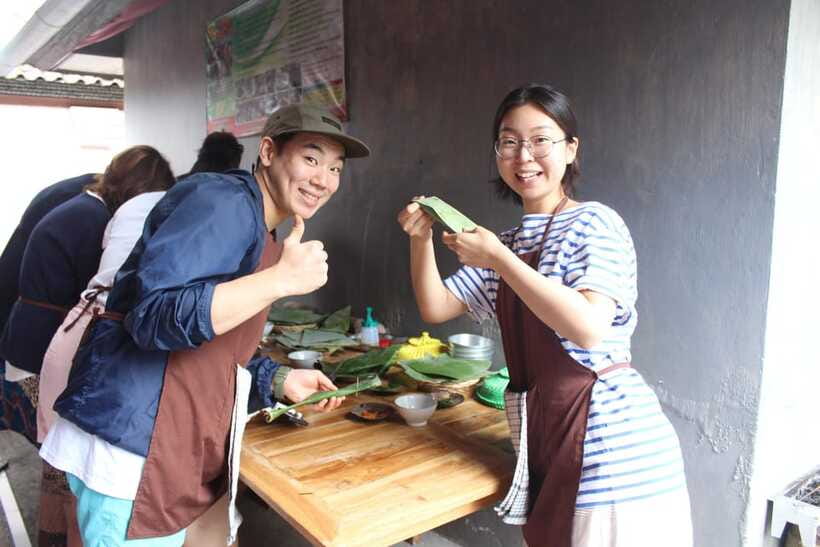
A cooking class is only half the experience if you can’t recreate it later. Here, you get a copy of the recipes in PDF form, which is the simplest way to turn what you learned into a real home-cooking habit.
You’ll also have the muscle memory from doing the steps yourself. People mention making multiple dishes and then eating them together, so you get both sides: technique and taste.
If you like cooking, this is where the value shows. You’re not just buying a one-time meal; you’re buying a repeatable set of instructions plus flavors you can source again. And because the class is vegetarian/vegan focused, you’ll often find it easier to adapt at home without “mystery ingredients” getting in the way.
Price and value: why $23 can still feel like a bargain
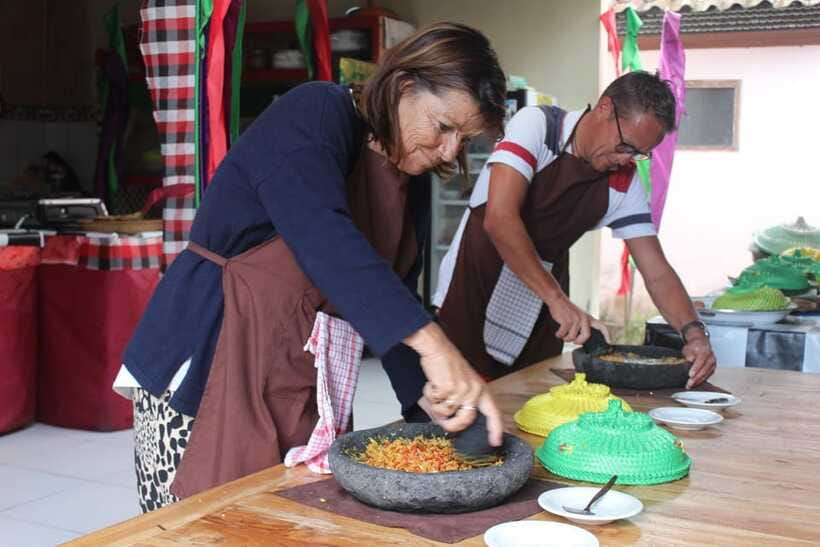
At $23 per person, this class looks inexpensive for what’s included. You’re getting pickup and drop-off in the Ubud area, kitchen equipment, mineral water, tasting, a shared lunch or dinner buffet, and a recipe PDF.
If you choose the morning option, you’re also adding the market visit and rice field tour. Those stops alone would cost money and time on their own if you tried to arrange them separately. The class also has a strong labor component because you’re actively cooking multiple dishes.
So the value isn’t just “cheap.” It’s “included.” You pay once, then the whole flow is handled.
Who should book this class (and who should choose the afternoon)
This class fits best if you want two things: hands-on cooking and a little cultural context. If your trip is all restaurants and you want at least one day where you learn flavors from the inside, this is a good match.
Choose the afternoon class if:
- you’re vegan/vegetarian but especially want to avoid the morning market experience
- you’d rather focus only on cooking and not on the market stop
- you want to keep the itinerary tighter
Choose the morning class if:
- you like ingredient context and want to see how things get sold and how rice farming works
- you enjoy getting out earlier in Ubud when the day is still forming
Not sure what to do? If animal welfare concerns are central for you, go afternoon. If you’re less sensitive and you love markets and farms, go morning.
Also note: it’s not suitable for wheelchair users due to steps leading to the kitchen area. If mobility is a concern, plan a different activity.
Should you book this Ubud vegetarian or vegan cooking class?
If you want a single day in Ubud that mixes food, learning, and real participation, I’d book it. The hands-on cooking is the headline, but the market and rice paddies (morning option) help you understand what you’re tasting. The guide teams—people mention Tata, Yogi, Komah, and Harry—seem to hit the sweet spot: organized, friendly, and focused on getting you cooking.
Skip it only if you know the market stop is a hard no for you, or if heat and steps would make the kitchen portion stressful.
One more small tip: bring cash, dress for heat, and go hungry. The buffet is part of the fun because you get to eat what you made.
FAQ
What time does pickup start?
Pickup is at 7:30am, with the guide waiting at the front of Ubud Palace area. If you stay outside Ubud center, you can meet the shuttle at the front of Ubud Palace.
Do they offer vegetarian or vegan cooking options?
Yes. The class is designed as a vegetarian and vegan cooking class, with the program catering to different eating preferences within the class.
How many dishes will I make?
The menu is described as making 8 Balinese dishes, and the program also states you’ll be taught at least 9 recipes of food through step-by-step preparation.
Is the market tour included every day?
No. The market tour is only available if you book the morning class. The afternoon option focuses on cooking, and can include making a Hindu offering (Canang).
Is the rice field visit included?
Yes, but only with the morning class option, when you also visit the market. The rice field stop includes explanations about rice types and harvest timing.
What’s included for eating and take-home?
You’ll have food tasting during the class and a lunch or dinner buffet afterward. You also receive a PDF file of the recipes and mineral water.
Is the class suitable for wheelchair users?
No. It is not suitable for wheelchair users due to steps to get upstairs to the kitchen.