REVIEW · TOKYO
Cozy Tokyo Class: Ramen, Sushi, Sake Pairing & Cultural Exchange
Book on Viator →Operated by Ramen and Sushi Cooking Tokyo · Bookable on Viator
Small-group ramen and sushi beats the tourist hustle. In a cozy Tsukishima kitchen, you’ll learn two (or more) Japanese staples while English-friendly hosts like Umi and Kou share context that makes the food click, not just the technique. I like how small-group it feels, with space to ask questions. I also like that you get a detailed recipe gift so the experience doesn’t evaporate the moment you leave Tokyo.
One thing to consider: it is not a private class. Even with a cap of four people, it’s still a shared cooking setting, so if you want total one-on-one pacing, you may find the schedule moves a little faster than you’d like.
In This Review
- Key highlights before you go
- A cozy Tsukishima kitchen with real conversation
- What you’ll cook in 3 hours: ramen, plus sushi or gyoza
- How the class tempo usually feels
- A practical takeaway: you’ll learn more than one trick
- Sake pairing, Japanese beer, and non-alcoholic options
- The cultural exchange part: culinary traditions explained simply
- Taste time and the take-home recipe that changes everything
- Price and value: is $79 a good deal?
- Who this class is perfect for
- Couples
- Families and mixed groups
- Solo travelers
- Practical logistics: meeting point, timing, and what to plan
- Should you book this Tokyo ramen-and-sushi class?
- FAQ
- How long is the cooking class?
- Where does the class start?
- Is transportation included?
- How many people are in the group?
- What will I learn to make?
- Are drinks included?
- Do I get recipes to take home?
- What’s the booking confirmation like?
- What’s the cancellation policy?
Key highlights before you go
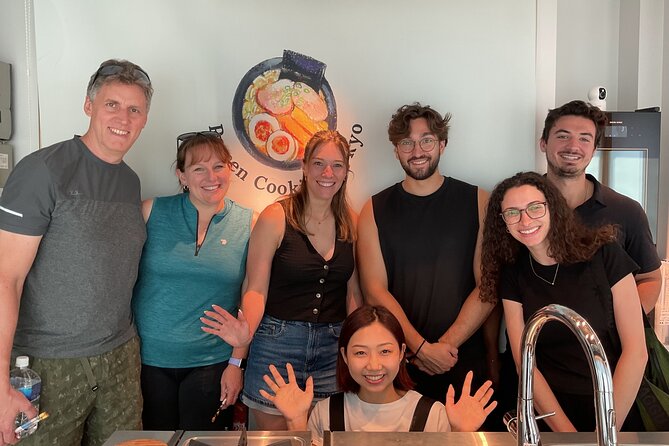
- Hand-on ramen + another iconic dish: the class framework centers on ramen, with sushi or gyoza depending on the session format
- Capped small group: the experience is kept intimate, so you can hear instructions clearly
- English-friendly hosts: Japanese chefs guide you with plenty of back-and-forth conversation
- Sake pairing included: unlimited sake with Japanese beer and non-alcoholic options
- Recipe handout to take home: you’ll leave with a detailed reference to recreate the dishes
A cozy Tsukishima kitchen with real conversation
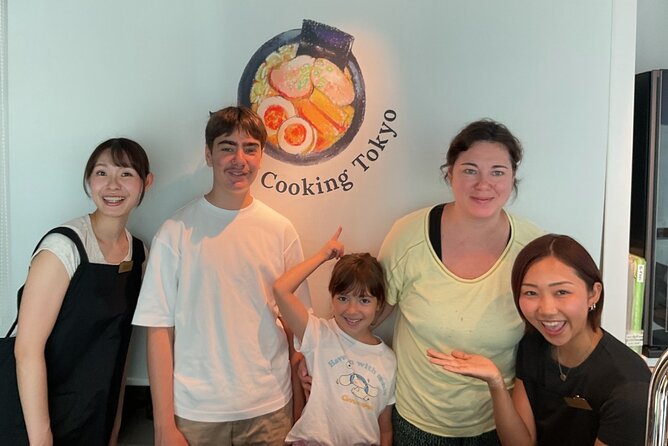
This class runs in a homey, small setting near public transportation in Tsukishima. The meeting point is at 2-chōme-13-5 HAUS Tsukishima (Chuo City, Tokyo 104-0051), and the activity ends back there. That matters because you’re not burning half your evening in transfers or trying to find your way through a maze of crowded meeting spots.
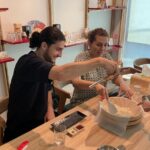
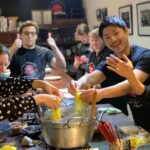
What makes the room feel special is how the setup supports conversation. Instead of watching from the back, you’re close to the action, and you can actually ask what you’re wondering. The hosts are English-friendly, and in practice that means you’re not stuck with mime-based cooking. Names you’ll see mentioned include Umi San and Kou San, plus other instructors like Komi, Namiko, Risa, and Alissa depending on the session.
This is the kind of Tokyo activity where you leave feeling like you talked with people, not just consumed a show. If you’re the sort of traveler who likes learning the why behind meals, this class leans into that.
You can also read our reviews of more tours and experiences in Tokyo.

What you’ll cook in 3 hours: ramen, plus sushi or gyoza
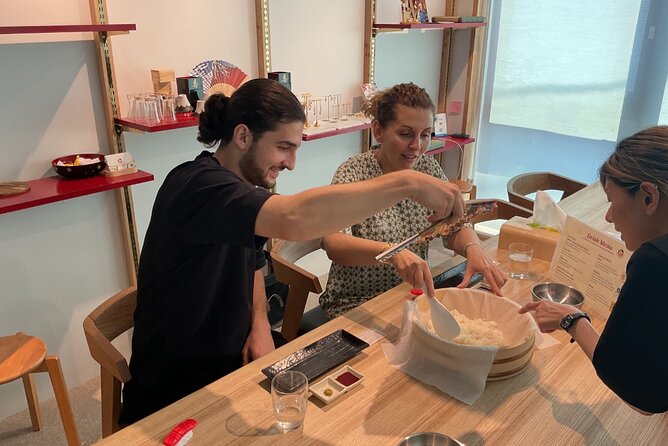
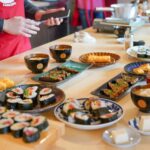
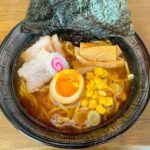
The big promise here is hands-on Japanese cooking in about three hours, with time to taste what you make. The program is described as centered on ramen, with another iconic dish added depending on the session: sushi or optional gyoza.
That’s a key detail for planning. If you’re coming specifically for ramen + sushi, look for the session wording that lists sushi in the description. If ramen + gyoza is the priority, the overview highlights gyoza as a core option. Either way, you’re building real confidence because you’re making the dishes from scratch with instructions right in front of you.
How the class tempo usually feels
You can expect a guided flow that goes something like this:
- welcome and setup in the kitchen
- hands-on cooking with step-by-step guidance
- tasting your own work
- cultural explanations tied to what you’re doing
- recipe handout so you can reproduce it later
Even without a formal sightseeing itinerary, the time still feels well-used because cooking naturally forces you to practice. You don’t just memorize steps—you build muscle memory around ingredients and technique.
A practical takeaway: you’ll learn more than one trick
People come to cooking classes hoping for one shortcut. This one is better if you want a framework. Between ramen and the second dish (sushi or gyoza), you’ll get practice reading and following instructions in a Japanese cooking rhythm: measured steps, attention to process, and the idea that small details change the final result.
Sake pairing, Japanese beer, and non-alcoholic options
Food classes can swing two ways: either they’re strict and serious, or they feel like a party with too much noise. This one hits a middle ground thanks to the unlimited sake pairing component, plus Japanese beer and non-alcoholic beverages.
That unlimited detail is genuinely useful for value. If you’re the type who likes drinking with dinner, you’re not paying extra for a beverage upgrade that would normally show up later. And if you don’t drink alcohol, you’re not forced into a compromise; non-alcoholic drinks are offered.
The bigger benefit is social. Pairing is usually where people relax enough to ask deeper questions. When the conversation flows, you’re more likely to pick up the “how” and “why” you’ll want when you recreate things at home.




The cultural exchange part: culinary traditions explained simply
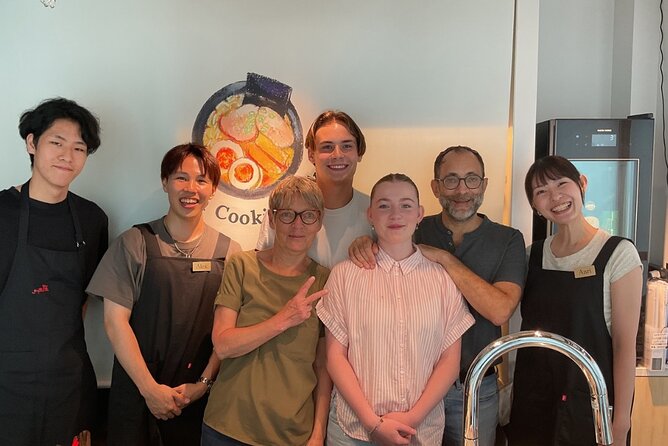
This class is built around a theme of connection through food, with hosts sharing stories about Japanese culinary traditions as you cook. That might sound soft, but it’s practical when you’re learning.
Why? Because culinary technique makes more sense when you understand the mindset behind it. Instead of thinking ramen is just noodles in broth or sushi is just rice and toppings, you start hearing about preferences, expectations, and small cultural habits tied to how dishes are made and enjoyed.
The “Beyond Cooking, Feel the Connection” framing shows up in the way the hosts teach: they don’t just instruct; they explain. When someone tells you what they’re aiming for and why, you can adjust as you go. That’s how you improve fast, even if you’re a first-timer.
And you’ll feel the warmth more than once. The instructors are described as welcoming and supportive, and that tone matters in a kitchen. Cooking is hands-on and slightly messy by nature. A friendly environment reduces the stress of getting something wrong.
Taste time and the take-home recipe that changes everything
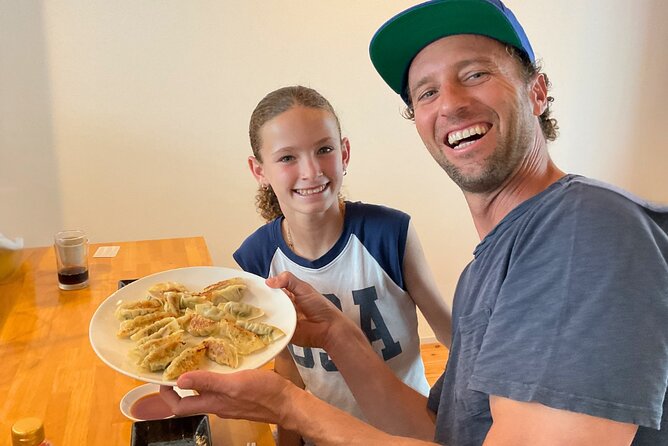
There’s a common problem with food experiences: you taste something great, take photos, then forget the exact steps later. This class fights that problem with a detailed recipe gift you receive so you can recreate the dishes at home.
That matters more than most people think. In Tokyo, it’s easy to taste dozens of amazing meals and still struggle to reproduce any of them. A recipe handout turns your experience into a skill you can use long after you’ve left the city.
Here’s what you should pay attention to when you’re cooking, because these are the spots that recipes usually help you lock in:
- ingredient amounts and how they’re measured
- the order you add things in
- texture and timing cues (what to aim for, not just what to do)
- how to assemble or finish the dish so it looks right and tastes balanced
Even if you don’t cook often, you’ll likely leave with enough detail to try again. Even if you do cook a lot, it’s still a shortcut to accuracy.
Price and value: is $79 a good deal?
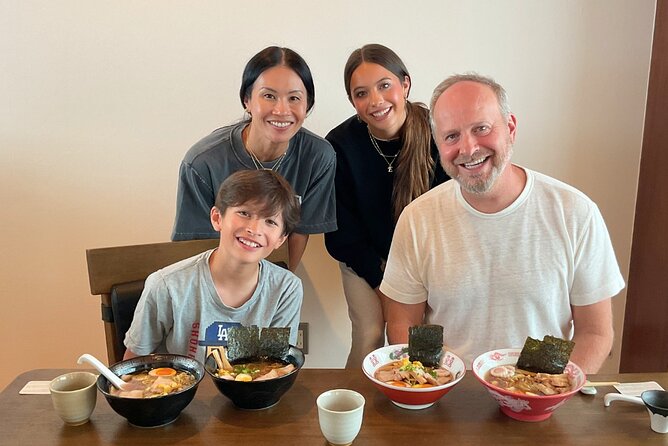
At $79 for around three hours, this sits in the “worth it if you’ll use it” category. You’re paying for more than ingredients. You’re paying for:
- a small guided cooking format capped at four
- English-friendly instruction
- cultural storytelling
- unlimited sake pairing plus other beverage options
- recipe handout designed for home recreation
- all fees and taxes included
You also avoid one of the hidden costs of food activities in Tokyo: time. If you’re working with a limited window in the city, a focused class like this can be more efficient than piecing together multiple meals and tours just to learn a single skill.
Not included is private transportation, so you’ll want to handle getting to Tsukishima on your own. That’s normal for many Tokyo experiences, but it’s still worth factoring in when you’re budgeting your evening.
Bottom line: if you like learning by doing and you want a take-home reference, $79 feels fair. If you only want to eat and don’t care about recreating anything, there may be cheaper ways to enjoy ramen in Tokyo. But if you want a skill, this price makes sense.
Who this class is perfect for
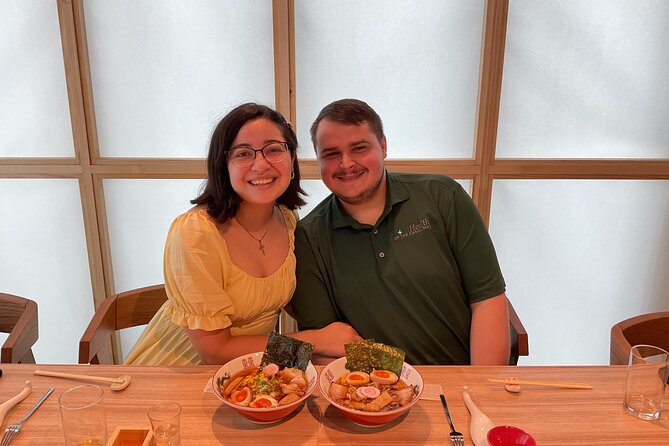
This class is built for a wide range of people, including families, couples, and friends, and it’s designed for both beginners and more practiced cooks. That flexibility shows in the tone: it’s not presented as some high-pressure culinary exam.
Couples
If you’re on a date night that isn’t just restaurant-hopping, this gives you a shared activity. You also get the relaxed social element from sake pairing, which can turn a meal into an experience you remember.
Families and mixed groups
The class format works well because everyone can participate. Kids can often enjoy the hands-on part, while adults get the technique and cultural stories. The overall vibe is friendly, which helps when people have different cooking comfort levels.
Solo travelers
If you’re traveling solo, small-group learning can be a relief. You get to talk with the hosts and the other participants without the feeling of standing around alone. It’s still shared, but the cap keeps it human-sized.
Practical logistics: meeting point, timing, and what to plan
The tour starts at 2-chōme-13-5 HAUS Tsukishima in Chuo City and ends back at the same place. It’s listed as being near public transportation, which is what you want in Tokyo if you’re planning dinner afterward.
The duration is around 3 hours. That’s enough time to cook, learn, taste, and still feel like you did something “real,” without the day stretching too long.
A quick planning note: because the class includes unlimited sake, Japanese beer, and non-alcoholic beverages, it’s smart to think about your post-class plans. If you want a lively night out, you’ll likely be in a good mood for it. If you prefer a quiet evening, choose non-alcoholic options and keep an easy pace with food and rest.
You’ll also want to confirm the exact dish pairing for your session when you book, because the descriptions reference ramen plus sushi or optional gyoza. That affects what you’ll be making most.
Should you book this Tokyo ramen-and-sushi class?
I’d book it if you want a small, friendly cooking class where you actually learn enough to repeat the dish at home. The standout strengths are the intimate group size, the English-friendly instruction, and the combination of cooking + cultural stories. Add in unlimited sake pairing and a detailed recipe gift, and you’ve got a complete experience for the money.
I’d skip it or choose something else if your goal is purely to eat without caring about technique, or if you need full privacy and total one-on-one pacing. It’s small, not private.
If you’re in Tokyo for a short visit and want one activity that delivers both flavor and skill, this is a strong pick.
FAQ
How long is the cooking class?
The class runs for about 3 hours.
Where does the class start?
It starts at Japan, 104-0051 Tokyo, Chuo City, Tsukuda, 2-chōme135 HAUS Tsukishima.
Is transportation included?
No. Private transportation is not included.
How many people are in the group?
The small group is capped at four people. The activity is also described as having a maximum of 8 travelers.
What will I learn to make?
You’ll learn ramen and sushi, with gyoza mentioned as an optional part of the experience.
Are drinks included?
Yes. The class includes unlimited sake pairing, plus Japanese beer and non-alcoholic beverages.
Do I get recipes to take home?
Yes. You receive a detailed recipe as a gift so you can recreate the dishes at home.
What’s the booking confirmation like?
You’ll receive confirmation at the time of booking.
What’s the cancellation policy?
You can cancel for a full refund up to 24 hours in advance. If you cancel less than 24 hours before the start time, you won’t receive a refund.