REVIEW · UBUD
From Ubud : Ubud Balinese cooking class with Market tour
Book on Viator →Operated by Wayan Aris · Bookable on Viator
Food in Ubud starts with a plan.
I love how the experience pairs a traditional morning market tour with a hands-on 9-dish cooking class, so you understand the ingredients before you cook them. It also helps that the group stays small, which makes it easier to ask questions while you’re working at the outdoor-style kitchen. One heads-up: the food can be very spicy, and a couple of people found the pace or presentation a bit rushed, so if you’re heat-shy, plan to tell your guide early.
Wayan Aris and his team keep the focus on Balinese flavors that go beyond the usual tourist plates. You’ll learn how spice paste becomes the base for multiple dishes, then sit down to a buffet meal you made yourself. It’s built for a stress-free half-day—especially with hotel pickup and drop-off in Ubud center—but it’s not designed for long rides outside the area without extra cost.
In This Review
- Key Highlights at a Glance
- Cooking Skills in Ubud: What You Really Learn in 5 Hours
- The Morning Market Tour in Tampaksiring: A Real Ingredient Reality Check
- Rice Paddies and Subak Vibes: Why the Scenery Is Part of the Lesson
- The Outdoor-Style Cooking: Spice Paste, 9 Dishes, and Real Hands-On Work
- Buffet Lunch at a Balinese House: The Part Where You Actually Enjoy Yourself
- Canang Offering Making for Afternoon Sessions: A Different Side of Balinese Food Culture
- Recipes PDF and Take-Home Value: Cook Again Instead of Just Taking Photos
- Price and Logistics in Ubud: Does $58 Make Sense?
- Who Should Book This Ubud Balinese Cooking Class
- Who This Is Perfect For on a Family Trip or Solo Day
- Should You Book This Ubud Balinese Cooking Class with Market Tour?
- FAQ
- Is hotel pickup included?
- Do I get the market visit and rice paddies?
- What cooking will I do during the class?
- Is making a canang offering included?
- What food is included?
- Do I receive recipes to take home?
- What should I bring?
- Is alcohol included in the price?
Key Highlights at a Glance
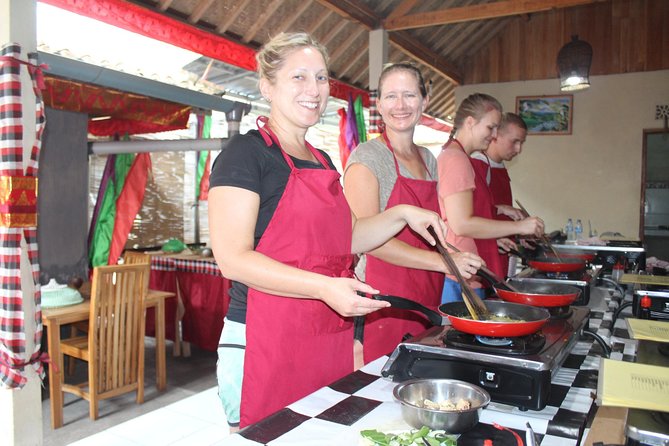
- Small group (max 12) means more time at the cooking station
- Morning market + rice paddies add context to what ends up on your plate
- Spice paste foundation shows you how Balinese flavors build across recipes
- 9 recipes + PDF copy give you something to cook again after you leave
- Chef-family energy with Wayan Aris and his household at the center of it
Cooking Skills in Ubud: What You Really Learn in 5 Hours
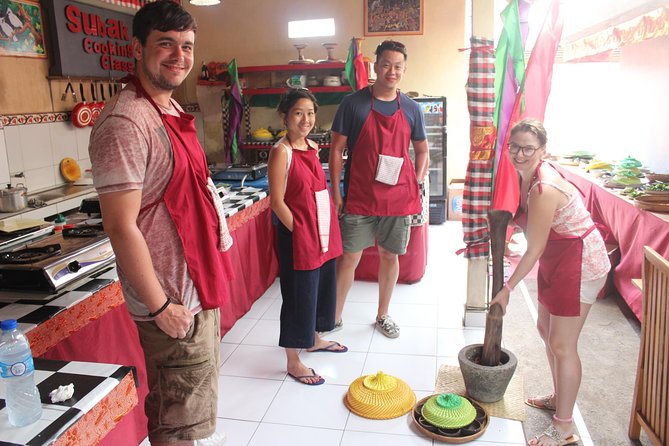
This is a practical Balinese cooking class where the goal isn’t just feeding you. It’s teaching you the structure of flavor: you start with ingredients, then you make a spice paste that works as a base for several dishes, and then you cook your way through a set of recipes.
The class runs about 5 hours, so you won’t feel like you’re trapped all day. In exchange, it moves with purpose. That’s usually a good thing in cooking classes: you learn by doing, not by watching someone else work for hours. Just keep in mind that a small number of people felt the flow could be a bit mechanical—so if you learn best with a slower pace, don’t hesitate to ask for clarification when you’re at the cutting board.
You can also read our reviews of more tours and experiences in Ubud.
The Morning Market Tour in Tampaksiring: A Real Ingredient Reality Check
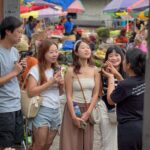
If you’re on the morning session, your day begins with a visit to a local market in the Tampaksiring area. This stop matters because it changes how you see the cooking. Instead of treating spices as a mystery powder, you get to connect them to real produce, seasonings, and everyday items that locals actually use.
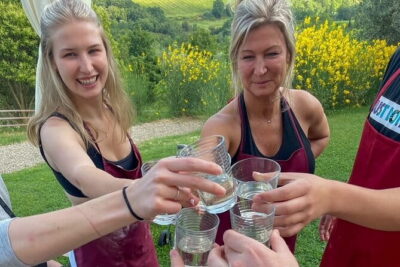
From the feedback, this part is often the most interesting for people who like food culture—not just food. One strong detail: Wayan has relationships at the market and can introduce you to people there, which makes the visit feel less like a drive-by and more like you’re tagging along with a friend who knows the place. You’ll also get a welcome drink (cold ice tea), which is a nice touch when you’re walking and looking for ingredients.
Practical note: the market visit is only included with the morning class. If you book an afternoon session, you’ll miss this piece and shift focus to the ritual cooking elements later in the day.
Rice Paddies and Subak Vibes: Why the Scenery Is Part of the Lesson
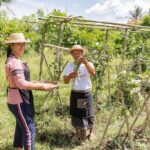
After the market, the morning group heads to rice paddies. Even though this is a cooking class, the rice field stop isn’t just “pretty scenery.” It gives you context for why Balinese cooking tastes the way it does and how local life connects to food.
People who enjoy photos and quiet moments tend to like this stop. It’s also useful because it breaks the day into segments: market first, then nature and local farming rhythms, then back to the kitchen. You’ll see the environment that supports the crops and plant ingredients that show up later during cooking.
This is also a good time to slow down and reset if the market felt like sensory overload. Wear shoes you can walk in comfortably—this kind of stop can mean uneven ground and lots of standing.
The Outdoor-Style Cooking: Spice Paste, 9 Dishes, and Real Hands-On Work
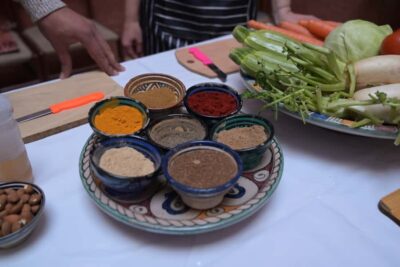
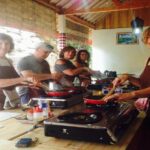
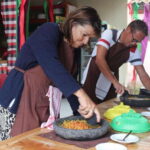
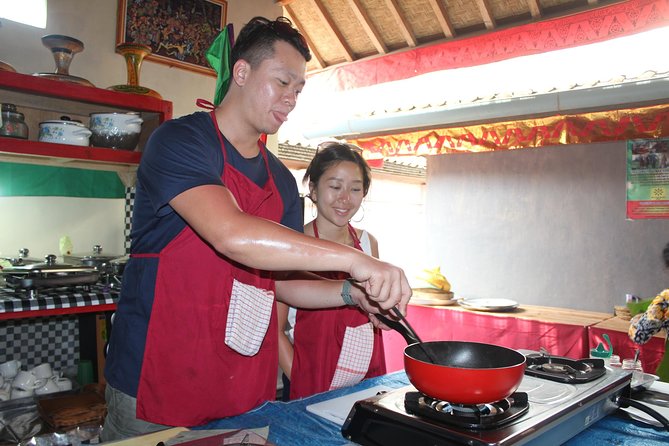
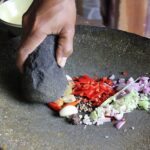
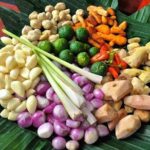
Now for the reason you booked: the cooking. The class starts by making a Balinese spice paste, which becomes the base for many dishes. This is a big deal. Once you understand the paste, you start seeing patterns in flavor—how heat, aromatics, citrusy notes, and depth come together.
You’ll then cook a total of 9 Balinese recipes. Some dishes are clearly listed, including fried tempe, Balinese chicken, and vegetable soup. Those give you a good spread: a crispy side or snack-style dish, a main built on spiced chicken, and a comforting soup that shows how seasoning behaves in liquid.
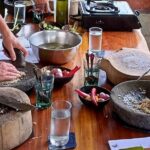
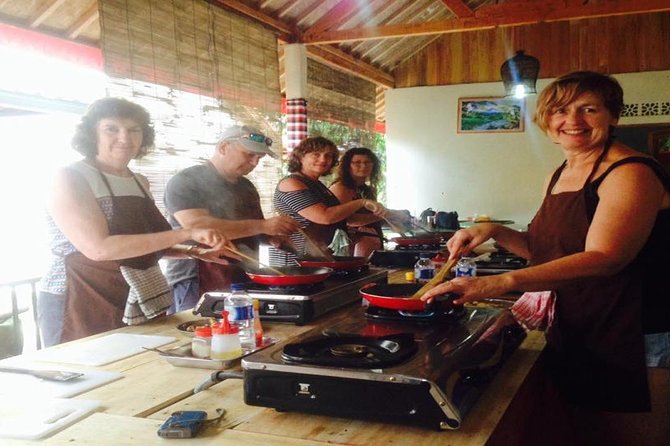
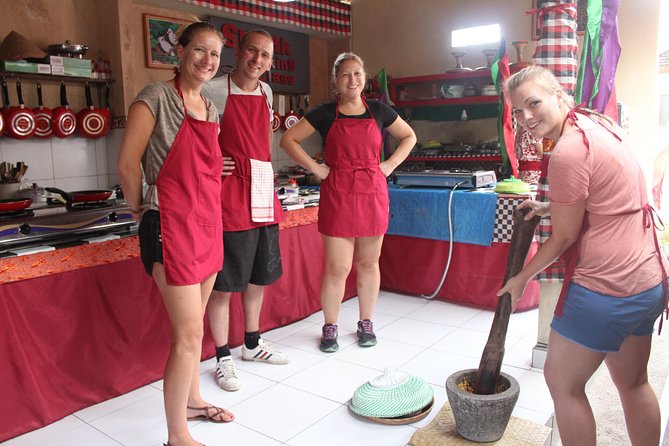
The hands-on element is where this class earns its high marks. The kitchen setting is set up so you can do the chopping, mixing, and cooking steps instead of only watching. In one family-style experience, the cooking portion was described as sensational, and that tracks with how these classes are designed: multiple stations, active instruction, and you eating what you make.
One important consideration: spice tolerance. A couple of people struggled to eat everything because the dishes were extremely spicy, even if they were trying to keep up. If you know you’re sensitive, it’s smart to be strategic with tasting and communicate your preference early. Bring water, and don’t feel pressured to force every bite if heat overwhelms you.
Buffet Lunch at a Balinese House: The Part Where You Actually Enjoy Yourself
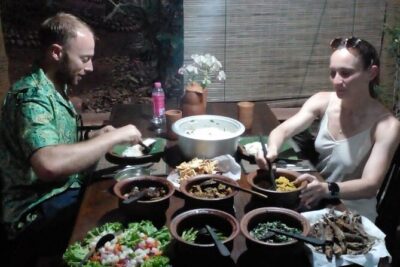
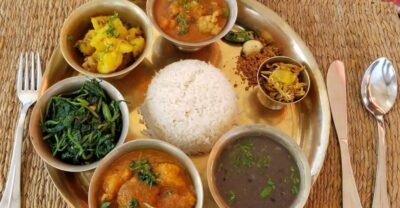
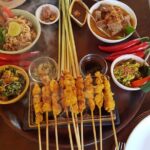
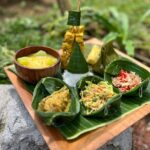
After the cooking, you sit down for a buffet lunch at a Balinese house. This is more than a reward for effort—it’s where you get to compare flavors across dishes you made yourself.
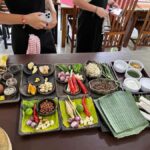
You’ll also have food tasting during the process, so the meal at the end works as a full tasting table rather than the only moment you get to eat. In a good class, tasting helps you notice what “balanced” tastes like in Balinese cuisine, and the buffet format makes it easier to try one more item before you move on.
From the positive feedback, the food quality is a big reason people recommend the class. Even people who found pace issues still said the cooking itself was fun and the results were delicious. Translation: you’re likely to leave fed and satisfied, not just educated.

Canang Offering Making for Afternoon Sessions: A Different Side of Balinese Food Culture
If you’re taking an afternoon class, one added element appears: making a canang offering (canang sari). This isn’t a cooking technique, but it’s very much part of how many Balinese households connect daily life, food, and ritual.
Think of it as cultural context you can see with your own eyes. You’ll follow along with the process and likely handle components used in the offering. For some people, this becomes the most memorable part because it goes beyond the kitchen and shows how ingredients travel into practice and tradition.
One thing to remember: canang offering making is listed as afternoon-only. If you want both the market and the canang, you’d need the right session timing, since the market and rice paddies are morning-only.
Recipes PDF and Take-Home Value: Cook Again Instead of Just Taking Photos
You don’t just leave with full bellies—you leave with a way to repeat the experience. You’ll get a PDF copy of the 9 Balinese recipes. That makes the class far more valuable than a one-off meal, because it gives you a reference for the dish list you cooked.
The practical advantage here is clarity. When you’re cooking from a recipe later, you’ll appreciate having written guidance that matches what you did during the class. It’s also a nice souvenir that actually gets used back at home.
You should also plan to take photos. The experience mentions bringing a camera for picture-taking, which is useful since you’ll have a few different settings: market, rice paddies, and the cooking area.
Price and Logistics in Ubud: Does $58 Make Sense?
At $58 for about 5 hours, you’re paying for an all-in program: guided stops, active cooking instruction, food tastings, and a buffet meal. You’re also paying for convenience, especially the hotel pickup and drop-off in Ubud center and use of an air-conditioned vehicle.
This is where value hinges on your location. Pickup/drop-off is included only for Ubud center. If you’re staying outside the area, you’ll face additional charges for transport—so check your pickup radius before you fall in love with the idea of a casual ride.
Also note what’s not included: alcoholic drinks. Water and the welcome cold ice tea are included, but if you want wine or beer, you’ll need to purchase it separately.
Group size is max 12, which matters more than people think. Larger groups can feel like a show. This one is small enough that instruction can land when you’re actively working.
Who Should Book This Ubud Balinese Cooking Class
This tour fits best if you:
- Want a hands-on cooking class, not a lecture
- Enjoy market experiences where you learn about ingredients before cooking
- Like family-run energy and guides who can add context beyond the recipe steps
- Are happy to eat spicy food or at least taste through it
It might not be ideal if:
- You’re highly spice-sensitive and know you’ll avoid most dishes once heat hits
- You dislike structured pacing and prefer a slower, more open-ended class flow
- You’re outside central Ubud and don’t want the extra transport cost
Who This Is Perfect For on a Family Trip or Solo Day
Families often do well with this kind of program because everyone gets multiple chances to taste, and the variety across 9 dishes keeps plate-time interesting. One family experience highlighted how the day worked well even with kids, with a 40-minute drive through villages and a guide who shared local information.
If you’re solo, the small group size helps you feel included rather than shoved into the background. And if you’re a couple, it’s a rare activity where both of you are busy together, then relax together at the buffet.
Should You Book This Ubud Balinese Cooking Class with Market Tour?
I’d book it if you want a real Balinese cooking day that connects ingredients to dishes and gives you take-home recipes. The strongest reason is the combination: market context plus outdoor-style cooking plus a full meal you made. Add the fact that it’s capped at 12 people and led by Wayan Aris and his family, and it tends to deliver good attention.
I would think twice only if spicy food is a hard no for you. Heat is part of the cooking here, and while you can manage your own eating, the dishes may still be too spicy for comfort. If that’s you, message your needs in advance and consider tasting strategy.
If you want, tell me which month you’re going and whether you’re aiming for the morning or afternoon session, and I’ll help you pick the best fit based on what you care about most: market and paddies, or canang offering and ritual culture.
FAQ
Is hotel pickup included?
Yes. Pickup and drop-off are included for hotels in Ubud center.
Do I get the market visit and rice paddies?
Those are included for the morning class only, with stops at a traditional market in the Tampaksiring village area and local rice paddies.
What cooking will I do during the class?
You’ll make a Balinese spice paste and then cook a total of 9 Balinese recipes, including dishes such as fried tempe, Balinese chicken, and vegetable soup.
Is making a canang offering included?
Making a canang offering is included for the afternoon class only.
What food is included?
You’ll have food tasting during the class and a buffet lunch at a Balinese house.
Do I receive recipes to take home?
Yes. You’ll receive a PDF copy of the 9 Balinese recipes.
What should I bring?
Wear a normal uniform. Bring cash if you want to handle additional charges related to areas outside Ubud center. It’s also suggested to bring a camera for pictures.
Is alcohol included in the price?
Alcoholic drinks are not included. They are available to purchase.