REVIEW · KYOTO
Arashiyama’s Best Vegan Ramen & Gyoza Class
Book on Viator →Operated by Kyoto green cuisine · Bookable on Viator
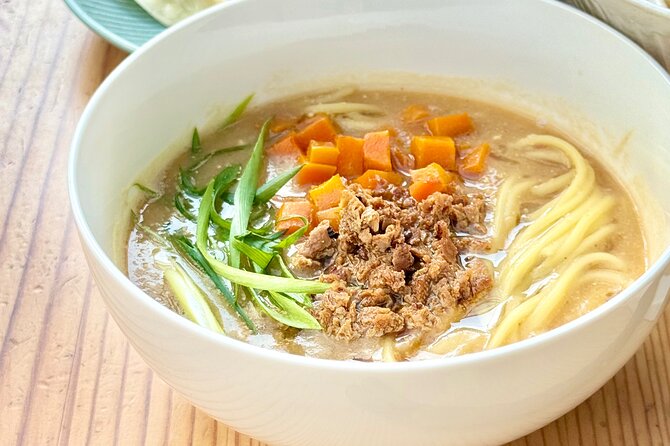
Kyoto ramen, but make it 100% plant-based. In Arashiyama, you’ll learn to build a dashi-free umami broth from scratch and cook crispy gyoza with an English-speaking instructor in a home kitchen.
What I like most is how seriously they chase flavor, not just labels. The focus on kombu, shiitake, and Kyoto vegetables means the ramen has depth that meat-lovers tend to respect.
One drawback to flag up front: the hosts have a dog, so this isn’t a fit if you have animal allergies. If you have any food allergies, tell them before you go.
In This Review
- Key things to know before you go
- Arashiyama Station is the easiest starting line
- Price and value: what $65.15 buys you
- Meet Satoru and Akiko: the home-kitchen style that wins points
- The core skill: building a dashi-free umami broth
- What you should pay attention to while cooking
- Two broths and one big takeaway for meat-lovers
- Crispy gyoza: learning the texture, not just the recipe
- Lunch vs dinner: how reservation timing changes your experience
- Logistics that actually matter on the day
- Allergies, animal allergies, and what to tell them beforehand
- Should you book this Arashiyama vegan ramen & gyoza class?
- FAQ
- What does the class include?
- How long is the experience?
- Is the ramen broth dashi-free?
- Are gluten-free options available?
- Where do I meet and where does it end?
- What should I know if I have allergies?
Key things to know before you go

- 100% plant-based and dashi-free broth built from kombu, shiitake, and Kyoto vegetables
- Two types of ramen broth plus crispy gyoza made from scratch
- Cook and eat with the instructor at lunch or dinner reservations
- English-speaking guidance with clear steps and a relaxed pace
- Private group experience, starting and ending at Arashiyama Station
- Dog on site, and allergies should be communicated in advance
Arashiyama Station is the easiest starting line
Arashiyama is one of Kyoto’s most convenient neighborhoods for food-focused activities. You start at Arashiyama Station, and the experience ends back at the same meeting point. That saves you from the “now how do I get back?” scramble after dinner.
The area also helps set expectations. You’re in a place famous for Kyoto’s classic sights, but this class keeps you closer to daily life: hands-on cooking in a real kitchen environment rather than a production-style venue.
Even if you’re only doing a couple of hours in the area, this fits well. You can plan it before or after browsing Arashiyama, without it turning into a half-day commitment.
You can also read our reviews of more tours and experiences in Kyoto.



Price and value: what $65.15 buys you
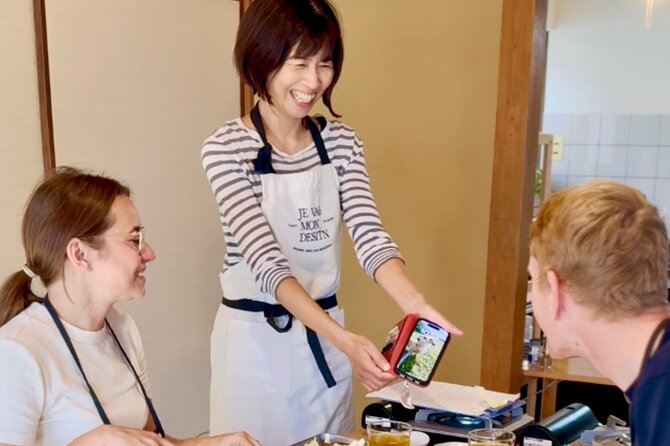
At $65.15 per person, this isn’t a cheap snack course. But you’re paying for instruction, ingredients, and the chance to cook, not just watch.
Here’s what that price covers, in practical terms:
- An English-speaking instructor
- You cook and eat with the hosts (lunch or dinner depending on your reservation)
- Aprons and towels are provided
- Bottled water and tea are available
- You take home cooking recipes
So you’re not just buying ramen. You’re buying skills you can repeat, plus recipe guidance you can actually use later. That’s where the value starts to make sense, especially if you’ve ever tried to replicate Japanese restaurant flavors at home and gotten… sad results.
Also note the group format. This is a private tour/activity, meaning your group stays together and you’re not squeezed into a crowded class. That usually makes it easier to ask questions, slow down when needed, and get clarity on steps.
Meet Satoru and Akiko: the home-kitchen style that wins points
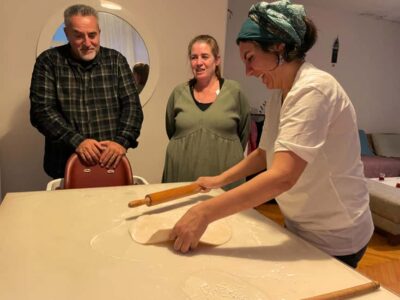
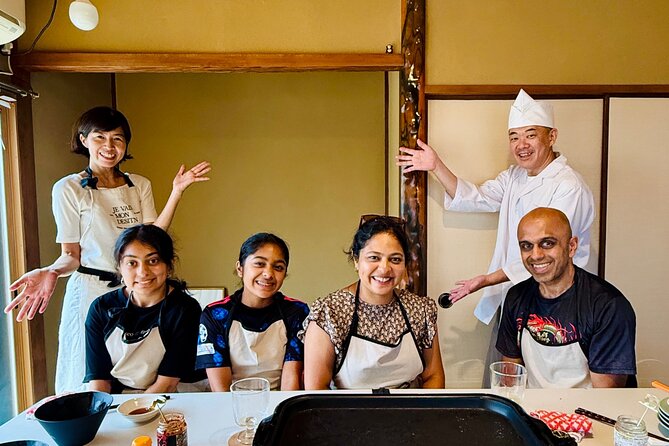
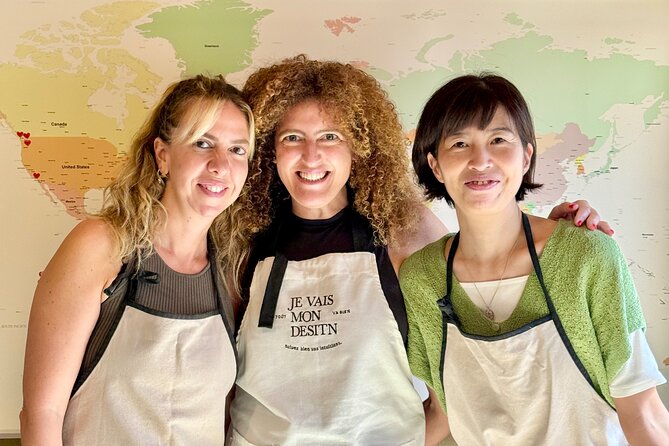
This kind of class works when the teaching vibe feels calm and organized. The hosts here, Satoru and Akiko, run it like a tidy, friendly kitchen session—welcoming, clear, and not rushed.
From what I’d expect in a well-run home class, the key is communication. You’ll have an English-speaking instructor, and you should feel comfortable asking details if something is unclear. That matters with ramen broth and gyoza, where small choices affect the final taste and texture.
One more practical upside: you’re close to real cooking workflows. Instead of complicated station hopping, you’re likely to spend time where the action is—broth building, then gyoza prep and cooking, then sitting down to eat what you made.
It’s also set up to be comfortable. Aprons and towels being included is one of those small things that makes the whole experience feel easier from minute one.
The core skill: building a dashi-free umami broth

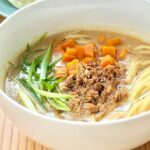
The headline here is 100% plant-based and dashi-free. That means they aren’t relying on standard dashi shortcuts. They build richness by layering kombu (kelp), shiitake, and fresh Kyoto vegetables until the broth hits that savory, satisfying target.
They also frame the goal clearly: they wanted a vegan ramen that wouldn’t get the polite response of it’s good for vegan. The aim is more direct—flavor that can stand up to meat-based tonkotsu-style satisfaction.
And that’s not just marketing. Dashi-free is meaningful because kombu and shiitake carry strong natural flavor. When you treat them right—timing, intensity, and layering—you can get a broth that tastes full, not flat.
You’ll make two types of rich ramen broth. Even if you don’t already cook, the lesson is about understanding how different flavor foundations can still land in the same satisfying bowl.
What you should pay attention to while cooking
In a broth-focused class, your best “souvenir” isn’t just the recipe sheet. It’s the moment you learn what signals readiness. Even without exact measurements being your only tool, you can learn:
- when the broth smells properly savory (not just vegetal)
- how the flavor deepens as ingredients work together
- how to keep it tasting balanced rather than one-note
The instructors’ style seems designed for this kind of clarity. The class is described as well organized with clear instruction and good timing, which is exactly what you want when you’re building a broth from scratch.

Two broths and one big takeaway for meat-lovers
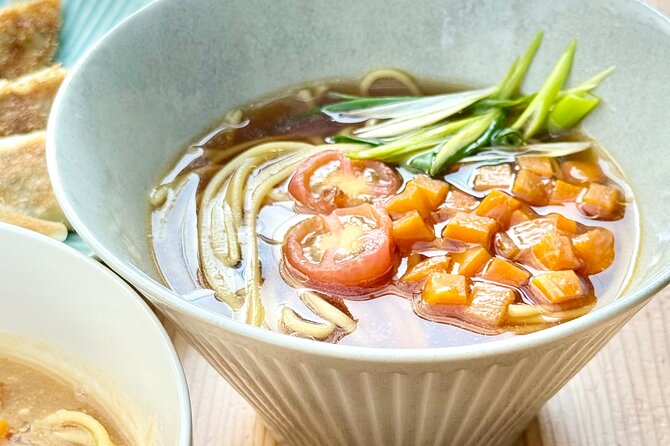
The promise isn’t that plant-based food imitates meat in a sad way. It’s that the broth’s umami should do the heavy lifting.
This matters because many people try vegan ramen and end up thinking it’s light or plain. Here, the philosophy is simple: if guests want joy, you have to engineer the taste. Kombu, shiitake, and Kyoto vegetables are doing a lot of the work, and you’ll learn how they’re layered to create depth.
If you’re an omnivore, this approach is easier to trust. The hosts say they’re not vegans—they’re passionate food people who love meat and fish, and they were disappointed by earlier attempts at vegan ramen that lacked depth. That context helps explain why they obsess over flavor structure.
If you’re vegan or vegetarian, you still get a ramen lesson that respects your goal. You’re not settling for “okay.” You’re learning a method meant to taste satisfying on its own.
Also keep an eye on the dietary flexibility. They note gluten-free options available, which is valuable if you’ve struggled to find ramen that won’t wreck your plans.
Crispy gyoza: learning the texture, not just the recipe
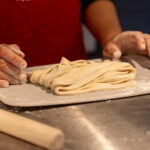
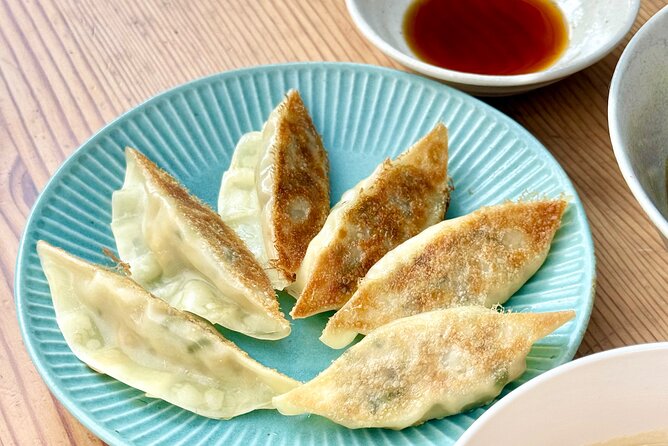
Gyoza can be deceptively simple. The outside has to be crisp, and the inside has to be properly tender and flavorful. This class focuses on crispy gyoza from scratch, and that usually means you’re doing the prep work yourself rather than assembling a pre-made product.
Even though the exact technique steps aren’t listed here, the core lesson is clear: you’ll be taught how to get that crispy result. That’s the part most home cooks try to guess at.
A good gyoza class typically teaches you texture cues. You should aim to learn:
- what “crispy” looks like as it cooks
- how to avoid sogginess
- how to keep the flavor balanced instead of greasy
This is also where the class vibe matters. Reviews describe the environment as friendly and relaxed, which is helpful because cooking gyoza well requires attention but not panic.
You’ll likely move from broth-focused work to hands-on gyoza cooking smoothly. That flow is part of what makes the two-hour format feel manageable.
Lunch vs dinner: how reservation timing changes your experience
You’ll choose lunch or dinner. For each, the pattern is the same: you can cook and eat with them.
That timing shift matters because ramen and gyoza feel different depending on the hour. Dinner tends to feel more like a full “meal experience,” while lunch can work as a calming reset during a day of sightseeing.
Either way, you’ll be fed with what you made. The class includes dinner for evening reservations and lunch for lunch reservations, so you’re not buying ingredients and then walking away.
Also note what isn’t included. Alcoholic beverages and soda/pop aren’t included, so if you want them, plan on paying separately or skipping them.
Logistics that actually matter on the day
This is near public transportation, and your start point is Arashiyama Station. With Japanese transit, that’s a big deal. You can plan without guesswork and get to class without adding extra transit stress.
Your ticket is mobile, and the experience is listed as a private tour/activity. Private doesn’t just mean less crowded. It usually means the instructor can pace things to your group and help with questions.
Duration is about 2 hours (approx.). That’s long enough to cook broth and gyoza properly, but short enough that it won’t steal your entire day.
If you’re scheduling around Arashiyama sights, I’d place this earlier rather than later if you’re the type to get hungry fast. Cooking turns up your appetite, and you’ll want energy after.
Allergies, animal allergies, and what to tell them beforehand
Please don’t skip this section.
The hosts have a dog at the home, and they explicitly recommend this experience is not suitable for people with animal allergies. If that applies to you, look for another Kyoto food class where allergens are not part of the picture.
They also ask that you notify them in advance if you have food allergies. If you’re traveling with a serious allergy, contact details matter. This is the kind of class where ingredients are layered for flavor, so “minor” allergies should still be taken seriously.
If you don’t have allergies, you still benefit from the transparency. It helps the hosts prepare properly, and it helps you enjoy the meal without worrying.
Should you book this Arashiyama vegan ramen & gyoza class?
If you want ramen that tastes like ramen, this is an easy yes. The strongest reason to book is the focus on umami and the idea that a vegan bowl should be satisfying enough for meat-lovers. That’s a rare angle, and it’s supported by the way the class is described: organized, clear, and centered on the food.
I’d especially book if:
- you want hands-on skills, not just a tasting
- you’re curious about dashi-free broth and how it can still be deep
- you care about getting recipes you can use at home
- you’d rather learn in a calm home setting than a crowded kitchen
Skip it if you have animal allergies due to the dog in the house. And if you’re allergic to specific foods, make sure you communicate that early so they can adjust safely.
FAQ
What does the class include?
You get bottled water and tea, and you can cook and eat with the hosts for your reservation (lunch or dinner). You’ll also have aprons and towels provided, an English-speaking instructor, and cooking recipes.
How long is the experience?
It’s about 2 hours (approx.).
Is the ramen broth dashi-free?
Yes. The experience specifies 100% dashi-free and plant-based.
Are gluten-free options available?
Yes, gluten-free options are available.
Where do I meet and where does it end?
You start at Arashiyama Station and the activity ends back at the meeting point.
What should I know if I have allergies?
The hosts have a dog, so it’s not recommended for animal allergies. If you have food allergies, you should inform them in advance.