REVIEW · OSAKA
Ramen and Gyoza Cooking Class in Osaka Dotonbori
Book on Viator →Operated by Cooking Sun · Bookable on Viator
Ramen and gyoza cooking makes Osaka stick. This hands-on class in Dotonbori has you making ramen noodles and broth from scratch and shaping gyoza like you’re plating your own little restaurant in Japan.
I especially like the small group size (max 8), which means you get real step-by-step help, and the customization options that help you tailor flavors to your own tastes.
One drawback: gluten-free isn’t available, so this is not the pick if you need a strict gluten-free meal.
In This Review
- Key Highlights You Should Know
- Why This Osaka Ramen and Gyoza Class Feels Like a Food Workshop
- Location and Getting There: Dotonbori’s Food District, with a Residential Twist
- The 3-Hour Flow: What You’ll Do From Arrival to Dinner
- 1) Start with instruction and getting set up
- 2) Make ramen noodles from scratch
- 3) Build ramen broth
- 4) Make gyoza filling and fold the dumplings
- 5) Customize toppings and finish with the meal
- Making Ramen Noodles by Hand: The Skill That Changes Everything
- Why this matters for value
- Broth Base, Fish Notes, and Toppings: Build a Bowl You Actually Like
- Gyoza the Osaka Way: Filling Control and Real Folding Practice
- Diet Requests and the Gluten Limitation You Must Plan Around
- Small Group Size and English Instruction: Why It Feels Personal
- What You Take Home: Recipes That Actually Help You Cook Again
- Price and Value: Why $71.35 Makes Sense Here
- Who This Cooking Class Is Best For (and Who Should Skip It)
- Should You Book This Dotonbori Ramen and Gyoza Class?
- FAQ
- Where does the class meet in Osaka?
- What time does the experience start?
- How long is the cooking class?
- Is this a small group experience?
- Is gluten-free food available?
- Can I request vegetarian or no-fish options?
- What is included in the price?
- Do I get recipes to take home?
- Should I book if my dietary needs are complicated?
- What if I need to cancel?
Key Highlights You Should Know

- Ramen noodles and broth from scratch: You’ll knead noodles by hand and make the soup base.
- Gyoza from filling to fold: Build your filling, then fold dumplings with guidance.
- Customize your toppings and fillings: Adjust flavors to what you actually like to eat.
- Diet requests are possible (with limits): Vegetarian, pescatarian, and no-fish notes can be added. Gluten-free is not offered.
- Maximum 8 people: More attention from the English-speaking instructor team.
- English instruction from familiar faces: Classes have been taught by instructors including Miki and Jun (names vary by session).
Why This Osaka Ramen and Gyoza Class Feels Like a Food Workshop
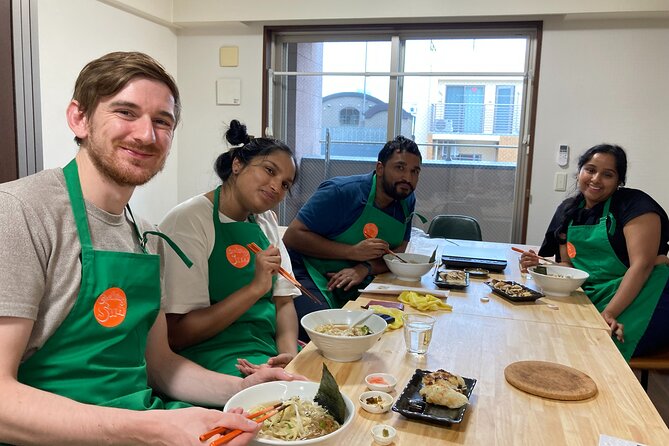
If you love eating in Osaka, this is the kind of experience that turns memories into something you can repeat at home. Instead of just tasting street food, you’ll make a full meal—ramen and gyoza—using techniques that explain why Japanese dishes taste the way they do. That context matters. It helps you recreate results, not just copy a recipe.
The best part is that the class focuses on skills, not performance. You’re not watching someone else cook while you take photos. You’ll knead, shape, assemble, and then eat what you made. And because the class is capped at 8 people, it doesn’t feel like you’re stuck in the back row waiting for instructions.
You can also read our reviews of more tours and experiences in Osaka.
Location and Getting There: Dotonbori’s Food District, with a Residential Twist
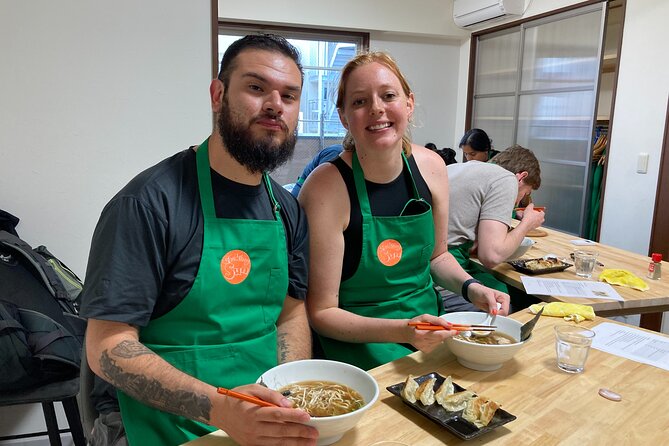
The class starts at 1:30 pm at Cooking Sun, in a building address listed as:
Cooking SunJapan, 542-0082 Osaka, Chuo Ward, Shimanouchi, 2-chōme 914 807号室.
It’s described as near public transportation, and you’ll receive a mobile ticket. That part is easy.
The part that can trip you up is that the cooking venue is in a building that doesn’t feel like a classic shopfront. You’ll likely need to find the building, then use the elevator to the room level. If you rely on a name-only map search, you might end up at the wrong place. My advice: plug in the full address and use that, especially if walking around Osaka streets makes your brain go into autopilot.
The 3-Hour Flow: What You’ll Do From Arrival to Dinner
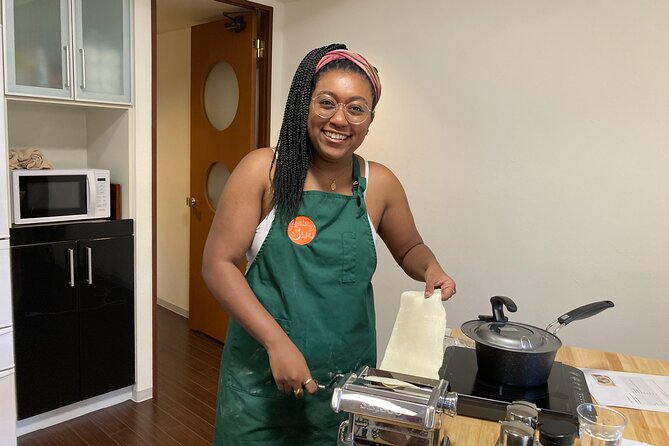
This is roughly a 3-hour class, and it ends back at the meeting point. Many sessions run fast once you get cooking, so plan your day like it’s an afternoon event that can turn into an early dinner.
Here’s the practical shape of the experience:
1) Start with instruction and getting set up
You’ll begin with an English-speaking instructor briefing you on what you’ll be making and how the process works. You’ll also hear the logic behind techniques—why certain steps happen before others, and what to watch for while you work.
2) Make ramen noodles from scratch
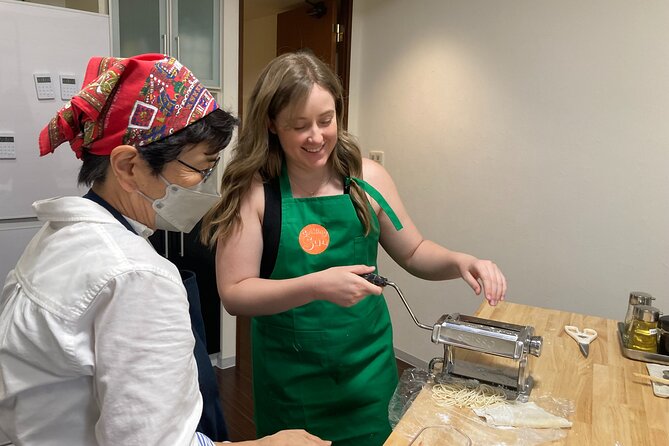
You’ll knead ramen noodles by hand. That’s the part people tend to underestimate. Noodle dough sounds simple until you’re responsible for the feel of it. The payoff is huge: when your noodles turn out right, the bowl tastes more convincing than just using store-bought noodles.


3) Build ramen broth
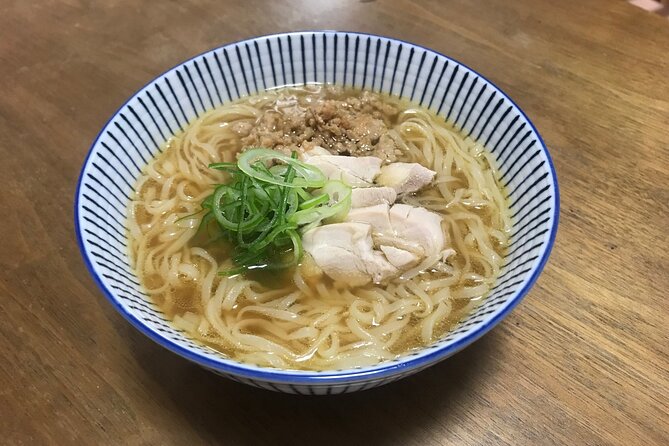
You’ll also make the ramen soup base. The class is described as using a fish/chicken base, with options for people who don’t want fish when you request it in advance. As you cook, you’ll learn what elements go into the broth flavor.
4) Make gyoza filling and fold the dumplings
Next comes the gyoza. You’ll prepare the filling (chopped ingredients and seasoning) and then fold the dumplings—typically using premade wrappers so the focus stays on technique, not rolling dough from scratch.
5) Customize toppings and finish with the meal
Then comes the fun part: assembling bowls with your own ramen toppings and eating the meal you made. You’ll also take home printed recipes, so the whole thing isn’t limited to the kitchen that day.
Making Ramen Noodles by Hand: The Skill That Changes Everything
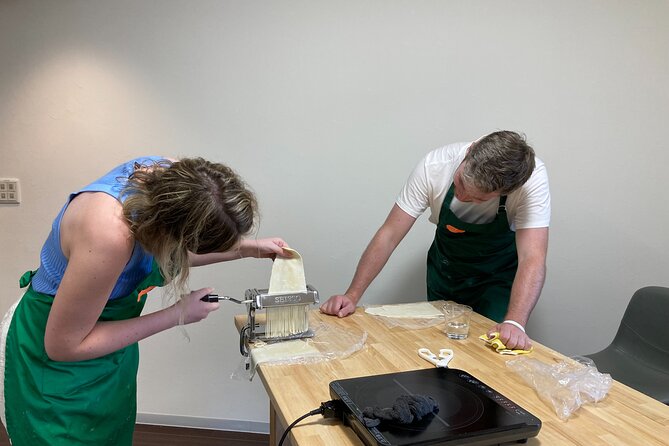
Ramen can seem mysterious if you only buy it as a packaged product or eat it out. In this class, the mystery gets replaced with muscle memory.
You’ll knead the dough yourself, which teaches you how ramen noodle dough behaves—how it tightens, stretches, and turns workable. That’s the kind of detail you don’t get from tasting. And once you’ve done it, you’ll understand why ramen noodles have a distinct texture compared with other noodles.
Why this matters for value
The $71.35 price is easier to justify when you consider that you’re not just paying for a meal. You’re paying for a chance to learn a core process—the noodles and broth—plus you get recipes to take home. That combination is what lets you recreate ramen at home later, instead of only remembering it as a one-off.
Broth Base, Fish Notes, and Toppings: Build a Bowl You Actually Like
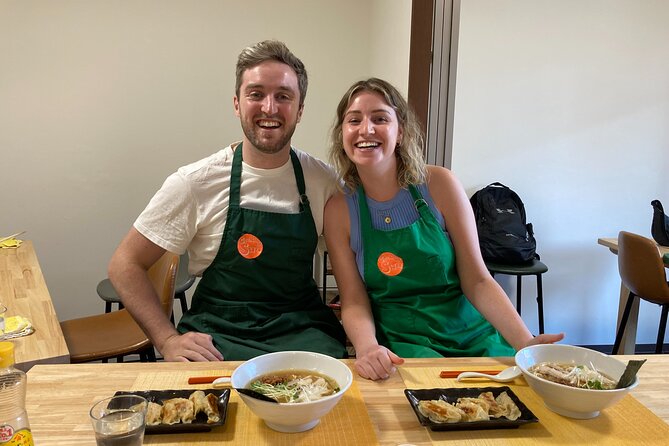
The ramen broth is described as a fish/chicken base. If you’re not a fish person, don’t panic. There’s an explicit option to add a no-fish note upon booking, and vegetarian/pescatarian options are also available if you request them ahead of time.
When it comes to toppings, the class is built around customizing your ramen. That’s a big deal because ramen shops in Japan don’t all taste the same. You’ll learn how to adjust the bowl to match your preferences—more savory, more balanced, or whatever your taste buds want that day.
Tip: if you have strong preferences (or dislikes), send that note while booking. It’s not just politeness. The class is designed to help people tailor their dish for different tastes and dietary needs.
Gyoza the Osaka Way: Filling Control and Real Folding Practice
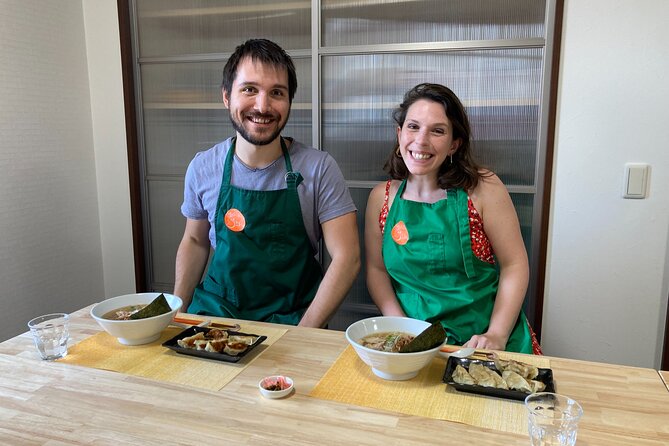
Gyoza feels simple until you’re folding it. This class gives you structure: you’ll make the filling, then fold dumplings with guidance. The wrappers are premade, which keeps the class timing realistic and makes the learning focus on flavor and technique.
You’ll also have room to customize the gyoza filling. That’s the part you’ll appreciate later when you try cooking from home. Instead of relying only on a single fixed flavor, you’ll understand how fillings come together and how you can adjust seasoning and ingredient choices.
And yes, the goal here is restaurant-level results. If you want gyoza that actually comes out satisfying and not just folded blobs, this is one of the better setups because you’re learning the process with hands-on feedback.
Diet Requests and the Gluten Limitation You Must Plan Around
Here’s the deal you should read twice: gluten-free is not available, and the class is not recommended for travelers with gluten intolerance.
So if gluten is a hard medical no, you’ll need another option in Osaka. Don’t gamble on it.
What you can do is request changes in advance:
- Vegetarian option / pescatarian option / no-fish option can be requested by leaving a note when you book.
In addition, the experience is described as accommodating dietary needs, and some sessions have included instructors working carefully with allergy concerns. Still, since only the no-fish/vegetarian/pescatarian requests are explicitly listed as options, I’d treat it like this: if your needs are specific, message early and be clear about what you can’t eat.
Small Group Size and English Instruction: Why It Feels Personal
This class runs with a maximum of 8 travelers, which keeps it from turning into a chaotic cooking sprint. You get more attention when you’re kneading dough, folding dumplings, or trying to figure out broth flavor.
The instruction is in English, and instructors have included people like Miki and Jun. The teaching style emphasized patience and step-by-step guidance, even for people who don’t cook much at home. That matters because ramen is one of those dishes that scares you before you try it. Here, the process is broken into doable steps.
If you’re traveling with family, this is also a strong option for teenagers and older kids who want something interactive but still structured.
What You Take Home: Recipes That Actually Help You Cook Again
A lot of cooking classes give you a meal and a memory. This one also gives you recipes to take home. That’s the difference between a fun afternoon and a skill you can reuse.
You’ll leave with a clearer understanding of:
- how ramen noodles are formed,
- how the broth is built,
- how gyoza filling and folding come together,
- and how to adjust flavors for your own tastes.
If you like eating Japanese food regularly at home, those written recipes reduce the trial-and-error time.
Price and Value: Why $71.35 Makes Sense Here
At $71.35 per person, you might wonder what you’re paying for. Here’s what’s included:
- all ingredients and utensils
- the hands-on class (ramen noodles + broth, gyoza from scratch)
- an English-speaking instructor
- recipes to take home
- all fees and taxes
You’re also eating the food you make. So you’re not paying extra for the meal.
Where the price really earns its keep is the fact that you’re learning major components—noodles, broth, and dumpling technique—not just assembling toppings. That’s a lot of instruction bundled into a single session.
Who This Cooking Class Is Best For (and Who Should Skip It)
This is a great fit if you:
- want to do something hands-on in Osaka Dotonbori
- enjoy cooking and want real technique, not just tasting
- want to recreate ramen and gyoza at home
- like small classes where you can ask questions
It’s not a good fit if you:
- need gluten-free (not available, and the class isn’t recommended for gluten intolerance)
- hate seafood flavors unless you request the right alternatives (fish/chicken base is standard, but no-fish requests exist)
Also, be ready for the fact that making ramen can feel like real work. One of the joys is that it’s satisfying, but yes—handmade noodles take effort.
Should You Book This Dotonbori Ramen and Gyoza Class?
If you want an Osaka experience that goes beyond eating, I’d book this. The combination of handmade noodles + homemade broth + gyoza folding, plus recipes to take home, is exactly what turns a trip into something you can keep cooking long after you leave.
Just plan around the key constraint: gluten-free isn’t on the menu. If that works for you, you’re in for a fun, structured afternoon with clear instruction and a meal you’ll feel proud to serve again.
FAQ
Where does the class meet in Osaka?
The class starts at Cooking Sun, Osaka, Chuo Ward, Shimanouchi, 2-chōme 914 807号室. The address is provided as part of the booking information.
What time does the experience start?
The start time is 1:30 pm.
How long is the cooking class?
It lasts about 3 hours.
Is this a small group experience?
Yes. The class has a maximum of 8 travelers.
Is gluten-free food available?
No. A gluten-free option is not available, and it is not recommended for travelers with gluten intolerance.
Can I request vegetarian or no-fish options?
Yes. You can leave a note upon booking for vegetarian, pescatarian, or no-fish options.
What is included in the price?
The price includes all ingredients and utensils, the hands-on ramen and gyoza class, an English-speaking instructor, recipes to take home, plus all fees and taxes.
Do I get recipes to take home?
Yes. You’ll receive recipes to take home as part of what’s included.
Should I book if my dietary needs are complicated?
If your needs fall into vegetarian, pescatarian, or no-fish categories, you can request them in advance. If you have allergies or other requirements, make sure you include clear notes during booking, since the gluten-free option isn’t available.
What if I need to cancel?
You can cancel for a full refund if you cancel at least 24 hours before the experience starts. If you cancel less than 24 hours before, the amount paid is not refunded.