REVIEW · OSAKA
Three Types of Ramen Cooking Class in Osaka
Book on Viator →Operated by Sakura Cook · Bookable on Viator
Making ramen in Osaka is a hands-on win. You’ll learn noodle-making from scratch and then cook three different ramen styles—salt, soy sauce, and miso—in one focused class. It’s also set up for small groups, so you get real guidance instead of standing around watching.
I especially like how the class turns flavor into something you can repeat later. You practice not just toppings, but the thinking behind each broth. One practical heads-up: there’s no hotel pickup, so you’ll need to reach the meeting point in Kitahorie on your own.
In This Review
- Key Highlights to Know Before You Go
- Three Types of Ramen in 2.5 Hours: What the Class Really Gives You
- Meeting in Kitahorie: Banix 北堀江 and How You’ll Get Started
- Handmade Noodles First: The 100g Skill You’ll Actually Use
- Build Three Broths, Three Personalities: Salt, Soy Sauce, Miso
- Salt Ramen: Clean Savory with Sweet Pork
- Soy Sauce Ramen: Deeper Flavor with Greens and Corn
- Miso Ramen: Rich and Comforting with Spicy Chicken
- What Happens When You’re Assembling and Eating
- Equipment, Ingredients, and the Take-Home Recipe
- Small Group Size in Osaka: Why It Matters for Cooking
- Price and Value: Is $79.28 Worth It?
- Timing and Pacing: How to Slot It Into Your Osaka Day
- Who This Ramen Class Is Best For (and Who Should Reconsider)
- Practical Tips So You Start Smooth
- Should You Book This Osaka Ramen Class?
- FAQ
- What types of ramen will I make?
- How long is the cooking class?
- How many people are in the class?
- What’s included in the price?
- Do I need to bring any ingredients or cooking tools?
- Can I cancel and get a refund?
Key Highlights to Know Before You Go
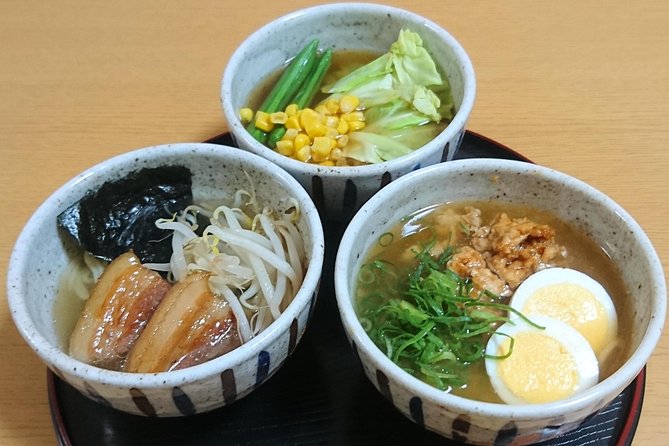
- Three ramen types in one session: salt, soy sauce, and miso, each with its own toppings
- Handmade noodles from scratch for the full ramen experience (total noodles: 100g)
- Small-group setup with a class size limited to eight for more personal attention
- All-in-one meal plan: ramen plus dessert, green tea, and seasonal fruits
- Take-home recipe so you can recreate what you made after the trip
Three Types of Ramen in 2.5 Hours: What the Class Really Gives You
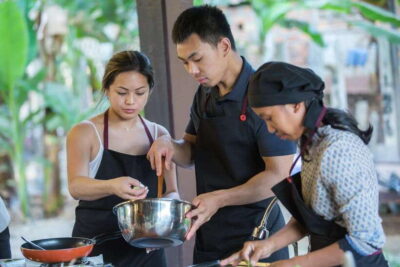
This isn’t a demo where you watch someone else cook. It’s built so you actively make ramen from start to finish, then sit down and eat what you cooked. In about 2 hours 30 minutes, you’ll go through the core ramen workflow: dough and noodle-making, broth-building, topping prep, and assembly.
What makes it worth it is the “three-for-one” structure. Instead of learning one bowl, you learn how seasonings and ingredients change everything. Salt ramen tastes clean and savory. Soy sauce ramen feels deeper and more aromatic. Miso ramen leans richer and more rounded. You’ll feel those differences while you’re cooking, not just after you take a bite.
The class also stays practical. You aren’t asked to bring anything, and all utensils and ingredients are provided. You also leave with a printed recipe—not a vague memory of what you did.
You can also read our reviews of more tours and experiences in Osaka.

Meeting in Kitahorie: Banix 北堀江 and How You’ll Get Started
The meeting point is Banix 北堀江 Japan in Osaka’s Nishi Ward, Kitahorie area. You’ll start there and the activity ends back at the meeting point, so plan your day like a self-contained experience.
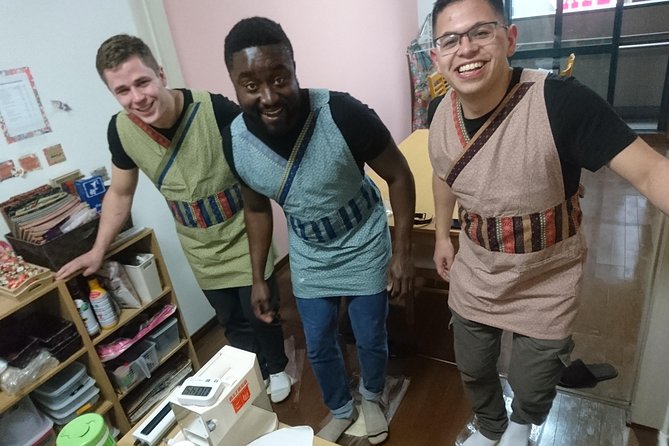
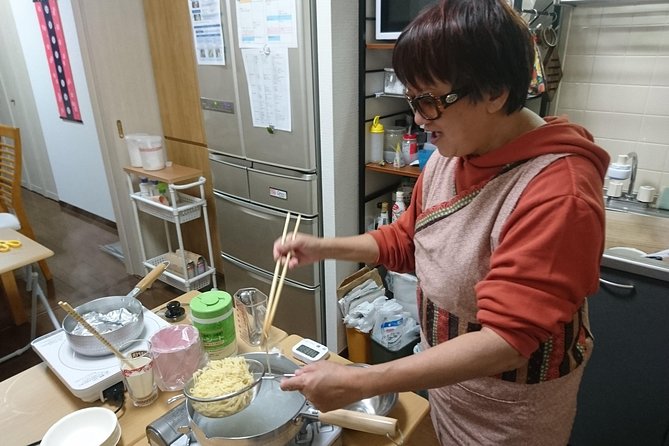
You’ll show up, get oriented, then get into the cooking rhythm. The class begins with you putting on an apron—simple, but it sets the tone. This is hands-on cooking in a working kitchen setup, not a classroom with chairs in neat rows.
One more logistics note: you’ll want to factor in how you’ll reach Kitahorie by public transport. The tour notes that it’s near public transportation, but it doesn’t include hotel pickup and drop-off. If you’re staying far out, that’s the only part that might take planning.
Handmade Noodles First: The 100g Skill You’ll Actually Use
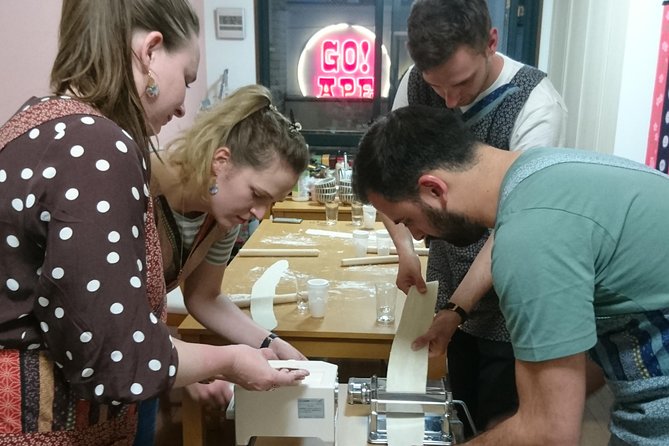
The best part of any ramen experience is the noodles, and this class starts there. You’ll make noodles from scratch, and the total noodles you produce is 100g. That matters because you’re learning real technique—how to handle dough, how to work it, and how to get it to the right stage for cooking.
A lot of ramen classes skip the hard part. Here, you don’t. And from the way the class is described, the instructor guides you through the process step-by-step, so you’re not guessing or freelancing.
In the reviews, people highlighted that the instructions are clear and that the instructors take time with each stage. Some names that came up include Fumi (often referenced as Fumi-san), and Keigo/Keiyo in other class experiences. Even when the group is small, the vibe stays instructional and friendly.
Build Three Broths, Three Personalities: Salt, Soy Sauce, Miso
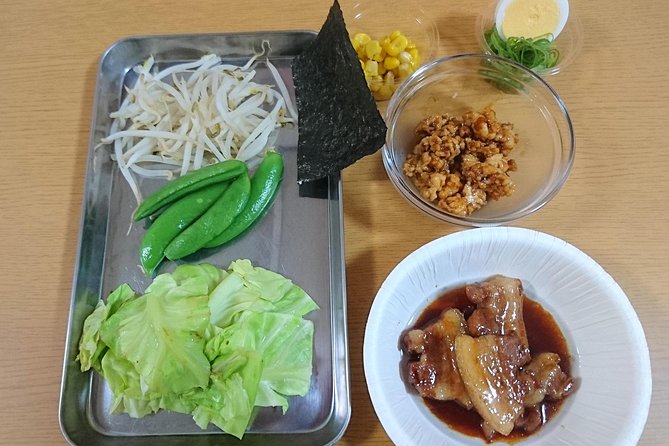
After the noodle work, you shift into ramen mode: broths, toppings, and the small choices that create big differences. The class is designed so you’re not just making three bowls—you’re learning three flavor frameworks.
Salt Ramen: Clean Savory with Sweet Pork
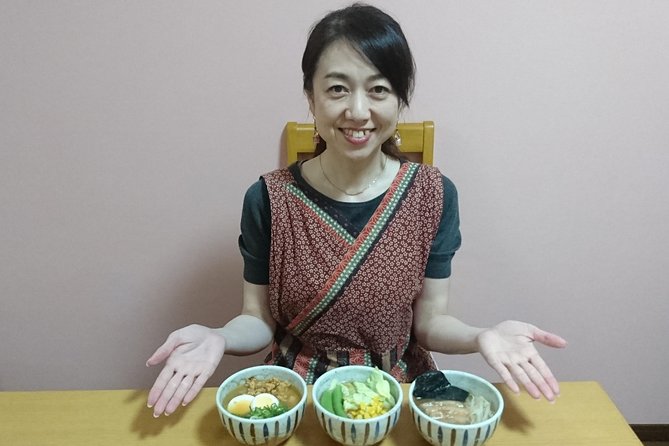
Salt ramen is your lighter, straightforward baseline. In this class, your toppings include:
- juicy sweet pork
- bean sprouts
- seaweed
Salt ramen often feels “simple” only at first bite. The real lesson is how pork sweetness and salty seasoning work together, while the sprouts and seaweed add texture and briny lift.

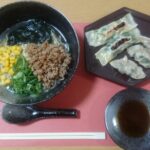
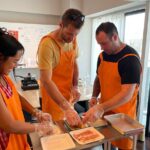



Soy Sauce Ramen: Deeper Flavor with Greens and Corn
Next is soy sauce ramen, which leans more aromatic and savory:
- steamed cabbage
- green vegetables
- sweet corn
This is a good contrast bowl. Soy sauce brings warmth and depth, and the vegetables keep it from feeling heavy. Corn adds a gentle sweetness that balances the savory profile.
Miso Ramen: Rich and Comforting with Spicy Chicken
Then comes miso ramen, the “rounder” and more comforting style:
- spicy chicken
- boiled eggs
- green onion
Miso tends to stick to your palate. The boiled egg adds richness and body. Green onion keeps it from going too flat.
Across all three, the toppings aren’t random. Each set teaches a role: sweetness, crunch, saltiness, richness, aroma, and that final hit of freshness from scallions or greens.
What Happens When You’re Assembling and Eating
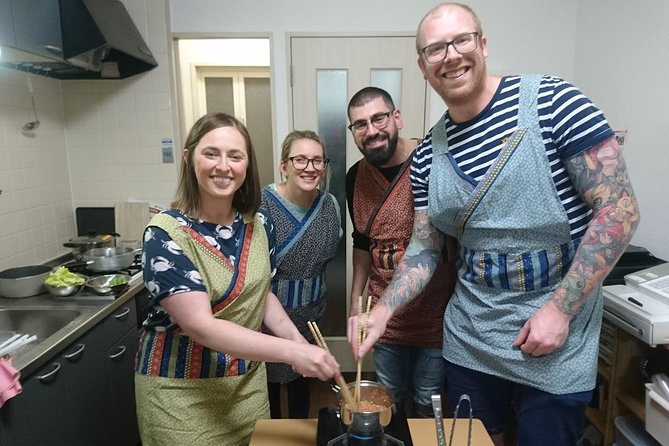
This class ends with the best part: you serve your ramen in front of you, using chopsticks, and you start with the usual Itadakimasu moment. It’s a small cultural detail, but it makes the meal feel like the end of a real cooking process instead of a buffet stop.
Food includes more than ramen. You’ll also get:
- dessert
- green tea
- seasonal fruits
That’s a thoughtful touch for a cooking class. You finish the kitchen work, you eat well, and you don’t have to chase dessert afterward. It also helps the experience feel like a full lunch or dinner setup.
One extra caution I’d pass along from a real-world note: there may be chili oil served at the end or with the ramen, and it can be stronger than you expect. If you’re sensitive to spice, use it lightly at first.
Equipment, Ingredients, and the Take-Home Recipe
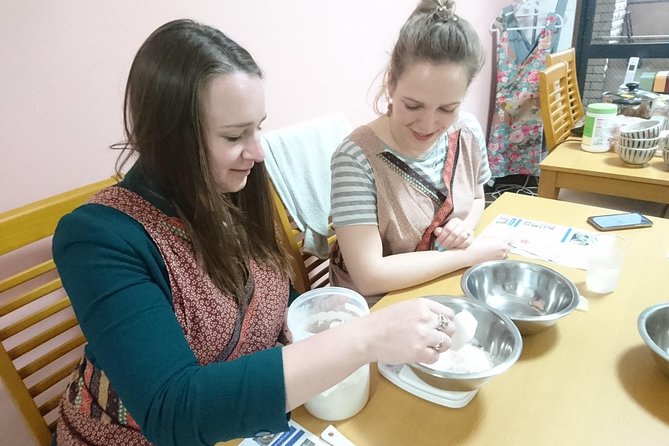
You don’t have to pack cutting boards or bring your own ingredients. The class provides:
- all ingredients
- kitchen utensils and equipment
- a printed recipe to take home
- seasonal fruits
That recipe is the big value lever. A lot of cooking classes give you a memory and a photo. This one gives you a document you can actually use later. So when you’re craving ramen at home, you’re not trying to recreate it from vague recollection.
If you want to cook for a special diet, there’s also a hopeful sign. One experience in the reviews noted that when a vegetarian diet was requested, the instructor was mindful about ingredients and made sure the broth didn’t contain animal products. If dietary needs matter for you, it’s smart to communicate those ahead of time.
Small Group Size in Osaka: Why It Matters for Cooking
The class is described as a small-group tour limited to eight people, with a maximum travelers count listed as 12. In practice, that size is what makes cooking feel manageable.
With fewer people, the instructor can watch what your hands are doing, not just what your face is doing. When noodles are the focus, tiny technique differences matter. A small group helps keep the pace moving and helps you get unstuck.
In the reviews, many people also described the experience as cozy—sometimes even like a private class depending on who booked. That’s the kind of setup where you can ask questions without feeling like you’re interrupting.
Price and Value: Is $79.28 Worth It?
At $79.28 per person, you’re paying for several things at once: real instruction, a multi-part meal, and ingredients plus equipment. You’re also learning a skill with reuse value—how to make noodles from scratch and how three ramen styles differ.
If you’ve ever eaten one great bowl and thought, I want to do this at home, this class is closer to the “how” than the “where.” You’re not just tasting ramen; you’re getting the base methods that make ramen possible: noodle dough handling, soup-building logic, and topping prep.
You also get dessert, green tea, and seasonal fruit included. That’s part of why the price can feel more reasonable than a class that only covers cooking and then you pay for food separately.
Is it a bargain? It’s not the cheapest activity in Osaka. But for a hands-on food lesson that produces three bowls from scratch and gives you a take-home recipe, the value is strong.
Timing and Pacing: How to Slot It Into Your Osaka Day
With a 2 hours 30 minutes duration, you’ll want to treat this like a real meal plan day activity. You’ll get hungry while you’re working (in a good way). Then you’ll sit down and eat what you made, plus dessert.
Because there’s no pickup, I’d plan to arrive with enough buffer to settle in. If you’re late, you’ll miss some of the early noodle-making window, and that’s the skill-heavy part.
Also, choose a day when you’re not rushing through five other food stops. This is the kind of activity where you should let it be the main event.
Who This Ramen Class Is Best For (and Who Should Reconsider)
You’ll get the most out of this class if:
- you genuinely like ramen and want to learn how it’s built
- you want hands-on instruction, not a food walk
- you travel with kids or friends and want shared work time
- you want a repeatable skill, not just a meal
It may be less ideal if you:
- hate cooking mess or heat (it’s an active kitchen experience)
- want a relaxed sightseeing pace instead of focused food work
- need hotel pickup or a fully managed door-to-door tour
A key strength is that the class is described as suitable for all ages, including kids who followed instructions well. So it’s a good family option—especially when you want everyone doing something, not just eating.
Practical Tips So You Start Smooth
Here are a few small moves that help you enjoy the class more:
- Go with comfy clothes you don’t mind getting a little kitchen-dusted.
- If you’re sensitive to spice, go easy on chili oil at the end.
- Bring questions about technique. Noodle-making has a learning curve.
- If you need a vegetarian setup, ask ahead so the instructor can handle broth ingredients appropriately.
- Take a photo of the printed recipe page you care about most before you leave, so you don’t have to hunt for it later.
Should You Book This Osaka Ramen Class?
I’d book it if you want a memorable Osaka food experience that’s not just eating. The combination of handmade noodles, three ramen styles, and a meal that actually follows the cooking (dessert, green tea, seasonal fruit) makes this feel like a complete afternoon. The small-group structure keeps it friendly and instructional, and the take-home recipe means you can turn the experience into a cooking habit.
I’d hesitate only if getting to Kitahorie on your own is a deal-breaker, since there’s no hotel pickup. If you can handle that, this is a high-utility class: you leave with skills, not just souvenirs.
FAQ
What types of ramen will I make?
You’ll make three types of ramen: salt ramen, soy sauce ramen, and miso ramen.
How long is the cooking class?
The class runs about 2 hours 30 minutes.
How many people are in the class?
It’s a small-group experience limited to eight people, with a maximum of 12 travelers.
What’s included in the price?
The price includes all ingredients, kitchen utensils and equipment, a printed recipe to take home, seasonal fruits, and the ramen meal with dessert and green tea.
Do I need to bring any ingredients or cooking tools?
No. All utensils and ingredients are provided, and you’ll also be given what you need for the class.
Can I cancel and get a refund?
Yes. You can cancel for a full refund up to 24 hours before the experience starts. Canceling less than 24 hours before start time isn’t refundable.