REVIEW · TOKYO
Small-Group Wagyu Beef and 7 Japanese Dishes Tokyo Cooking Class
Book on Viator →Operated by Cooking Sun · Bookable on Viator
A great Tokyo morning can smell like dashi. This small-group wagyu cooking class teaches you how Japanese home cooks build flavor, starting from scratch with stock and seasonings, then finishing with a sit-down meal.
I especially love the hands-on format (maximum eight people) and the fact you leave with practical recipes, not just photos. You’ll also get enough instruction to cook confidently at home, even if you think you’re not a kitchen person.
One thing to consider: the building can be a little tricky to locate, so give yourself a few minutes to find the place near Shinjuku’s Shinanomachi area and arrive on time with your mobile ticket ready.
In This Review
- Key highlights before you book
- Wagyu and kaiseki-style cooking in 3 hours: the real appeal
- Getting to Cooking Sun Tokyo in Shinanomachi (without a pickup)
- The first step of Japanese cooking: dashi and seasonings
- Seven to eight dishes: what you’ll actually cook
- Wagyu main course (the centerpiece)
- Side dishes and course rhythm
- Instructor support: how English teaching makes it doable
- The meal finish: Itadakimasu, sake, and green tea
- Value check: is $72.96 a good deal for Tokyo?
- Who this class suits best (and who might not love it)
- My booking verdict: should you do Cooking Sun’s wagyu class?
- FAQ
- FAQ
- What is the duration of the Small-Group Wagyu Beef and 7 Japanese Dishes Tokyo Cooking Class?
- Where is the meeting point?
- What time does the class start?
- How many people are in the class?
- What’s included in the class fee?
- Is hotel pickup included?
- Are instructions provided in English?
- Is a vegetarian option available?
- Do I need any prior cooking experience?
- Can you accommodate dietary requirements?
- What is the cancellation policy?
Key highlights before you book
- Dashi first, always: You start with the Japanese soup stock that powers the whole meal.
- Small group, real feedback: With up to eight people, instructors can correct your technique and not just point.
- Wagyu as the main event: You cook tender Japanese beef and learn how it fits into a classic meal flow.
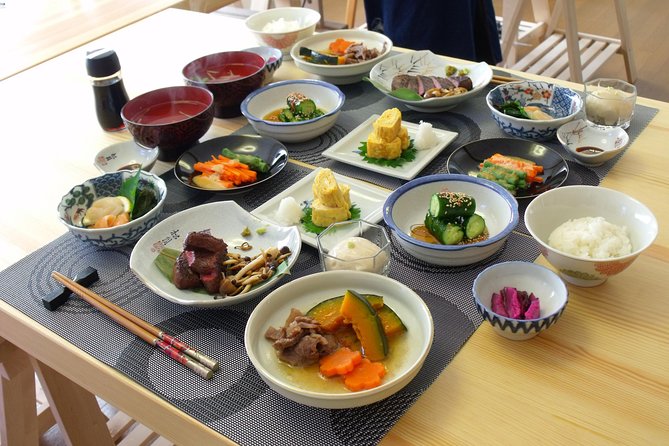
- A full-course lunch pace: In around three hours, you’ll work through up to eight dishes, with many classes focusing on seven.
- English-speaking local instructors: Friendly teaching, clear explanations, and lots of “why this works.”
- Eat what you make: You finish with your multi-course lunch plus sake and green tea.
Wagyu and kaiseki-style cooking in 3 hours: the real appeal
This class is built around a simple idea: if you learn the basics that Japanese cooking runs on, you can make restaurant-style food at home without mystery steps. You don’t just watch ingredients happen. You work with them—chopping, mixing, shaping, and cooking—while the instructor explains what matters and what doesn’t.
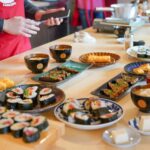
The second big draw is the meal itself. You’re creating a kaiseki-style lunch course, which means the food isn’t just one dish. You get an appetizer-side-main-dessert kind of flow, so you taste how Japanese cuisine layers flavors and textures rather than eating one heavy thing.
And yes, the star ingredient is Wagyu beef. Wagyu has a reputation, but here it’s taught in context: how you season, how you cook it tender, and how it pairs with the rest of the course.
You can also read our reviews of more tours and experiences in Tokyo.

Getting to Cooking Sun Tokyo in Shinanomachi (without a pickup)
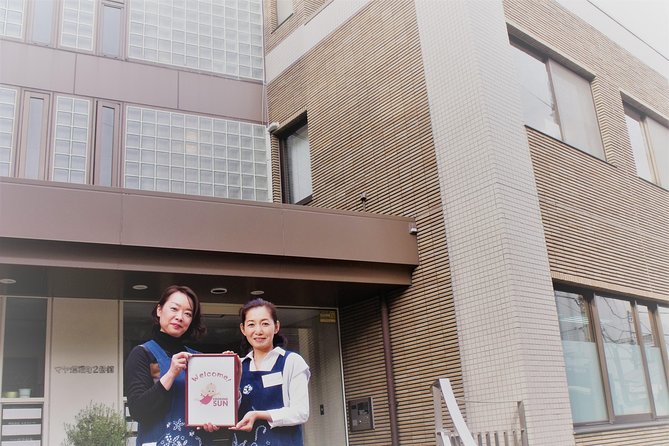
The class starts at Cooking Sun Tokyo, at 18-39 Shinanomachi, Shinjuku City, Tokyo 160-0016. There’s no hotel pickup, so you’ll navigate there on your own using public transportation.
This is one reason I recommend planning your arrival more carefully than you would for a “walk-in from the station” activity. The location is described as a bit difficult to find. The good news: once you follow the directions and use Google Maps, it’s workable, and the area feels calmer than central Tokyo traffic.
Practical tip: bring your mobile ticket, arrive a little early, and don’t assume the first road you see is the right one. Residential Tokyo can look similar block to block.
The first step of Japanese cooking: dashi and seasonings
Every session begins with making dashi, the fundamental soup stock used across Japanese cuisine. This is one of those skills that sounds technical until you see how it’s handled in a real class. You’ll start the morning by learning the stock process and the role it plays in Japanese cooking.
At the same time, the instructor explains staple seasonings that you’ll keep using throughout the meal. This matters because Japanese flavor isn’t only about “salt plus heat.” It’s about balance—umami from stock, sweetness from mirin or similar elements, and acidity or bitterness where needed.
In multiple rounds, I’ve seen how much this one start point helps students. Once you understand dashi, the rest of the course makes more sense: why sauces taste connected, why soups taste deep without being heavy, and why simple ingredients can feel special.
Seven to eight dishes: what you’ll actually cook
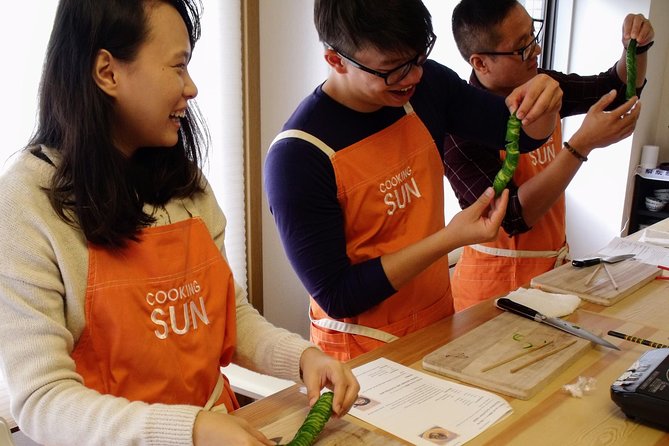
The class is described as a full-course lunch where you prepare up to eight different dishes in a small-group setting. In practice, many sessions focus on seven dishes during the roughly three-hour window, with some tasks prepared ahead for speed and safety.
Here’s what you can expect the work to feel like:
- You’ll spend time on hands-on cooking tasks, especially chopping and mixing components and assembling elements of each dish.
- Some items may be partially handled before class so you can keep the momentum and actually finish a multi-course lunch.
- You’ll still do meaningful work, not just assembling pre-made plates.
Wagyu main course (the centerpiece)
The main dish is your Wagyu beef preparation and cooking. If you want a direct takeaway for home cooking, this is the part that gives you it. The instructor teaches tender results and how the beef fits into the course.
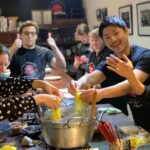
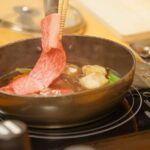
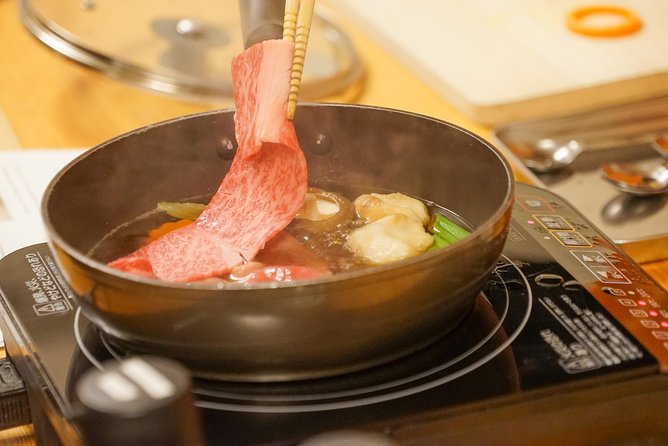
One dish that shows up in the learning experience is sukiyaki with Wagyu beef. Even if the exact menu varies slightly by day, the teaching goal stays the same: learn how to handle beef with the right seasoning approach so it tastes soft, savory, and balanced.
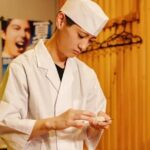




Side dishes and course rhythm
You’ll also make Japanese staples as part of the course flow. Based on the dishes described, you might work on things like:
- miso soup
- rice
- cucumber salad
- and other seasonal-style preparations
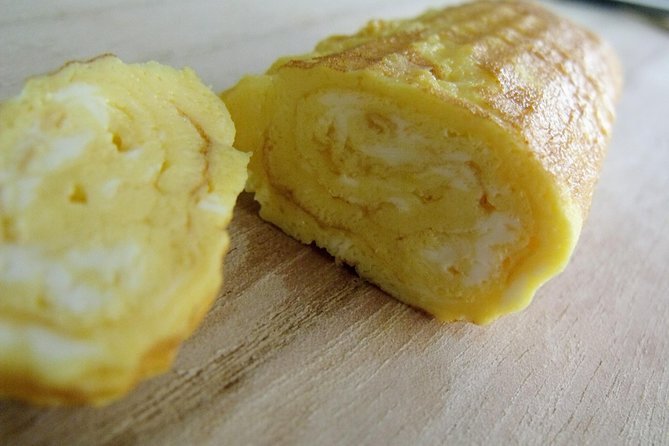
One review experience also notes you may learn about an egg component and a lotus element stuffed with minced chicken meat that’s prepared ahead. That’s a good heads-up: some parts may be prepped so you can focus on technique you can repeat later.
The course idea is that each dish has a job: one brings comfort, one adds crunch, one brings aroma, and one ends the lunch with something lighter. When you eat it together, it feels like a real meal, not a random set of tasting bites.
Instructor support: how English teaching makes it doable
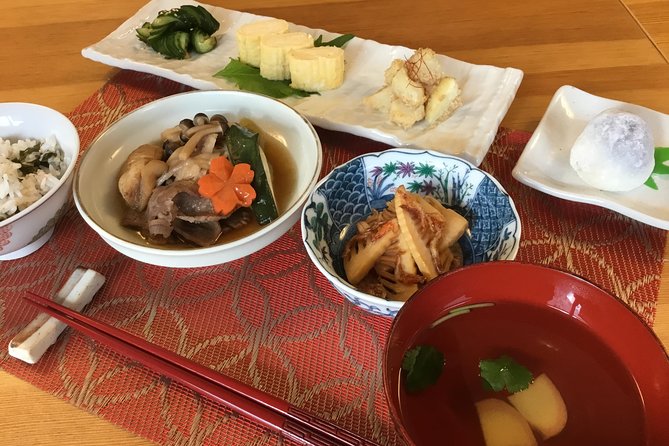
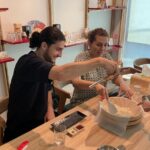
The instructors are friendly English-speaking locals, and the class is small enough that you won’t feel like a spectator. That ratio matters. When someone can see your cuts, your mixing, and your timing, you learn faster than with a big group where you only get one general tip.
You’ll get feedback while you cook—step-by-step guidance, plus short explanations of technique and why certain choices work. Several sessions mention instructors such as Aya and Hidemi, and other names like Kaori, Megumi, and Yoko. If you’re lucky enough to be in that kind of class, you’ll probably notice the same pattern: patient teaching, clear English, and a relaxed vibe.
Another practical point from the teaching style: you’ll hear ingredient context as you go. So when you choose a seasoning at home later, you’re not guessing. You know what flavor role it played in that course.
The meal finish: Itadakimasu, sake, and green tea
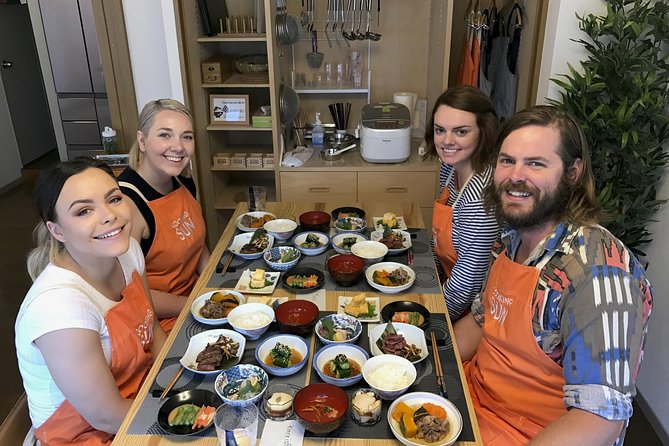
After the cooking, you sit down to eat what you made. You’ll start with the Japanese eating moment called Itadakimasu, then enjoy the multi-course lunch together.
What makes this special is that you’re not eating someone else’s idea of Japanese food—you’re eating yours, plus you’ve practiced how the dishes connect. That’s why the class is often a highlight: the teaching and the tasting are tied together.
You’ll also be offered sake and green tea with your meal. This adds a classic Japanese dining touch without requiring you to hunt for anything outside the studio.
Value check: is $72.96 a good deal for Tokyo?
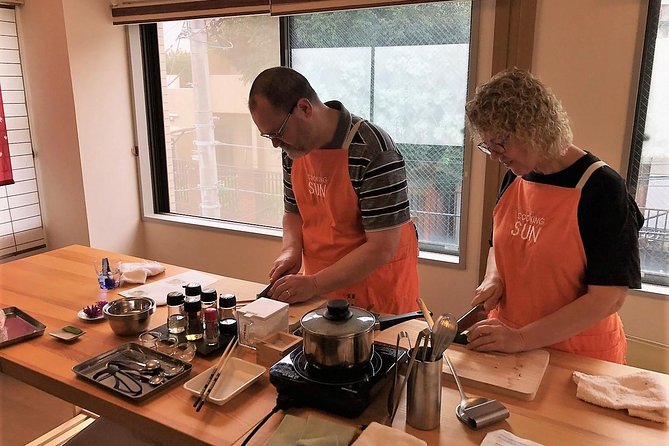
At $72.96 per person, this is one of those Tokyo activities that feels reasonable if you compare it to the cost of eating similarly styled meals out in the city.
Here’s why it can be good value:
- You get up to eight dishes made in a single session, not a one-dish demo.
- You’re taught core skills (dashi, seasonings, and cooking methods) you can reuse.
- You also get the satisfaction of eating a completed course with sake and green tea included.
- The class is capped at eight people, which keeps instructor attention focused.
There is also a less glamorous part of cooking classes that affects value: not every second is pure “hands-on cooking.” Some portions can be prepped ahead, and you may spend time chopping or mixing while staff handles components like soups or rice. Still, the overall experience is very hands-on where it counts, and you leave with recipes you can actually repeat.
If your goal is learning plus a real lunch you didn’t have to plan, this price starts to look fair fast.
Who this class suits best (and who might not love it)
This experience fits best if you want a Tokyo food activity that gives you real skills, not just a guided tasting.
You’ll likely love it if:
- you’re curious about how Japanese home cooks build flavor
- you want to cook Wagyu beef with proper technique
- you like small groups and interactive instruction
- you want recipes to bring home
It might be less ideal if:
- you hate navigating on your own and need hotel pickup
- you need the schedule to feel like full “chef’s counter” cooking all the time (some prep may happen before class)
- you’re extremely sensitive to location details and don’t like arriving a few minutes early to confirm you’re at the right entrance
My booking verdict: should you do Cooking Sun’s wagyu class?
I’d book this if you want a fun morning in Tokyo that turns into a take-home cooking education. The combination of dashi training, practical seasoning guidance, and a multi-course lunch—plus the small-group attention—makes the class feel worth your time.
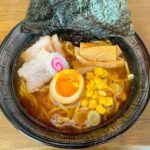
If you’re traveling with a flexible schedule, this also works nicely as a first-day anchor. It’s a great way to understand Japanese cuisine through technique, then use that knowledge the rest of the trip when you order ramen, rice dishes, grilled meats, or simple soups.
Just plan for the one real drawback: arrive early enough to find the building without stress.
FAQ
FAQ
What is the duration of the Small-Group Wagyu Beef and 7 Japanese Dishes Tokyo Cooking Class?
The class runs for about 3 hours.
Where is the meeting point?
The meeting point is Cooking Sun Tokyo, 18-39 Shinanomachi, Shinjuku City, Tokyo 160-0016, Japan.
What time does the class start?
The start time is 9:30 am.
How many people are in the class?
It’s a small group with a maximum of 8 people.
What’s included in the class fee?
Included items are a local cooking instructor, recipes, ingredients, and apron and towel rental. You’ll also eat the meal you make with sake and green tea.
Is hotel pickup included?
No, hotel pickup and drop-off are not included.
Are instructions provided in English?
Yes, instructions are provided in English.
Is a vegetarian option available?
Yes. You should advise at booking if you need the vegetarian option.
Do I need any prior cooking experience?
No. The class is designed for an approachable, instruction-led experience with hands-on guidance.
Can you accommodate dietary requirements?
Yes. You should advise any specific dietary requirements at the time of booking.
What is the cancellation policy?
Free cancellation is available up to 24 hours before the experience starts for a full refund. Canceling within 24 hours does not receive a refund.