REVIEW · TOKYO
Tokyo Washoku 4-hour Cooking Class: From Market to Table
Book on Viator →Operated by MagicalTrip Inc. · Bookable on Viator
Tokyo’s best souvenir is what you cook. This Tokyo Washoku class turns a normal morning into a hands-on loop from supermarket to studio, where you cook classic dishes and learn practical technique as you go.
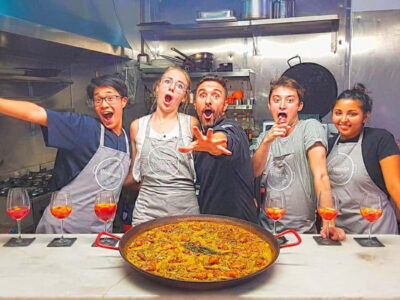
I loved the hands-on knife and cooking technique time, with guides like April, Yuri, and Alice praised for clear, patient step-by-step coaching. I also loved the meal itself, built from scratch (like maki sushi and miso soup) and finished with beer and sake tasting or drink pairings.
One consideration: plan ahead for food needs. You can’t count on allergy-free cooking, and you have to share dietary requests at least one day before if you want the best chance at accommodations.
In This Review
- Key highlights to know before you go
- From FamilyMart Meet-Up to the Iriya Supermarket
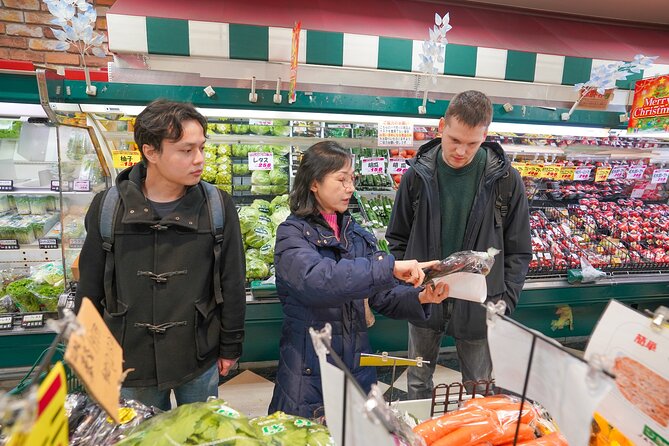
- Shopping for Japanese ingredients like a pro (with a guide watching)
- Knife practice and Washoku technique in a dedicated cooking studio
- The meal you build: makisushi, miso soup, dashimaki tamago, and more
- Drink pairings: sake or beer during the lesson
- Taking the recipes home (and actually using them)
- Who this cooking class is best for
- Price and value: what $79.59 buys you
- Should you book Tokyo Washoku: From Market to Table?
- FAQ
- What dishes will I make in the 4-hour Tokyo Washoku class?
- Where do I meet for the experience?
- How long is the class?
- Is the class suitable for vegan or vegetarian diets?
- How does the class handle allergies?
- What happens if I’m late to the meeting point?
Key highlights to know before you go
- Start with a real supermarket run near Iriya Station and learn how to pick quality ingredients
- Practice Washoku knife work and cooking methods instead of just watching
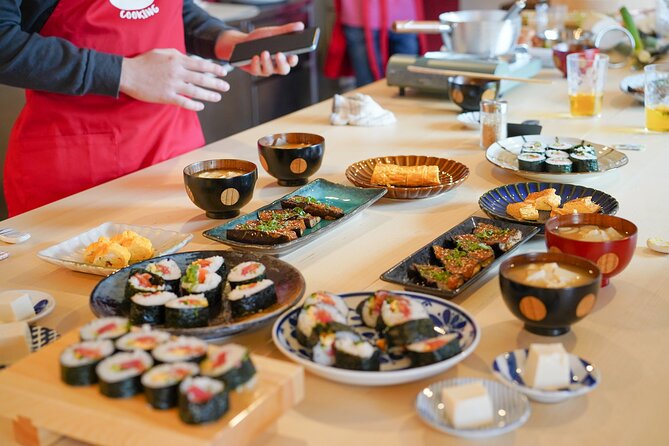
- Cook from scratch dishes such as makisushi, miso soup, dashimaki tamago, and nasu dengaku
- Take-home recipes included so the class sticks with you after Tokyo
- Enjoy sake or other drink pairings, with some sessions including beer and sake tasting
- Small group size (max 7) keeps questions moving
From FamilyMart Meet-Up to the Iriya Supermarket
The day starts at FamilyMart, 2-chōme-1-10 Shitaya, Taito City—an easy reference point if you’re using public transit. Your ticket is mobile, and the class is designed to start on time, so you’ll want to arrive a bit early to avoid missing the group.
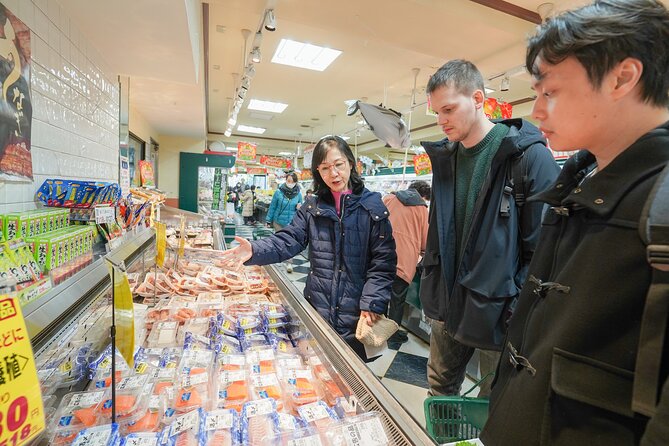
After meeting up, you head to a local supermarket near Iriya Station. This first step sounds simple, but it changes how you experience Japanese food. Instead of treating ingredients as mystery items, you learn what to look for and why it matters once you’re back at the studio.
The class runs about 4 hours. That’s long enough to shop, cook several dishes, and eat together—without turning into a full-day production. Also, because the group is capped at 7 travelers, you get more hands-on time and more chances to ask questions while things are still fresh.
Tokyo timing also means weather planning. The operator notes extreme swings—summer can hit 40°C (110°F) and winter can drop to -5°C (20°F)—so dress for the conditions and bring water when it’s hot.
You can also read our reviews of more tours and experiences in Tokyo.
Shopping for Japanese ingredients like a pro (with a guide watching)
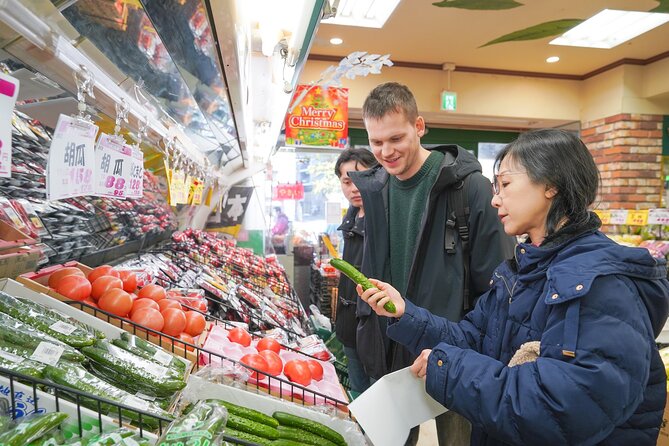
This class begins with a supermarket walk with your guide, and that’s where you start building confidence. You’ll learn how to choose good ingredients, and you’ll get context on what works for Washoku cooking—not just random shopping tips.
What makes this valuable is the link between choice and result. For example, once you see how ingredients are handled and selected, you’re better able to cook with the right textures later. You’re also less likely to panic in Japanese stores after the class because you’ll recognize key items and think in “what it does in the dish,” not just “what it is called.”
Your guide can also tailor advice in real time. If you ask questions while you’re shopping—about ingredients, substitution ideas, or how to cook certain items—those answers stay connected to the dishes you’ll make soon after. That connection matters more than a general lecture.
If you’re cooking at home, this part pays off. Most people can follow a recipe once. Fewer people can choose ingredients confidently. Here, you’re training both skills in one sitting.
Knife practice and Washoku technique in a dedicated cooking studio
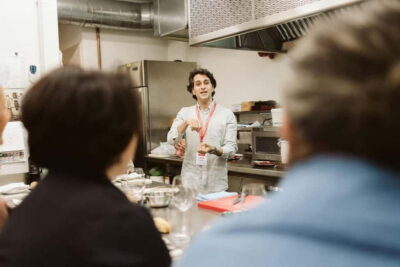
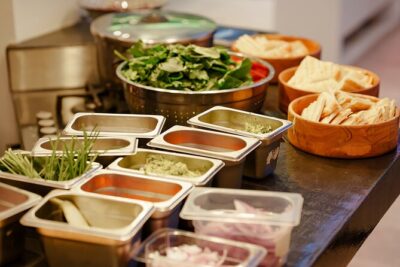
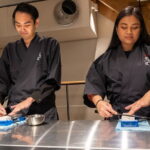
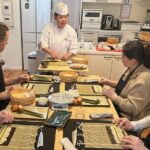
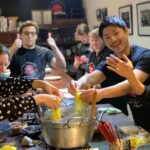
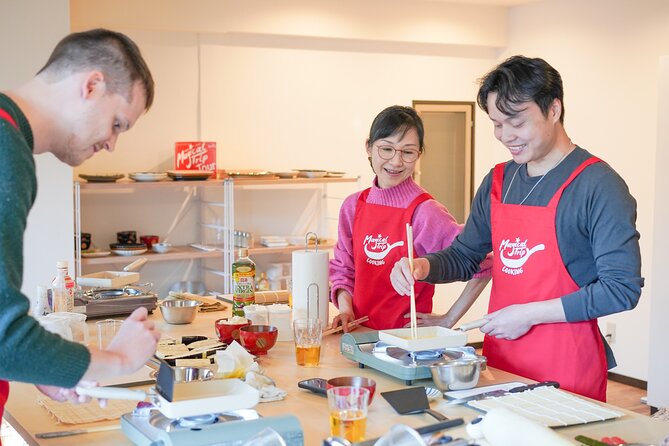
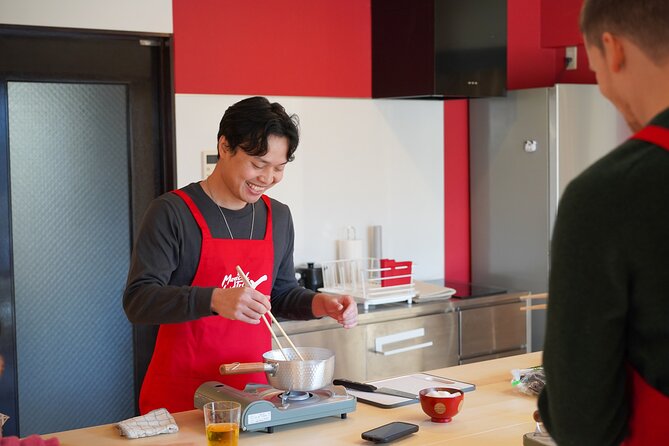
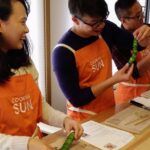
After shopping, you move to the cooking studio where the real work happens: hands-on technique. You’ll practice traditional Japanese knife and cooking techniques, and you’ll do it while following a planned menu instead of doing random chopping.
Why I like this setup for you: knife skills stop being abstract. When the guide teaches you a cut or a method, you immediately apply it to the dish you’re making. That makes it easier to remember later and easier to repeat when you’re standing in your own kitchen.
The studio experience is also practical. Past participants have praised the space as spacious and well set up, which matters because cooking classes go smoother when you’re not elbowing for counter space or trying to cook in cramped conditions.
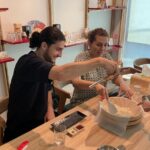
The vibe is friendly and question-friendly. Guides like Yuri and Mihori have been noted for giving detailed instructions and encouraging participants through the steps. Even if you’re a total beginner, you’re not just waiting for someone else to do the cutting.
The meal you build: makisushi, miso soup, dashimaki tamago, and more
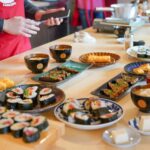
The centerpiece dishes are classic Washoku foods made from scratch. Your menu includes makisushi (rolled sushi) and miso soup, plus dashimaki tamago (rolled omelet) and nasu dengaku (grilled eggplant skewers). You’ll learn both the cutting approach and the cooking method for each one.
Here’s how the dishes work as a learning experience:
Makisushi (rolled sushi). This teaches you assembly and timing. Rolling is part technique, part patience. Once you understand how the fillings and rice behave together, you’ll be able to troubleshoot at home instead of starting over from scratch.
Miso soup. This dish helps you understand comfort-food depth. Even if miso feels familiar, the class format helps you connect the flavor base to how it’s built in cooking rather than just tasting a final bowl.
Dashimaki tamago. Rolled omelet is a great way to learn texture. It’s not just flavor—it’s structure. You’ll practice method so the omelet comes out properly rather than collapsing or turning rubbery.
Nasu dengaku (grilled eggplant skewers). Eggplant is a useful ingredient because it teaches handling and heat control. You’ll get a sense of how to treat a vegetable so it holds up while still tasting satisfying.
Some sessions also include eggs in multiple dishes. If you can’t eat eggs, your selection is reduced from four types to three, so you still get a full class experience, just with a modified plan.
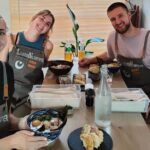
By the time you sit down to eat, you’re not sampling a menu. You’re tasting the results of the specific techniques you just practiced. That makes the meal feel earned—and it helps you remember what to repeat.
Drink pairings: sake or beer during the lesson
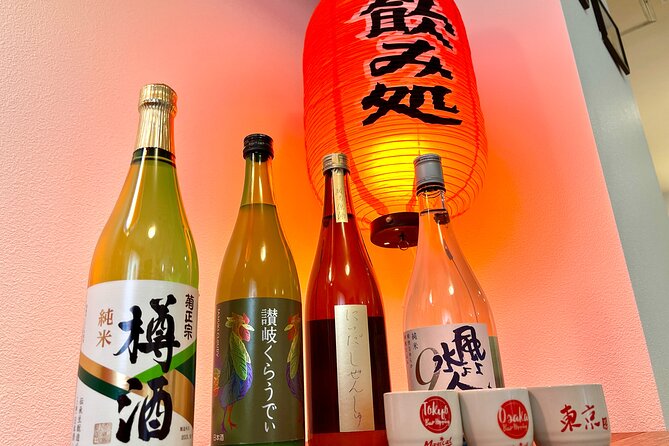
Food in Japan often makes more sense when you taste it with what locals drink alongside it. This class includes a moment to enjoy your meal with sake or other drink pairings, and some past groups report beer and sake tasting as part of the fun.
You don’t need to be a sake expert to benefit. The value here is that you taste alongside the dishes you cooked. Then you start noticing what changes—how acidity cuts through richness, how aroma matches savory notes, and how sweetness can balance salt.
It also adds a social break in the middle of the day. Cooking classes can become intense when you’re focused on timing. Having a planned tasting moment keeps the pace friendly and makes the class feel like an actual Tokyo experience, not a worksheet.



Taking the recipes home (and actually using them)
One of the best features is simple: you receive recipes for the dishes to take home. That’s crucial. Without recipes, a cooking class is a memory, not a skill. With recipes, it becomes something you can rebuild later.
I also like that the experience is designed to be tailored. Your guide encourages questions during class, so you can ask about small adjustments—like what to swap, what to watch for, and how to nail the technique next time.
Because you’re cooking multiple dishes (not just one), the recipe set gives you a mini “home menu” you can repeat. That’s also where value shows up: you’re paying for instruction, ingredient guidance, and several take-home instructions, all within a single 4-hour window.
If you want an experience that improves what you can cook after you return, this is the kind of class that supports that goal.
Who this cooking class is best for
This is a strong fit if you want real skills, not just sightseeing. You’ll get hands-on knife work, cooking technique, and ingredient selection—all focused on everyday Japanese flavors you can recreate.
It’s also a good match if you’re traveling with teens or people who learn best by doing. A few participants have noted that their family members enjoyed the active, hands-on format, especially when they could chop and cook alongside the group.
If you eat plant-based, you’re covered. The class states that vegan and vegetarian are welcome, and the team arranges ingredients and the cooking process. Just remember: dietary requests need to be shared at least one day before if you want the best chance at accommodations.
On the other hand, if you have very specific allergies, treat this as a “needs planning” situation. The operator states they cannot guarantee allergy-free cooking, and substitutions may not always be possible at every stop.
Price and value: what $79.59 buys you
At $79.59 per person for about 4 hours, this isn’t a cheap activity. But it’s also not trying to be. Here’s what you’re paying for in real terms:
- A guided supermarket ingredient lesson (not just a walk-by)
- Hands-on cooking instruction with Japanese knife and technique focus
- Multiple dishes cooked from scratch, including sushi rolls and miso soup
- Recipes you keep, so the class extends beyond the day
- Sake or drink pairings, sometimes with beer and sake tasting
- Small group size (max 7), which usually means more attention per person
If you compare this to paying for ingredients and tools on your own, you’ll find the class is closer to paying for coaching plus a structured, social cooking meal. That coaching is the hard part to replicate on your own in Tokyo.
In plain terms: if you want to leave with skills you’ll use, the price starts to look fair. If you only want a quick snack and a photo, you’ll be happier with something lighter.
Should you book Tokyo Washoku: From Market to Table?
I’d book this if you want a Tokyo food experience that teaches you how to shop and cook, not just what to eat. The supermarket start is the secret sauce, because it teaches you how ingredients are chosen before you ever touch the knife.
You should also book it if you like structured cooking with enough space to ask questions. Past guides such as April, Yuri, Masai, Alice, Minnie, Mihori, Suzy, and Taka have been praised for clarity, patience, and encouragement—so you’re not signing up for silence and chaos.
Skip it if your schedule is fragile. The class starts on time, and you won’t be able to join (or reschedule) if you’re late and miss the group. Also, if allergies are a major concern, plan carefully and communicate in advance, because allergy-free preparation can’t be promised.
If your goal is practical skill plus a satisfying meal in a small group, this one lands well.
FAQ
What dishes will I make in the 4-hour Tokyo Washoku class?
The class includes cooking makisushi (rolled sushi), miso soup, dashimaki tamago (rolled omelet), nasu dengaku (grilled eggplant skewers), and more. The exact set can change if you have dietary restrictions such as no eggs.
Where do I meet for the experience?
You meet at FamilyMart, 2-chōme-1-10 Shitaya, Taito City, Tokyo 110-0004, Japan. The activity ends back at the meeting point.
How long is the class?
The cooking class runs about 4 hours.
Is the class suitable for vegan or vegetarian diets?
Yes. Vegan and vegetarian participants are welcome, and the team arranges ingredients and the cooking process. You should inform them at least one day before the tour about dietary requests.
How does the class handle allergies?
You need to inform the operator at least one day before if you have allergies or dietary requests to mention, because day-of requests cannot be accommodated. Also, allergy-free cooking cannot be guaranteed since preparations happen in kitchens that are not allergy-controlled, and substitutions may not always be possible.
What happens if I’m late to the meeting point?
The tour must start on time. If you are more than 5 minutes late without contacting the staff, it is considered a cancellation and no refund is provided.